














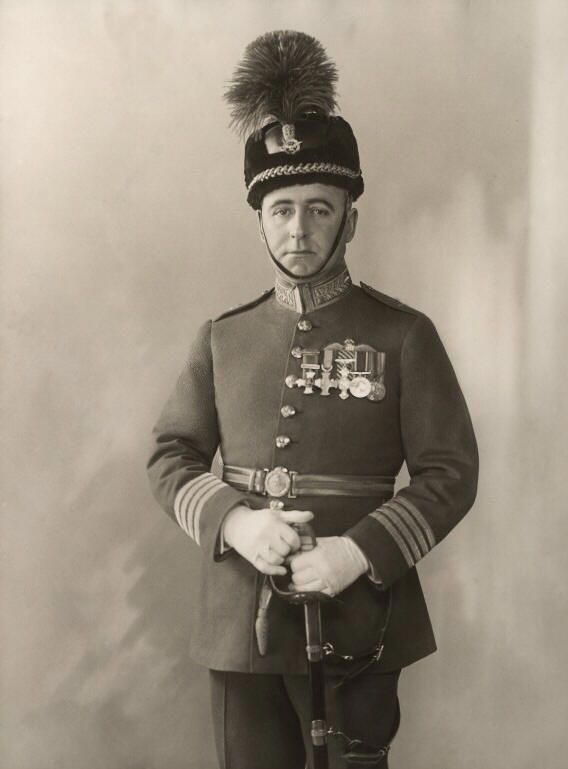
by Bassano Ltd
bromide print, 1933
NPG x85133
bromide print, 1933
NPG x85133
© National Portrait Gallery, London
Air of Authority - A History of RAF Organisation
|
|
|
|
|
|
|
|
|
|
|
|
|
|
|
|
|
|
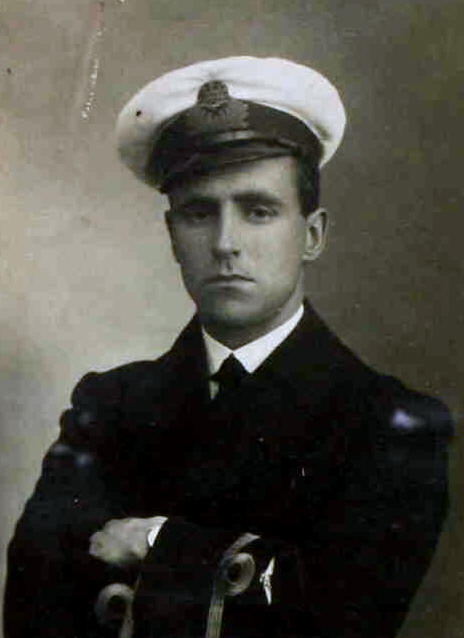
 Robert
b: 16 Apr 1890
r: 6 Apr 1942
d: 1 Apr 1975
Robert
b: 16 Apr 1890
r: 6 Apr 1942
d: 1 Apr 1975
CB
- 2 Jun 1943, DSO - 17 May 1917, DSC -
23 Jun 1917, DFC - 21 Sep 1918,
PR1 - 1 May 1945.
(RN):
- (T) Flt Sub-Lt (P):
6 Dec 1915, (T) Flt Sub Lt:
xx xxx xxxx [6 Dec 1915], Flt
Lt: 30 Jun 1917, Flt Cdr:
31 Dec 1917.
(RAF):
- (T) Capt [Lt]: 1
Apr 1918, (T)
Maj: 8 Aug 1918, Act
Lt Col: 25 Mar 1919, Sqn
Ldr: 1 Aug 1919, Wg Cdr: 1 Jan
1926, Gp Capt: 1 Jan 1933, A/Cdre:
1 Jan 1937, Act AVM: 5 Aug 1941, AVM:
Retained.
(RCAF):
- AM: 1 Jan 1944?
Photo (left) - taken from his RAeC Certificate
Photo (right) -
© National Portrait Gallery, London
xx xxx xxxx: Officer, 1st Central Ontario Regiment
6 Dec 1915: U/T Pilot, RNAS.
xx xxx 1916: Pilot, Felixstowe Air Station
xx Sep 1916: Pilot, Yarmouth Air Station (Curtiss H12)
20
Aug 1918: Officer Commanding, No 228 Sqn. (Curtis H12/Felixstowe F2A – Great
Yarmouth)
25
Mar 1919: Officer Commanding, No 1 Wing, Canadian Air Force.
1 Aug 1919: Awarded Permanent Commission as a Major
31 Aug 1919: Relinquished his commission in the 1st Central Ontario Regiment
15
Dec 1919:
Director of Flying Operations, Air Board, Canada.
27
May 1922: Staff, No 1 School of Technical Training (Boys)
25 Sep 1922: Attended Royal Naval College, Greenwich
5
Jul 1923:
Technical Staff, HQ Coastal Area.
30
Mar 1926: OC Flying, HMS Hermes.
21
Feb 1928: OC Flying, HMS Courageous.
5
Sep 1929: Supernumerary, RAF Bircham Newton.
13
Sep 1929: Officer Commanding, RAF Bircham Newton.
11
Apr 1931: Officer Commanding, No 210 Sqn (Southampton II/Trials
types)
15
Jun 1931: Officer Commanding, No 210 Sqn/RAF Pembroke Dock. (Southampton II/Trials
types)
30
Jan 1933: Supernumerary, RAF Hendon.
1 Mar 1933: Superintendent of RAF Reserve/Officer Commanding, RAF Hendon.
21
Jan 1935: Officer Commanding, RAF Hendon.
21 Aug 1935: Appointed as an additional Air ADC to the King.
1 Jul 1936: Appointed Air ADC to the King.
3
Oct 1936: Director of Training.
2
Dec 1938: AOC, RAF Mediterranean.
xx
xxx 1940: Director of Training, RCAF.
5
Aug 1941: Member of Air Council for Training, RCAF.
6 Apr 1942: Appointed to RCAF.
xx
xxx 1943: Acting Chief of Staff, RCAF
1
Jan 1944:
Chief of Staff, RCAF.
A Scotsman by birth and educated at Glasgow High School, he emigrated to Canada with his parents in 1907 and learnt to fly at the Curtiss School in Toronto in 1915 prior to being commissioned into the RNAS, he gained his RAeC Certificate (No 2923) on 10 May 1916. On 14 May 1917, he shot down Zeppelin L22 whilst flying 'Large America' 8666, the first airship to be destroyed by a flying boat. In 1918, he started the process of 'dazzle' painting the flying boats in his squadron. In September 1917, he was piloting N8666, where he alighted to rescue the crew of a DH4 he was escorting an anti-Zeppelin mission. Unable to take off due to the overloading and sea conditions, he started to taxi towards England. As the weather worsened, they lost a float and were having to take it in turns, bailing and lying on the good wing tip to balance the boat. They were eventually rescued after three days adrift. In May 1918, whilst searching for a missing pilot, Leckie and his co-pilot became the first to cross the North Sea at night in a flying boat. He shot down another Zeppelin, the L70, on 5 August 1918, whilst acting as observer to Major E Cadbury, an achievement for which Cadbury was recommended for the Victoria Cross, but received the DFC instead.
In 1932 he led a return flight from Felixstowe to the Baltic starting on
5 September. Posted to
Canada, once again to assist in the setting up of the British Commonwealth Air
Training Programme, he served on the Air Council of the RCAF from November 1940 until
retirement from the RAF, when he was transferred to the RCAF. He
remained in the RCAF as CAS until 1 Sep
Citation for the award of the Distinguished Service Cross
"Flt. Sub-Lieut. Robert Leckie, R.N.A.S.
In recognition of his services on the night of 3rd to 4th May, 1917, when he dropped bombs on Ostend seaplane base with good results, making two trips.
(London Gazette - 23 Jun 1917)
Citation for the award of the Distinguished Flying Cross
“Capt. (T./Maj.) Egbert Cadbury, D.S.C. (Pilot).
Lieut. (T./Capt.) Robert Leckie, D.S.O., D.S.C. (Observer).
Lieut. Ralph Edmund Keys (Pilot) (Sea Patrol).
These officers attacked and destroyed a large enemy airship which recently attempted a raid on the North-East Coast, and also succeeded in damaging a second airship. The services rendered on this occasion were of the greatest value, and the personal risk was very considerable for aeroplanes a long way out from land.”
(London Gazette – 21 September 1918)
This page was last updated on 16/03/25©
 P de L Le Cheminant