














by Howard Coster
bromide print, 1926
NPG Ax2245
bromide print, 1926
NPG Ax2245
© National Portrait Gallery, London
Air of Authority - A History of RAF Organisation
|
|
|
|
|
|
|
|
|
|
|
|
|
|
|
|
|
|
Air Vice-Marshal Sir Sefton Brancker
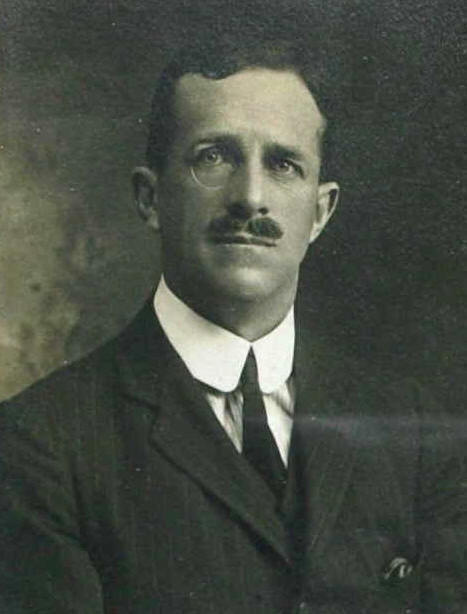
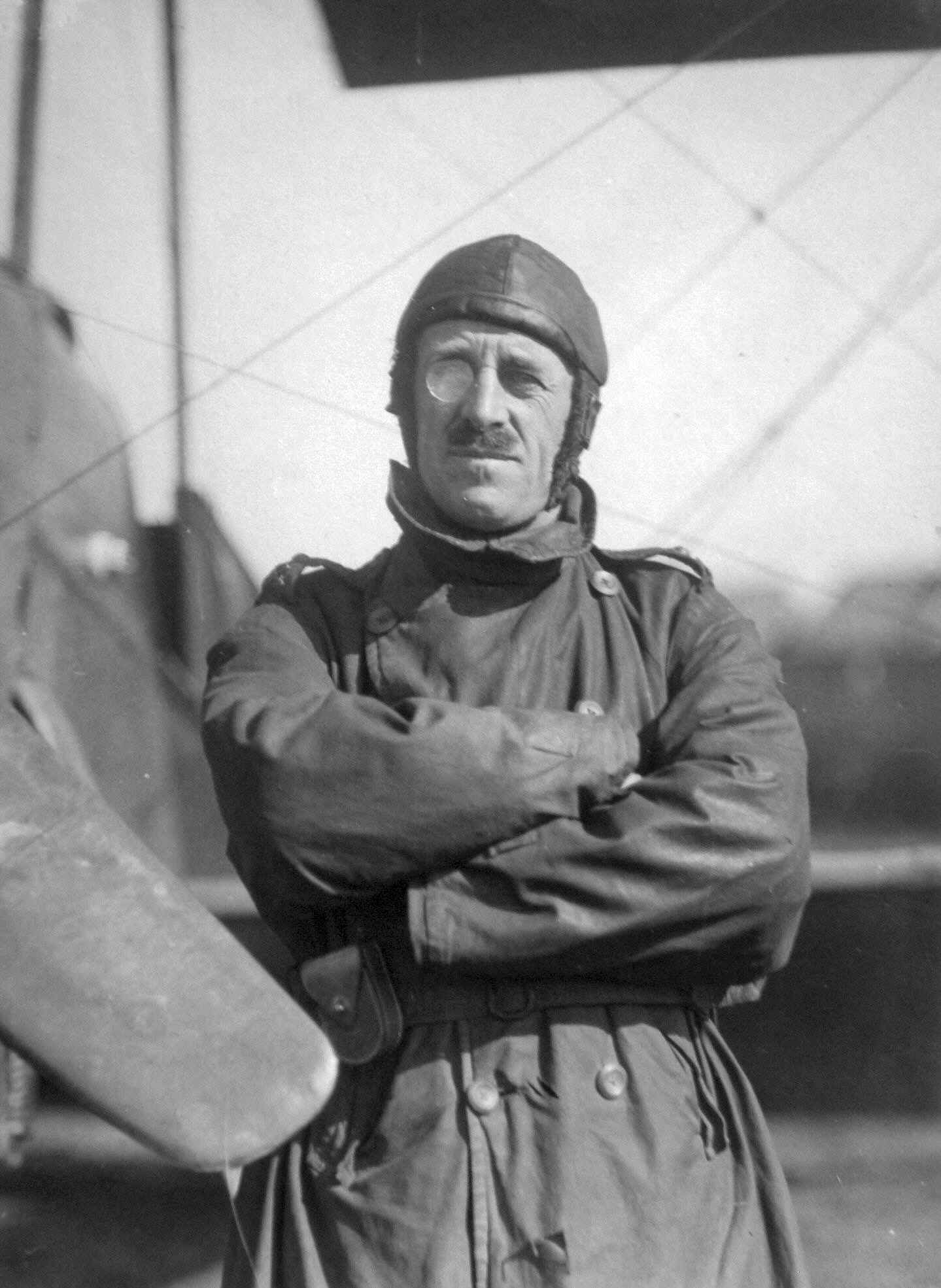
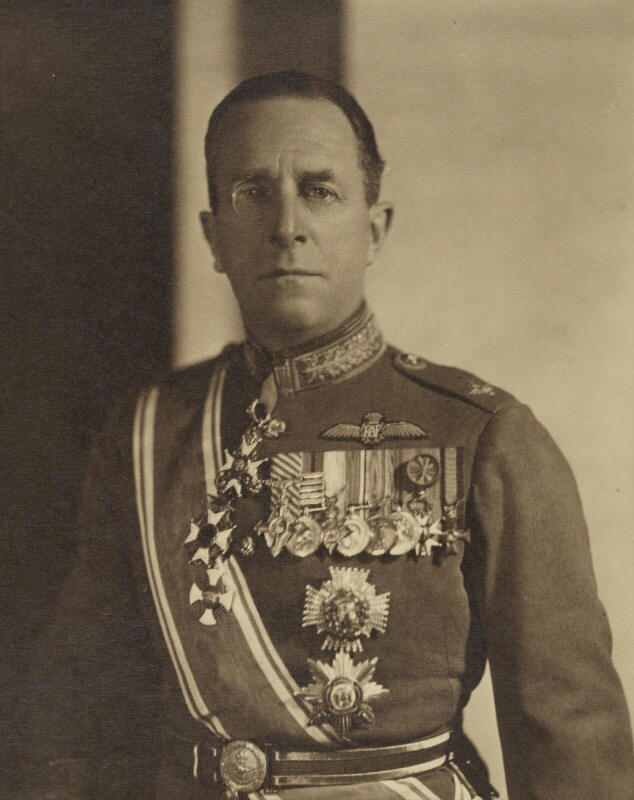 (William) Sefton
b: 22 Mar 1877
r: 13 Jan 1919
d:
5 Oct 1930
KCB
-
1 Jan 1919,
AFC
- 3 Jun 1918,
LoH, O
- 24 Feb 1916,
SV4
- 12 Apr 1916,
Cwn, Cdr
- 8 Nov 1918,
Leo, Cdr
-
15 Jul 1919,
SS1
- xx xxx
xxxx.
(Army): - 2 Lt: 21 Sep 1896, Lt: 21 Sep 1899, Capt: 31 Jan 1902, Maj: 27 Jan 1913, (T) Lt Col: 5 Aug 1914, Bt Lt Col: 18 Jan 1915, (T) Col: 9 Mar 1915, Bt Col: 1 Jan 1917, (T) Brig-Gen: 18 Dec 1915, (T) Maj-Gen: 22 Jun 1917
(RAF): -
Maj-Gen: 3 Jan 1918, AVM:
1 Aug 1919.
Photos -
(left) from his RAeC Certificate - 1913
(centre) during WW1
(right) - Sir William Sefton Brancker
© National Portrait Gallery, London
xx
xxx xxxx: Attended RMA Woolwich
21 Sep 1896: Officer, Royal Field Artillery
31 Aug 1905: Adjutant, Royal Field Artillery
20 Jul 1906: Resigned his appointment as Adjutant
20 Jul 1906: Reverted to establishment of Royal Field Artillery as a Captain.
17 Mar 1908: Brigade Major, Indian Army
xx
xxx 1910: Deputy
Assistant Quartermaster-General, Presidency Brigade.
17 Mar 1912:
3 Mar 1913: Specially employed at War Office
1 Apr 1913: GSO 3nd Class
13 Oct 1913: Assistant Director of Military Aeronautics. (GSO 2nd Class)
5 Aug 1914: Assistant Director of Military Aeronautics. (GSO 1st Class)
13 Oct 1914: Embarked for France
xx
Nov 1914 - xx Dec 1914:
OC (Temporary), RFC in the Field.
5 Feb 1915: Posted to HQ RFC
9
Mar 1915: Deputy Director of Military Aeronautics.
25 Aug 1915: Posted to HQ, 3rd Wing RFC
31
Oct 1915: Officer Commanding, 3rd Wing RFC.
18 Dec 1915: Graded as Brigade Commander
26 Dec 1915: Returned to Home Establishment
26 Feb 1916: Temporary Duty in Paris
27
Mar 1916: Director of Air
Organisation.
xx xxx xxxx: Director of Military Aeronautics.
28
Feb 1917: Deputy Director-General of Military Aeronautics.
19 Oct 1917: GOC, HQ Palestine Brigade
14 Dec 1917: GOC, HQ RFC Middle East
3
Jan 1918:
Comptroller-General of Equipment.
22 Aug 1918: Master-General of Personnel.
23 Aug 1918: Appointed to a Permanent Commission in the RAF
23 Aug 1918: Relinquished his Commission in the Royal Artillery
13 Jan 1919: Retired from the RAF
11
May 1922: Director of Civil Aviation.
During
the South African War from 1899 to 1900 he served in the Orange Free State,
Transvaal, Orange River Colony and Cape Colony, being wounded in action. Whilst serving in India he was responsible for the unloading of aircraft and
equipment of the Bristol and Colonial Aeroplane Co. expedition which arrived in
India to demonstrate the new art of flying.
He was allowed to fly during these demonstrations as an observer and was
soon involved in manoeuvres, which showed him the advantages of aerial
reconnaissance. Whilst working at
the War Office under General David Henderson, he learnt to fly,
Never
a particularly good pilot, he was however, an excellent administrator.
One day as a Major-General he was carrying out a tour of inspection and
made a poor landing at the airfield in question.
Walking away from the aircraft, he was accosted by a junior instructor
who, unable to see his rank badges under his coat admonished him for his poor
performance and ordered him to go up a again and practice.
Brancker promptly did as he was told and only revealed
who he was on his return. Having
given evidence to the Smuts Inquiry he found himself 'demoted' to Acting
Deputy Director-General of Military Aeronautics and then sent to the Middle East
as GOC. However with the passing of
the Air Force Act and the formation of the Air Ministry, Brancker found himself
back in the UK and a member of the newly formed Air Council as
Controller-General of Equipment.
With the cessation of hostilities and the general run-down of the RAF, he
decided to retire with the intention of developing commercial aviation and
together with Brigadier-General Festing he formed Air Transport & Travel.
Appointed Director of Civil Aviation in 1922, he remained dedicated to
the development of civil air routes across the empire utilizing both aircraft
and airships. It was in this
capacity that he found himself on the inaugural flight off the R101 airship from
Cardington to India. Sir Sefton Brancker died shortly after 2am on the
morning of 5 October 1930, when the R101 hit the Beavais Ridge in France and
burst into flames killing 48 crew and passengers (only six survived).
The accident not only destroyed the R101 but also put an end to further
British Airship development.
This page was last updated on 16/03/25©
 F J St G Braithwaite