|
|
|
|
|
|
|
|
|
|
|
|
|
|
|
|
|
|
Air of Authority - A History of RAF Organisation
|
|
|
|
|
|
|
|
|
|
|
|
|
|
|
|
|
|
This section will give brief histories of those ground training units providing technical training: -
Air Armament School, Pembrey
This was formed in March 1940 to train 400 Armourers transferred from the AAS at Eastchurch.
Air Armament School, Porthcawl
This was formed in March 1940 to train 300 Armourers (Boys) transferred from the AAS at Eastchurch.
No 63 Air School
This was formed from on 11 November 1940 at Tempe, as a ground instruction school and absorbed into No 75 AS on 1 December 1940
No 64 Air School
This was formed from the Signals training School and Electrical School, SAAF on 5 February 1941 at Tempe, to train wireless operators. It moved to Lyttelton on 19 September 1945 and disbanded on 20 December 1945
No 65 Air School
This was formed from the Air Armament School, SAAF on 11 November 1940 at Youngsfield. It disbanded on 13 March 1944, becoming the Armament training Section of No 66 AS but reformed as an independent school on 1 June 1943 and disbanded on 10 September 1945
No 66 Air School
This was formed from No 3 CAONBGS, SAAF on 30 April 1941 at Youngsfield, and disbanded on 1 April 1945
No 67 Air School
This was formed from on 11 November 1940 at Zwartkop, as a photography training school and was redesignated No 67 Air Photo Training School in 1946
No 68 Air School
This was formed from No 1 SoTT, SAAF on 11 November 1940 at Voortrekkerhoogte and was redesignated No 68 Air Technical Training School in 1946.
No 69 Air School
This was formed from No 2 SoTT, SAAF on 11 November 1940 at Germiston and disbanded on 1 December 1944, being absorbed into No 68 AS.
No 70 Air School
This was formed from No 3 SoTT, SAAF on 11 November 1940 at Alexandersfontein, Kimberley and disbanded on 13 September 1945.
No 71 Air School
This was formed from No 1 Basic Training Centre, SAAF on 11 November 1940 at Johannesburg, as a basic workshop training school and disbanded on 1 February 1945.
No 72 Air School
This was formed on 11 November 1940 at Kimberley, as a WAAF training school and disbanded on 1 December 1941.
No 72 Air School
It reformed on 1 March 1942 at St George's Park, Port Elizabeth and disbanded on 9 August 1943.
No 73 Air School
This was formed on 11 November 1940 at Wonderboom, as a WAAF technical training school and disbanded on 25 September 1944.
No 77 Air School
This was formed from the WAAF Basic Training Centre, SAAF on 15 July 1942 at Edward Street, Pretoria and was redesignated the WAAF Camp on 30 January 1943.
No 78 Air School
This was formed on 21 March 1942 at Driftsands, Port Elizabeth, as a WAAF training school, but never opened was and disbanded in January 1943.
No 100 Air School
This was formed in March 1941 at Voortrekkerhoogte, as a recruit training school and disbanded 12 February 1944.
Beam Approach Technical Training School
This was formed by October 1942 at Watchfield and on 4 December 1943 it moved from Cranwell to join No 1 Radio School, with the first intake starting on 8 December.
Boy Mechanics Training School
This was formed in June 1918 at Eastchurch and moved to Halton, where it was redesignated as the Boys Training Depot on 9 October 1919
No 3 Boys Training Centre
This was formed from the Boys Training School in August 1918 at Eastchurch under the control of No 1 Group and was redesignated the School of Technical Training (Men) on 18 February 1920
The Boys Training Depot
This was formed from the Fitters Training Establishment (Boys) on 1 July 1918 at Letchworth and disbanded in June 1919
It reformed from the Boy Mechanics Training School on 9 October 1919 at Halton Camp and was redesignated the School of Technical Training (Boys) on 23 December 1919
Boys Training School
This was formed on 10 September 1917 at Halton Camp, moving to Eastchurch in May 1918, where it was redesignated No 3 Boys Training Centre in August 1919
Central Air Traffic Control School
This was formed from the Central Navigation and Control School on 11 February 1963 at Shawbury. Initially under No 25 Group, it was transferred to HQ Support Command on the disbandment of the group. It had originally operated aircraft to allow the trainee controllers to practice their skills but after 4 July 1989 all training became synthetic and is probably still in existence.
Central Trade Test Board
This was formed on 1 July 1922 at Uxbridge, tasked with assessing recruits on entry prior to being allocated to a specific trade and examining tradesmen for reclassification or remustering. It moved to West Drayton on 1 September 1924 and dispersed to Nos 1, 2 and 3 Recruits Depots on 2 September 1939.
It was reconstituted at West Drayton in No 24 Group on 6 November 1939, comprising four travelling boards to carry out the following: -
Reclassification of airmen to LAC.
Re-mustering of airmen.
Examining for inefficiency under paragraph 504 KR and ACI.
Road Traffic Act Tests.
Examining candidates for civilian instructors.
Visiting new schools which be opened at Technical Institutes at intervals to check the method and standard of training.
Examine all recruits at the Recruits Receiving Centres at Uxbridge, Padgate and Cardington.
On 1 February 1941 it was placed under the Directorate of Technical Training for technical administration whilst remaining under No 24 Group for all other administrative purposes.
To simplify its administration, it was transferred to No 26 Group, Bomber Command on 1 May 1944 and it moved to Chigwell on 28 May 1946, continuing to function. It was transferred to No 90 Group on the the disbandment of No 26 Group, but on 1 May 1946 was transferred to Technical Training Command. It was disbanded on 1 January 1951, with its tasks being decentralised to Commands.
ACSEA Central Trade Test Board
A formation date has not been found for this unit but was located at Seletar when it was dis-established on 1 September 1946.
RAF Central Trade Test Board, Canada
A formation date has not been found for this unit but it disbanded 6 March 1945.
Chinook Ground Servicing School
This was formed in No 38 Group on 9 May 1980 at Odiham but its fate is unknown.
Coastal Command Ground Instructors School
This was formed in 1944 at East Fortune under the control of No 17 Group, being transferred to No 18 Group on 1 September 1945 and disbanded on 29 October 1945 into the Coastal Command Instructors' School.
Defence College of Aeronautical Engineering
"The Defence College of Aeronautical Engineering (DCAE) was established on 1 April 2004 as a result of the Defence Training Review (DTR) and is an important step in the migration to a partnered solution for Defence Training
The principal task of the DCAE is to provide a high quality, relevant and up-to-date aeronautical engineering (AE) training to fulfill the needs of tomorrow's front line To that end, the College is exploiting the opportunity to combine the best aspects of the Services' current AE training; such refinement will contribute to the development of Defence Aeronautical Training for the future Concurrently, the DCAE is supporting the development of a partnered solution for Defence Training
Comprised of training establishments across 5 sites, the DCAE
embraces the AE and survival equipment elements of RN training at HMS Sultan
(Gosport), the REME School of Electronic and Aeronautical Engineering at
Arborfield, the RAF No 1 School of Technical Training at Cosford, specialist RAF
Engineering Officer Training at Cranwell and the RAF`s Painter and Finisher
training at St Athan Although the DCAE is a federation of military units, it
is first and foremost a cost-effective business For example, Cosford was one of
the first Defence College sites to become fully accredited to an ISO 9000-2000
quality assurance system and it has now embarked on substantial business
initiatives to secure International Defence Training contracts "
Defence College of Communications and Information Systems
"Formed on 1 April 2004, the Defence College of Communications and Information Systems is one of 6 Defence Training Establishments designed to deliver more coherent, efficient and cost effective training across defence
The College consists of a Headquarters based at Blandford
Camp, the Royal Navy CIS Training Unit at HMS Collingwood, the Royal School of
Signals at Blandford Camp and Number 1 Radio School at DCAE Cosford of which the
Aerial Erector School at RAF Digby is a part The separate schools currently
deliver a wide range of Service specific and generic CIS As a result of the
Defence Training Review plans will be made to co-locate these elements and enter
into a commercial partnership with an industrial consortium, which should see
the delivery of the first genuine 'Defence', rather than single-Service,
training courses Central to the College's vision is the concept of training
development on a joint basis for which, a team has been incorporated into the
Headquarters "
Fighter Command School of Technical Training
This was formed in July 1947 at Wattisham and disbanded in September 1949.
No 1 Glider Servicing School
This was formed on 21 March 1945 at Cardington in No 22 Group but its fate is unknown.
Ground Armament School
This was formed in May 1918 at Eastchurch and disbanded on 14 June 1919.
No 2 Ground Armament School
This was formed with effect from 7 July 1940 from the ground training element of RAF Manby to train ground armourers under the control of No 24 Group. The Demolition course was transferred to No 12 SoTT at Melksham on 12 October 1940. It closed on 21 November 1941 and the training undertaken was transferred to No 10 School of Technical Training. as were the remaining trainees.
Officer Commanding: -
20 Jul 1940 Flt Lt J W Scudder
15 Sep 1940 Wg Cdr A M N David
No 3 Ground Armament School
This was formed with effect from 7 July 1940 by redesignating No 2 Air Armament School on its move from Pembrey to Newton Down (renamed Stormy Down in October 1940) to train ground armourers under the control of No 24 Group. From 16 July it was decided to categorise schools in either 'B' (Bombing) or 'G' (Gunnery) and No 3 (G) AS became a 'G' School. Its trainees were moved to No 10 School of Technical Training, RAF Kirkham on 1 January 1942, and it disbanded on 3 January 1942.
Officer Commanding: -
7 Jul 1940 Sqn Ldr L E Dowse
31 Aug 1940 Sqn Ldr A J Whiting
Ground Controlled Approach Operators School
This was formed in September 1946 at Watton, as part of the CSE, moving to Wyton on 10 March 1952, under the functional and administrative control of CSE, parented by RAF Wyton. It disbanded on 14 March 1953 into the Central Navigation and Control School at Shawbury.
Ground Controlled Approach Training Unit
This was formed as part of the Signals Flying Unit at Honiley but no other details have been found.
No 2 School of Ground Training
This was formed in 1 September 1946 by redesignating No 2 School of Technical Training (India), no further details at present.
No 3 School of Ground Training
This was formed in 1 September 1946 by redesignating the Non-Technical Training Centre (India), no further details at present.
Marine Training Depot
This was formed on 22 September 1918 at Sandbanks, Poole in No 10 Group, to provide training in the handling of marine aircraft. On 1 March 1919 it took control of Gosport from HQ No 8 Group and disbanded on 24 October 1919.
Middle East Armament School
This was formed on 1 May 1943 at Shallufa to provide conversion courses for airmen to Fitter/Armourers (Group 1) and Armourers (Group 2) and disbanded on 9 October 1945.
Middle East Signals School
This was formed on an unknown date at Helwan and disbanded on 15 April 1946.
No 3 Middle East Training School
This was formed on 23 March 1942 at Amman, under the administrative and operational control of AHQ Egypt, to centralise and place under one co-ordinated control the following Units: -
School of Administration
Ground Gunners School
Small Arms School
School of Aircraft Recognition
PAC School
It was taken over by No 203 Group on 10 May 1943 and then transferred to AHQ Levant on 15 August, being disbanded on 15 November 1944.
Polish Air Force Boys' Training School
his was formed at Heliopolis in No 206 Group on 25 March 1944 to provide general education and preliminary training in the Fitter II trade for a total of 200 Polish boys up to the age of 18. It was relocated to the UK and transferred to Technical Training Command on 1 October 1946, but disbanded on 1 November 1946.
Polish Technical Training School
his was formed in July 1942 at Blackpool, moving to Halton in No 24 Group on 30 July 1942, to Locking in September 1944 and finally to Cammeringham on 9 July 1945 and was redesignated No 16 (Polish) SoTT the same day on 9 July 1945.
Radar Approach Control School
This was formed from the GCA School in 1953 at Shawbury and never actually formed at some point.
Radar Operators' School
This was formed on 10 December 1943 at Worth Matravers in No 60 Group to train Radar personnel to operate the Type 9000 Mk III equipment. It was under the operational control of No 60 Group but was administered by No 78 Wing and in order to meet operational target dates introduced 24 hour working. It disbanded on 23 November 1945.
Radio Direction Finding School
This was due to form on 19 January 1940 at Yatesbury but never actually formed.
Radio Direction Finding School
This was formed on an unknown date at Kidbrooke but its fate is unknown.
No 1 Radio Direction Finding School
This was formed from No 1 Radio School on 21 May 1942 at Cranwell and was redesignated No 8 Radio School on 1 January 1943.
Officers Commanding: -
xx xxx xxxx Wg Cdr W E Wendon
21 Dec 1942 Wg Cdr E R Long
No 2 Radio Direction Finding School
This was formed from No 2 Radio School on 21 May 1942 at Yatesbury and was redesignated No 9 Radio School on 1 January 1943.
No 3 Radio Direction Finding School
This was formed from No 3 Radio School on 19 August 1942 at Prestwick, and on 21 October 1942 the ASV course for WOp/AGs was split into two phases, ground and air. The ground phase lasting two weeks was carried out at No 7 Signals School, South Kensington, where the courses for RDF officers and Mechanics were also relocated, before returning to Prestwick for the three week air phase.
It moved to Hooton Park on 1 December 1942 in No 27 Group and was redesignated No 11 Radio School on 1 January 1943.
No 4 Radio Direction Finding School
This was formed at Carew Cheriton on 1 October 1942 in No 27 Group, for 350 pupils, to take over the pre-OTU training of AOp/AGs and AG/WOMs for Coastal Command. It was redesignated No 10 Radio School on 1 January 1943.
No 51 Radio Direction Finding School
This was formed on 1 January 1943 at Bangalore to train Indian personnel and locally recruited British personnel in the use of RDF equipment. Courses and output were as follows: -
| Course | Course Length | Output |
| Signals (RDF) Officers | 3.5 months | 16 per month |
| Ops Room Officers (G) Filterers | 1.5 months | 10 per month |
| RDF Mechanics (G) | 3.5 months | 20 per month |
| RDF Operators (G) | 1.5 months | 50 per month |
| Clerks/SD (F) | 2 weeks | 80 per month |
It was redesignated No 51 Radio School on 20 October 1943.
No 1 Radio School
This was formed on 10 March 1941 at Cranwell in No 26 Group, delivering the following courses: -
Radio Mechanics - Ground
Course of 10 weeks, with an intake of 42 per week up to a peak of 420 pupils. The course was duplicated with training in two shifts, thereby giving a total of 840 under training.
Radio Operators - Ground
RAF Personnel - Courses of 4 weeks, with an intake of 42 per week up to a peak of 168 pupils. The courses were duplicated with training in two shifts, thereby giving a total of 336 under training.
WAAF Personnel - Courses of 4 weeks, with an intake of 27 per week up to a peak of 108 pupils. The courses were duplicated with training in two shifts, thereby giving a total of 216 under training.
Signals Officer (R)
Courses of 8 weeks, for 25 Signals Officers (R), with no overlap, so one intake every 8 weeks.
Filter Room Plotters
Courses of 2 weeks, for 20 WAAF Personnel, with no overlap, so one intake every 2 weeks.
It was transferred to No 27 Group on 26 May 1941 and was redesignated No 1 RDF School on 21 May 1941.
It reformed from No 1 Signals School on 1 January 1943 at Cranwell in No 27 Group. By the end of 1943 the Navigators (W) W/T Long Course had an intake of 75 students per week but tis reduced as follows: -
Six intakes of 50 commencing 10 November 1943
No intakes on 22 or 29 December 1943
Intakes resumed on 5 January 1944 at rate of 60 per week.
This reduced to capacity of the 18 week course from 1,350 to 1,080. On 4 December 1943, it absorbed the Beam Approach Technical Training School from Watchfield.
On 9 October 1950 the detachment of No 1 RS at Locking was amalgamated with the station establishment at Locking to form a new No 1 Radio School. On 1 December 1952 it took over the apprentice training duties of No 6 RS and was transferred to No 24 Group on 15 September 1958. In October 1966 the apprentice training role was transferred to Cosford and in 1989, re-located to Cosford in its entirety, moving into a new purpose built complex on 24 March 1999 and remains part of the Defence School of Communication and Information Systems.
Officers Commanding: -
10 Mar 1941 Wg Cdr W E Wendon
21 May 1941 Redesignated No 1 RDF School
1 Jan 1943 Gp Capt C N Ellen
5 Jan 1943 Gp Capt G P Chamberlain
10 Jun 1943 Gp Capt S L Quinn
xx xxx xxxx Gp Capt G Thripp
30 Aug 1945 Gp Capt N F Simpson
No 2 Radio School
This was formed from the Special Signals School on 1 March 1941 at Yatesbury and was redesignated No 2 RDF School on 21 May 1942.
It reformed from No 2 Signals School on 1 January 1943 at Yatesbury in No 27 Group, being transferred to No 24 Group on 15 September 1958 and disbanded on 31 October 1965.
No 3 Radio School
This was formed from the AI/ASV School on 27 December 1940 at Prestwick in No 26 Group. Initial courses, both of five weeks duration, were
10 x AI plus 30 x ASV operators
23 x AI plus 24 ASV mechanics
It was transferred to No 27 Group on 26 May 1941 and was redesignated No 3 RDF School on 19 August 1942.
It reformed from No 3 Signals School on 1 January 1943 at Compton Bassett in No 27 Group, being transferred to No 24 Group on 15 September 1958 and disbanded on 30 November 1964.
No 4 Radio School
This was formed from No 4 Signals School on 1 January 1943 at Madley in No 27 Group. On 3 September 1946 its capacity was reduced from 870 to 375, comprising 350 RAF and 25 Allied trainees. It moved to Swanton Morley on 5 December 1946. It was transferred to No 21 Group, Flying Training Command, on 1 August 1950 and was redesignated No 1 Air Signallers' School on 1 May 1951.
No 5 Radio School
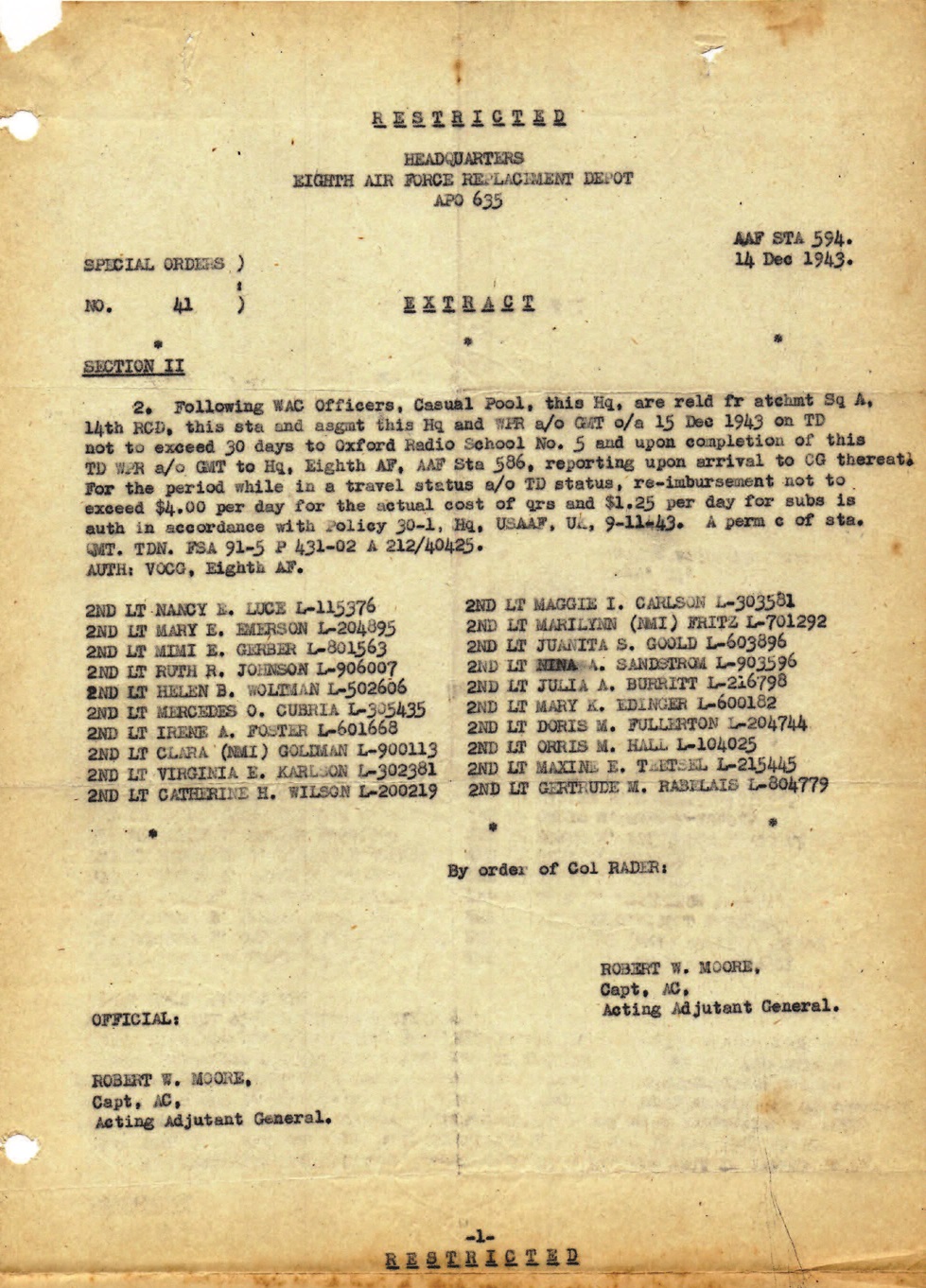
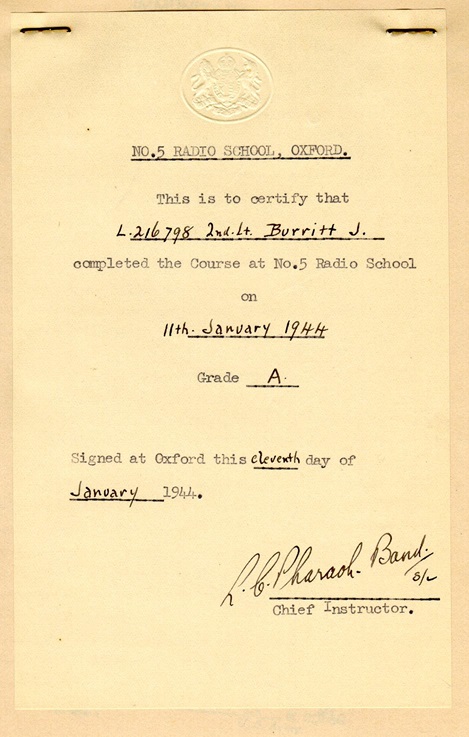
This was formed from the Code and Cypher School on 1 January 1943 at Haddington, Oxford, parented by RAF Abingdon. In September 1943 an outstation was established at the Municipal Homes, Worcester and the training was divided between the two site as follows: -
Oxford - RAF Officers
25 per week from September to December 1943 - Peak 100
American officers - Peak 40
Worcester - RAF NCOs
50 weekly from 2 September 1943 - Peak 200
Worcester - WAAF NCOs
15 weekly from 2 September 1943 to 17 February 1944 - Peak 60
4 every 4 weeks from 24 February 1944
The Worcester element was parented by HQ Unit, No 24 Group. The school moved to Compton Bassett in June 1945 and disbanded on 30 January 1946.
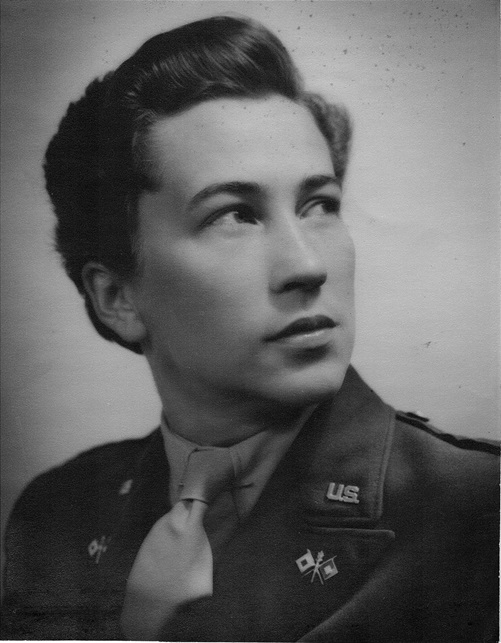
In 1943/1944 it was also training USAAF personnel as the photos below indicate: -
 |
 |
 |
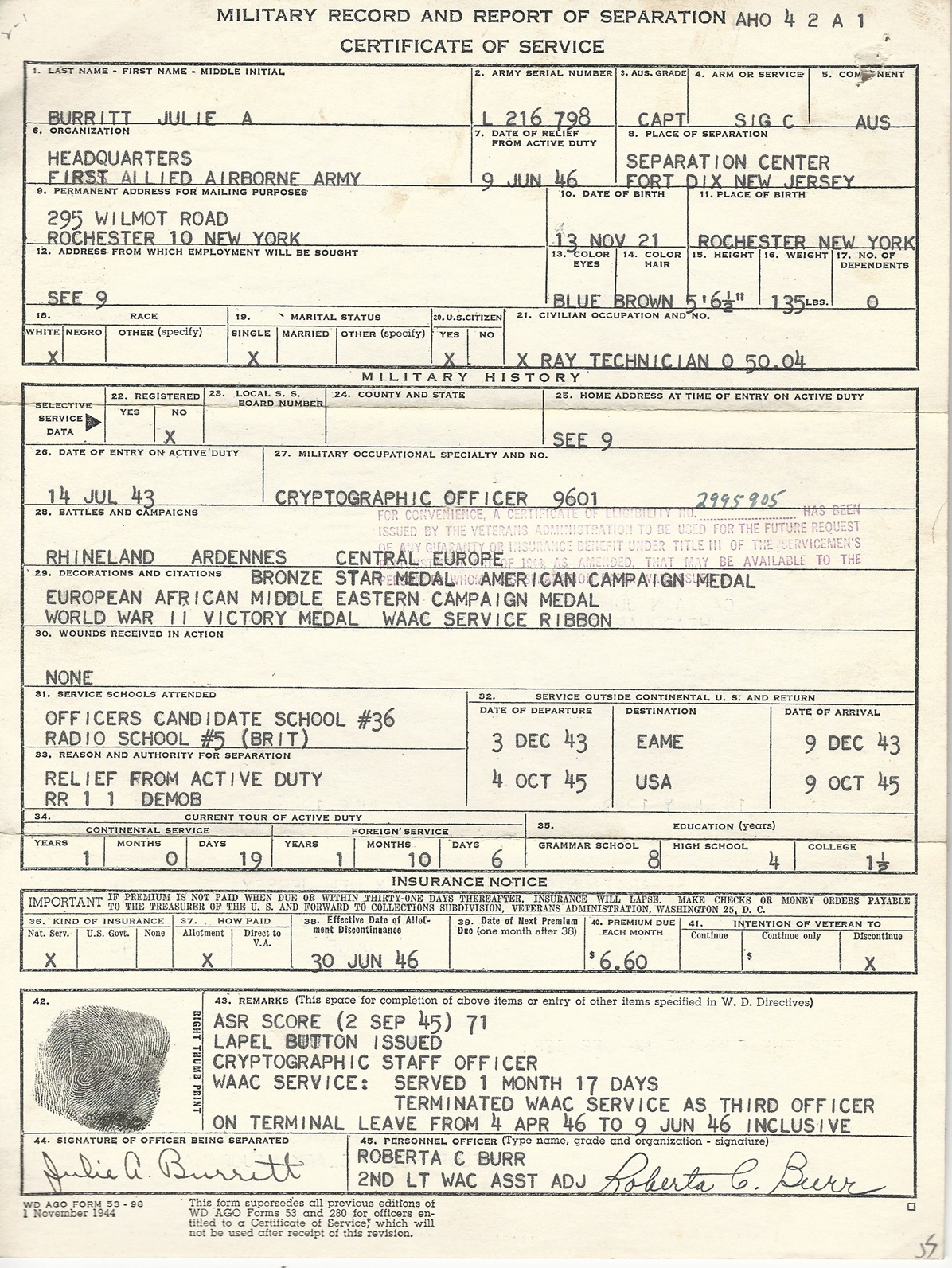 |
| These photographs relating to 2nd Lt Julie A Burritt where provided by her son William B Higinbotham (ex USAF) |
It reformed on 10 October 1946 at Bawdsey in Fighter Command, with a capacity of 128 trainees and disbanded on 20 June 1950.
No 6 Radio School
This was formed from No 6 Signals School on 1 January 1943 at the Municipal Technical College, Bolton and closed on 21 May 1945.
This reformed from the apprentice element of No 1 RS, which remained at Cranwell on 9 October 1950 following the detachment at Locking taking over the title No 1 Radio School. It disbanded on 1 December 1952 into No 1 RS.
No 7 Radio School
This was formed from No 7 Signals School on 1 January 1943 at Albert Court, Prince Consort Road, South Kensington and disbanded on 1 August 1944.
No 8 Radio School
This was formed from No 1 RDF School on 1 January 1943 at Cranwell in No 27 Group and disbanded on 24 June 1946, its commitments being taken over by No 1 Radio School.
Officers Commanding: -
1 Jan 1943 Wg Cdr E R Long
19 Apr 1943 Wg Cdr Kidd
xx xxx xxxx Wg Cdr W A E Featherstone
No 9 Radio School
This was formed from No 2 RDF School on 1 January 1943 at Yatesbury and merged into No 2 RS on 30 January 1946.
No 10 Radio School
This was formed from No 4 RDF School on 1 January 1943 at Carew Cheriton in No 27 Group and disbanded on 13 November 1945.
No 11 Radio School
This was formed from RAF Station Hooton Park on 11 December 1942 at Hooton Park in No 27 Group to provide Anti-Ship Vessel (ASV) radar training and disbanded on 31 August 1944.
No 12 Radio School
This was formed on 1 September 1943 at St Athan in No 27 Group, parented by RAF St Athan. It provided the facilities for combined pre-crewing and ASV training for Wireless Operator/Air Gunners of Coastal Command with a pupil capacity of 30 officers and 270 NCOs. However due to a shortage of suitably equipped Anson, its tasking was changed, as an interim measure, to delivering advanced W/T training, similar to No 10 RS. This commenced on 1 December 1943 with a series of courses, each lasting five weeks, with a total capacity of 225, broken down as follows: -
Intakes
15 pupils commencing 1 December 1943
30 pupils commencing 8 December 1943
45 pupils commencing 15 December 1943 and 45 pupils per week thereafter
It was disbanded on 31 May 1944 and may have reformed as it merged with No 14 RS to form the Empire Radio School on 7 March 1946.
No 13 Radio School
This was formed from No 10 (Signals) Recruit Centre on 16 August 1943 at Blackpool in No 27 Group to conduct initial Wireless Operator Training to airmen who had already completed their course at a Recruit Centre. It disbanded on 31 October 1944.
No 14 Radio School
This was formed on 1 June 1944 at St Athan in No 27 Group, taking over the Signals Leaders' and Air Crew Signals Instructors' Courses from RAF Penrhos with a total capacity of 135, as follows: -
Signals Leaders 50
Signals Instructors 'A' 75
Signals Instructors 'B' 10
It merged with No 12 RS to form the Empire Radio School on 1 March 1946.
No 15 Radio School
This was formed on 26 July 1944 at Cosford in No 27 Group with a pupil population of 420 and disbanded on 30 January 1946, with its personnel being transferred to No 2 Radio School.
No 16 Radio School
This was formed on 30 September 1944 at Beit Dara in No 203 Group to train Radar and Signals Leaders for MAAF and ACSEA with intakes of 20 students every 3 weeks and a course duration of 5 weeks. It disbanded on 15 December 1945.
No 17 Radio School
This was formed from the Wireless Operators (Air) Signals School on 12 July 1944 at Colombo in No 222 Group to provide refresher training to Wireless Operators (Air ) in aircraft W/T and Radar equipment (GR and ASV) and disbanded on 14 June 1945.
No 31 Radio School
This was formed in May 1941 at Clinton, Ontario and disbanded on 14 June 1945.
No 51 Radio School
This was formed from No 51 RDF School on 20 October 1943 at Bangalore, moving to Saharanpur on 12 October 1945 and disbanded on 15 March 1946.
Regional Control School
This was formed on in September 1940 at Mildenhall, moving to Brasenose College, Oxford on 10 May 1941 and was redesignated the School of Flying Control on 17 December 1941.
RAF (Belgian) Technical Training School
This was formed on was transferred to Saffraanberg in Belgium at Snitterfield and in October 1946.
RAF School of Control and Reporting
This was formed on 6 January 1964 at Bawdsey in No 12 Sector and was redesignated the RAF School of Fighter Control on 1 October 1968.
RAF School of Fire Fighting
This was formed from elements of No 8 SoTT (Weeton) and the Safety Equipment Works School on 18 August 1943 at Sutton-on-Hull in No 24 Group. It was transferred to No 22 Group on 7 September1943 and absorbed the Anti-Gas School on 10 August 1947, being redesignated the RAF School of Fire Fighting and Anti-Gas but reverted to its previous title on 9 June 1947. On 15 July 1953 it was redesignated the RAF School of Fire Fighting and Rescue and disbanded on 7 October 1959 with its tasking being transferred to the RAF Regiment Depot at Catterick.
Safety Equipment Workers School
This was formed on 18 November 1942 at Sutton-on-Hull and was absorbed into No 11 SoTT, Hereford on 31 May 1944.
Signals Instructor School
This was formed on 1 December 1942 at Penrhos, moving to St Athan in No 27 Group on 1 June 1944, after which its fate is unknown.
Signals School
These are shown in the Flying Training Section
No 1 Signals School (India)
This was formed on 1 November 1942 at Andheri, Bombay and disbanded on 1 October 1944 with the IAF Wireless Operators' Course being transferred to No 10 SoAFTT.
No 2 Signals School (India)
This was formed on 1 June 1943 at Hakimpet and disbanded on 25 January 1944 into No 10 SoAFTT.
No 3 Signals School (India)
This was formed on 1 June 1943 at Hakimpet to train Electricians and Wireless Operator Mechanics under the control of No 227 Group and disbanded on 7 April 1944 into No 10 SoAFTT.
No 5 Signals School
This was formed on 21 November 1941 at Pale Manor Farm, Malvern in No 27 Group, with training commencing on 28 November, with an intake of 100 for a 10 week course followed by a weekly intake of 100 up to a peak of 1,000.
It closed on 15 May 1942 with the personnel and equipment being transferred to No 7 Signals School.
No 6 Signals School
This was formed on 13 October 1941 at Bolton Technical College in No 27 Group, with an intake of 100 per week for a 10 week course up to a maximum of 1,000. It was redesignated No 6 Radio School on 1 January 1943.
No 7 Signals School
This was formed on 1 January 1942 at Albert Court, Prince Consort Road, South Kensington in No 27 Group. The first intake comprised 40 students but following completion of works services, the intake rate was raised to 65 per week on a 14 weeks course to a peak of 910 students. In order to increase the number of ASV operators for Coastal Command, various course were transferred to the school from No 3 Radio School in late 1942, as follows: -
| Course | Peak | WEF | Notes |
| WOp/AG Ground Phase | 150 | 21 Oct 1942 | Two week course , followed by three week Air Phase at No 3 RDF School, Prestwick |
| RDF Officers | 24 | 18 Nov 1942 | |
| RDF Mechanics (Conversion) | 18 | 30 Sep 1942 | |
| RDF Mechanics (Air) | 80 | 30 Sep 1942 |
It was redesignated No 7 Radio School on 1 January 1943.
Officers Commanding: -
xx xxx xxxx Gp Capt Ridding?
Special Signals School
This was formed at Yatesbury on 18 January 1940 in No 25 Group and was redesignated No 2 Radio School on 1 March 1941.
No 1 Supplementary School of Technical Training
This was formed on 16 October 1939 at Northampton Polytechnic, John Street, Clerkenwell, London and closed on 12 January 1940.
Its training commitment was: -
Wireless operators for conversion to Wireless and Electrical Mechanics (WEM) - 100 per 32 week course
ACH u/t as Instrument Repairers - 50 per 12 week course
Flight mechanics for conversion to Fitter IIEs - 50 per 18 week course
It reformed from No 1 Aircraft Assembly Unit on 31 March 1941 at Speke in No 20 Group, to provide training to Service personnel (40 trainees every 2 weeks) in the assembly and maintenance of US aircraft and closed on 5 May 1941.
No 2 Supplementary School of Technical Training
This was formed on 16 October 1939 at The Polytechnic, Regent Street, London and closed on 12 January 1940.
Its training commitment was: -
Armourers for conversion to Fitter Armourers - 50 per 31 week course
Electrician for conversion to Wireless and Electrical Mechanics (WEM) - 75 per 35 week course
Wireless operators for conversion to Wireless and Electrical Mechanics (WEM) - 75 per 32 week course
It reformed on 31 March 1941 at Colerne, to provide training to Service personnel (30 trainees every 2 weeks) in the assembly and maintenance of US aircraft and closed on 5 May 1941.
No 3 Supplementary School of Technical Training
This was formed on 31 March 1941 at Burtonwood in No 20 Group, to provide training to civilian personnel (50 trainees every 2 weeks) in the assembly and maintenance of US aircraft. Training commenced on 2 June 1941 with an initial intake of 50 rising to 200 but it was redesignated No 21 SoTT on 7 June 1941.
No 1 Supplementary School of Wireless Telegraphy
This was formed in September 1939 at Hamble, operated by Air Service Training Ltd to accommodate 480 trainees. Control was transferred from the Air Ministry to HQ Reserve Command on 30 October 1939, then to No 50 Group until 6 July 1940 when it was transferred to No 26 Group and it closed on 10 February 1941.
No 2 Supplementary School of Wireless Telegraphy
This was formed in September 1939 at Prestwick to accommodate 480 trainees. Control was transferred from the Air Ministry to HQ Reserve Command on 30 October 1939, then to No 50 Group until 6 July 1940 when it was transferred to No 26 Group and it closed on 15 October 1940.
No 3 Supplementary School of Wireless Telegraphy
This was ordered to form on 25 September 1939 at Waltham Cross to accommodate 400 trainees, but changed to White Waltham as the property at Theobald's Park was found unsuitable and then cancelled.
No 4 Supplementary School of Wireless Telegraphy
This was ordered to form on 25 September 1939 at White Waltham to accommodate 400/500 trainees, but was designated No 3 Supplementary School of Wireless Telegraphy on 11 October 1939 with the cancellation of the original 3 SSWT at Waltham Cross.
No 1 Technical School (American Aircraft)
This was formed on 1 December 1941 at Ismailia to train personnel in the maintenance of American aircraft with a peak capacity of 120 trainees, it disbanded in July 1943.
School of Technical Training (Boys)
This was formed from The Boys' Training Depot on 23 December 1919 at Halton and was redesignated No 1 School of Technical Training on 16 March 1920.
School of Technical Training (Men)
This was formed by amalgamating a number of training units from around the country on 8 February 1917 at Coley Park, Reading, moving to Halton on 10 September 1917 and disbanded on 5 December 1919 into The Boys' Training Depot.
It reformed from No 3 Boys Training Squadron on 8 February 1917 at Eastchurch, moving to Manston on 16 March 1920 and was redesignated No 3 SoTT on 5 December 1919.
Miscellaneous Technical Training Unit
This appears to have existed at Henlow in No 24 Group by December 1939 and was probably absorbed into No 14 SoTT.
No 1 School of Technical Training
This was formed in September 1918 as the School of Technical Training at Halton Camp. It was renamed the School of Technical Training (Boys) on 23 December 1919 and then No 1 SoTT (Boys) on 16 March 1920, before being renamed, again, as No 1 SoTT (Apprentices) between 1925 and 1929. From 1920 No 1 SoTT was control by HQ RAF Halton, which at that time held Command status but when Training Command was formed RAF Halton was reduced to Group status within the new Command, with No 1 SoTT being transferred to Training Command on 9 July 1936.
The Fitter AE and Metal Rigger to Fitter I Conversion course was transferred from No 13 MU, Henlow on 3 April 1939 with training commencing on 19 April and the Fitter II to Fitter I Conversion Course commenced on 28 April 1939.
On 2 March 1940 its training functions were revised as follows: -
Aircraft Apprentices for Fitters and Fitter Armourers
Airmen for Fitter Armourers
Conversion from Armourer to Fitter Armourer
Cooks and Butchers
Medical Orderlies
With the splitting of Training Command into Flying Training and Technical Training Commands on 27 May 1940, No 1 SoTT was transferred to No 20 Group under the control of the latter. On 10 December 1942 it was transferred to No 24 Group. It continued training apprentices after WW2 and on 1 June 1968 reverted to the control of Training Command, which had reformed by merging Flying Training and Technical Training Commands. As the Command structure of the RAF changed it found itself transferred to RAF Support Command on 13 June 1977 and then to Personnel and Training Command on 1 April 1994. In the same year the traditional RAF Apprenticeship Scheme ended and No 1 SoTT became a 'Phase 2' technical training centre for airmen but on 24 November 1994 it moved to RAF Cosford, bringing technical training at Halton to an end and was absorbed into the Defence College of Aeronautical Engineering on 1 April 2004.
1920 - 1936 Commandant was the same as AOC, RAF Halton (See Command section)
4 Sep 1936: A/Cdre G R M Reid
17 Aug 1938: A/Cdre G B Dacre
xx xxx 1939: AVM Sir Oliver Swann (Ret'd)
xx xxx 1940: A/Cdre G B Dacre
xx xxx 1942
A/Cdre H G White
xx xxx 1946
A/Cdre J F Titmas
xx xxx 1949
A/Cdre N Carter
xx xxx 1951
A/Cdre J G Elton
xx xxx 1952
A/Cdre J G W Weston
xx xxx 1954
A/Cdre G N E Tindal-Carill-Worsley
xx xxx 1956
A/Cdre E D McK Nelson
xx xxx 1958
A/Cdre T N Coslett
xx xxx 1961
A/Cdre B Robinson
xx xxx 1963
A/Cdre D M Strong
xx xxx 1966
A/Cdre A C Deere
xx xxx 1967 A/Cdre H P Connelly
xx xxx 1968
A/Cdre R H G Weighill
28 Apr 1973 A/Cdre B Hamilton
5 Jun 1975
A/Cdre M P Stanton
31 Oct 1977 Gp Capt J P Downes
19 Nov 1979 Gp Capt O J Truelove
xx xxx 1981
Gp Capt M J Evans
xx xxx 1983
Gp Capt S P Rarsons
24 Sep 1984 Gp Capt R H Kyle
xx xxx 1986
Gp Capt S M Williamson-Noble
xx xxx 1988
Gp Capt I R Blunt
xx xxx 1991
Gp Capt R Brumpton
xx xxx 1993 Gp Capt G O Burton
| Standards |
| 1st - 25 July 1952 HM Queen Elizabeth II 2nd - 6 April 1968 HRH The Princess Margaret 3rd - 25 September 1990 HRH The Duke of Kent |
No 2 School of Technical Training
This was formed from the Boys Training Wing on 16 March 1920 at Cranwell, as No 2 SoTT (Boys) and was redesignated the Boys Wing, Cranwell on in April 1921.
It reformed on 15 July 1938 at Cosford in No 24 Group, as No 2 SoTT (Apprentices). By October 1938 the organisation comprised No 1 (Aircraft Apprentice) Wing and No 3 (Airmen's) Wing, with No 2 (Aircraft Apprentice) Wing opening in January 1939. On 2 March 1940 it began conversion courses for Flight Mechanics and Flight Riggers to Fitters IIE and A and took over the Officers' Engineering Course. By April 1941 it had been transferred to No 20 Group but was back in No 24 Group on 10 December 1942 and was redesignated No 1 SoTT on 24 November 1994.
Officers Commanding: -
21 Jul 1938 Gp Capt W J Y Guilfoyle
18 Oct 1939 Gp Capt C B Dalison
16 Mar 1959 Gp Capt A W Caswell
30 Oct 1961 Gp Capt L H Moulton
20 May 1963 Gp Capt C S Thomas
22 Nov 1965 Gp Capt H Durkin
xx xxx xxxx
6 Apr 1970 Gp Capt W M Smedley
xx xxx xxxx
xx Jan 1975 Gp Capt A Thirkettle
23 Aug 1976 Gp Capt R L Smith
7 Aug 1978 Gp Capt D G Campbell
13 Oct 1980 Gp Capt W F Mullen
27 Sep 1982 Gp Capt T J Morgan
No 3 School of Technical Training
This was formed from the School of Technical Training (Men) on 1 July 1935 at Manston, but being so close to the East Coast its courses were was dispersed on 4-5 September 1939, with fabric workers and parachute packers moving to No 5 SoTT at Locking and MT drivers to No 4 SoTT at St Athan. It disbanded on 13 September 1939.
It reformed on 20 October 1939, under the control of No 24 Group, at Deacons Bank Chambers, Talbot Square, Blackpool, until at least June 1940. It was planned that the school should train 3,500 Flight Mechanics or Flight Riggers and 500 Drivers Petrol. The latter course would be transferred from No 4 SoTT at St Athan, whilst the Flight Mechanics/Flight Riggers would be accepted at a rate of 190 per week up to the maximum of 3,500. The courses were run in various locations around the town, including at Squires Gate. The MT Drivers' courses commenced on 11 November whilst the Flight Mechanic/Flight Riggers' courses commenced on 24 November. It disbanded on 31 August 1944.
It reformed on 1 May 1959 at Hereford in No 22 Group, being transferred to No 24 Group on 1 May 1958, then to HQ Training Command on 29 December 1973 and disbanded on 17 May 1974.
No 4 School of Technical Training
This was formed on 1 September 1938 at St Athan in No 24 Group, as No 4 SoTT (Men).
On 2 March 1940 its training functions were revised as follows: -
Flight Mechanics and Flight Riggers
It became part of the Defence College of Technical Training in October 2012 and continues to train all non-aircraft engineering technicians.
No 5 School of Technical Training
This was formed on 1 January 1939, with the transfer of No 4 (Training) Wing, No 13 MU from Henlow to train flight mechanics and flight riggers.
It disbanded on 15 May 1950, with the Boy Entrants being transferred to No 2 SoTT, Cosford and the Engineer Officers to the Engineering Division, RAF Technical College, Henlow.
It reformed on 1 March 1967 at Coningsby in No 24 Group, to train ground personnel on the Phantom. It was transferred from Training Command to Air Support Command on 15 June 1968 and was redesignated No 3 Squadron, No 228 OCU on 1 August 1968.
No 6 School of Technical Training
This was formed on 14 March 1939 at Hednesford in No 24 Group. In August 1939 a fourth Wing was opened to accommodate 1,000 airmen for Fitter II training. No 5 Wing for flight mechanics and flight riggers commenced training on 12 April 1939 and the direct entry Fitter to Fitter II(A) Conversion Course commenced on 14 April.
It was transferred to No 20 Group on 1 December 1939 but back to No 24 Group in 1942. On 1 December 1946 it took over the task of the RAF School of Explosives and disbanded on 9 August 1948.
No 7 School of Technical Training
This was formed on 4 June 1940 at Innsworth in No 24 Group. It was transferred to No 20 Group on 13 November 1942 and disbanded in June 1944.
It reformed on 1 August 1959 at Kirton-in-Lindsey in No 22 Group and disbanded on 26 February 1965.
No 8 School of Technical Training
This was formed on 21 May 1940 at Weeton in No 20 Group. Courses of five weeks duration for motor-cyclists commenced on 10 June 1940 with an initial intake of 40 trainees and then 20 per week up to a maximum of 100.
It was transferred to No 24 Group on 1 December 1942 and on 18 August 1943 the fire fighting courses were transferred to the RAF School Fire Fighting at Sutton-on-Hull. It disbanded on 30 September 1965.
No 9 School of Technical Training
This was formed on 28 December 1939 at Morecombe to train 2,500 Flight Mechanics and Flight Riggers with an intake rate of 105 per week (60 x Flight Mechanics, 45 x Flight Riggers) up to maximum of 2,500.
Initially it was administered by No 24 Group until the formation of No 20 Group and it disbanded on 17 May 1942.
It reformed on 1 December 1959 at Newton in No 24 Group. It was transferred to HQ Training Command on 29 December 1973 and disbanded on 17 May 1974.
Officers Commanding: -
28 Dec 1939 Gp Capt C R Cox
5 Jan 1940 Gp Capt W V Strugnell
No 10 School of Technical Training
This was formed on 25 May 1940 at Kirkham in No 20 Group and disbanded on 10 November 1958.
No 11 School of Technical Training
This was formed on 1 July 1940 at Hereford in No 24 Group and disbanded on 30 September 1945.
It reformed on 8 October 1945 at Hednesford in No 24 Group with a capacity of 1,620 and disbanded on 31 August 1947.
No 12 School of Technical Training
This was formed on 24 June 1940 at Melksham in No 24 Group, with training commencing on 1 August 1940 and it disbanded on 26 February 1965.
No 13 School of Technical Training
This was formed from No 2 Electricians Wing on 6 September 1940 at Henlow and was redesignated No 14 SoTT on 28 August 1940 to prevent confusion with No 13 MU, also at Henlow.
No 14 School of Technical Training
This was formed from No 13 SoTT on 28 August 1940 at Henlow and disbanded on 28 August 1944.
It reformed on 1 June 1945 at Henlow in No 24 Group as No 14 (Polish) SoTT with a capacity of 2,600 and disbanded on 1 September 1948.
It reformed on 1 August 1951 at Henlow in No 24 Group and disbanded on 9 June 1952.
No 15 School of Technical Training
This was formed from the School of Explosives Inspection on 1 October 1948 at North Coates in No 24 Group and disbanded on 13 September 1953.
No 16 (Polish) School of Technical Training
This was formed from the Polish Technical Training School (Locking) on 9 July 1945 at Ingham and disbanded on 7 December 1946.
No 21 School of Technical Training
This was formed from No 3 Supplementary School of Technical Training on 7 July 1941 at Burtonwood in No 24 Group. On 11 July 1942 parenting responsibilities for the school were transferred from No 37 MU to RAF Padgate. It had been transferred to No 20 Group by the time it disbanded on 1 May 1943.
It was reformed on 15 October 1943 at Burtonwood in No 24 Group by amalgamating the various Manufacturers' courses carried out at Burtonwood School, Burtonwood Repair Depot into a single unit. On 14 November 1945 its capacity was reduced from 525 to 50 and it disbanded on 16 April 1946.
No 1 School of Air Force Technical Training (India)
This was formed on 1 November 1939 at Ambala, to train the following: -
British personnel required to fill the existing vacancies in the Air Force establishments
Indian (including statutory Indians) personnel required to fill the existing vacancies in the Indian Air Force establishments, including the IAFVR
Existing apprentices transferred from the IAF Apprentice Training School, Karachi
It was placed in No 223 Group, possibly on 1 February 1943 but by January 1944 was under No 227 Group and disbanded on 15 November 1945.
No 2 School of Air Force Technical Training (India)
This was formed on 1 April 1940 at Drigh Road but its fate is unknown.
It reformed on 22 June 1943 at Secunderabad, later coming under No 227 Group. In September 1944 two new course were introduced: -
IAF Technical NCOs Technical, Administrative and Disciplinary Course.
To impart to all IAF NCOs of Group I and III a sound knowledge of Technical Administration to enable them to perform their duties as Technical NCOs in an efficient manner. One course was held for WOs and SNCOs and another for Junior NCOs. The courses were held alternatively, each of 3 weeks duration with an intake of approximately 10 per course.
Technical Instructors Course
To provide a steady flow of trained instructors in airframe, engine and ancillary trades to meet the requirements of Nos 2, 4, 5 7 and 8 SoTTs. The courses for all trades (RAF and IAF) were of eight weeks duration withintakes and populations as follows: -
| Trade | Intake | Frequency | Pupil Population |
| Fitter IIA | 6 | 4 weeks | 12 |
| Fitter IIE | 6 | 4 weeks | 12 |
| Carpenter | 5 | 8 weeks | 5 |
| Metal Worker | 5 | 8 weeks | 5 |
| Metal Worker | 5 | 8 weeks | 5 |
It was redesignated No 2 School of Ground Training on 1 September 1946.
No 3 (Civil) School of Technical Training (India)
The RAF Section of this school was formed on 2 January 1943 at Sidpur in No 227 Group and disbanded following completion of its final FME course on 11 March 1944.
No 4 (Civil) School of Technical Training (India)/School of Air Force Technical Training
This was formed on 3 February 1943 at Guindy in No 227 Group, as No 4 (Civilian) SoTT, being redesignated No 4 SoAFTT on 12 February 1944 in No 225 Group to train FMEs for the IAF, and disbanded on 1 February 1945.
No 5 School of Technical Training (India)//School of Air Force Technical Training
This was formed on 25 March 1943 at Jamnagar in No 227 Group, as No 5 (Civilian) SoTT, to train FMEs for the IAF, being redesignated No 5 SoAFTT, on 1 May 1944 and disbanded on 1 February 1945.
No 6 (Civil) School of Technical Training (India)
The RAF Section of this school was formed on 15 May 1943 at Juhu, Bombay in No 227 Group and disbanded following completion of its final FME course on 4 March 1944.
No 7 School of Technical Training (India)/School of Air Force Technical Training
This was formed on 10 August 1943 at Quetta in No 227 Group to provide: -
conversion training for RAF airmen
initial and disciplinary training of Anglo-Indian and domiciled Europeans in certain trades
It was transferred to No 223 Group on 1 February 1944. By February 1944 it had been redesignated No 7 SoAFTT and disbanded on 1 November 1945.
No 8 School of Air Force Technical Training (India)
This was formed on 14 February 1944 at Saharanpur in No 223 Group to train FMEs for the IAF, but lost it independence on 15 December 1944 when it became a section on the establishment of RAF Saharanpur. It disbanded on 7 May 1945, however it was shown as being located at Barrackpore in August 1945.
No 9 School of Air Force Technical Training (India)
This was formed on 20 August 1943 at Mana, Raipur under the operational control of AHQ India and administrative control of No 227 Group. It was responsible for training Flight Mechanics (Engines) and Flight Mechanics (Airframe) for the Indian Air Force and disbanded on 30 April 1944.
No 10 School of Air Force Technical Training (India)
This was formed from No 2 Signals School on 25 January 1944 at Hakimpet in No 227 Group to train Electricians Groups 1 and 2 and Charging Board Operators. It disbanded on 1 January 1946 on being absorbed as a Section of SHQ Kandy.
No 11 School of Air Force Technical Training (India)
This was formed on 24 September 1943 at Grubbs Island, Cochin in No 227 Group, to train Indian Air Force personnel as Motor Boat Crew. It was transferred to No 225 Group in September 1943 and disbanded on 30 September 1945.
No 12 School of Air Force Technical Training (India)
This was formed from the Balloon Training Centre on 28 October 1943 at Baroda in No 227 Group. From 1 August 1944, the course provided were: -
Initial course of training for Balloon Operators (IOR) - Group III
Course sin the waterproofing of MT Vehicles for MT personnel (BOR).
Courses of training for Driver MT, Fitter MT and MT Mechanic personnel.
Courses of training for Safety Equipment Assistants and Safety Equipment Workers.
MT Courses of Officers
Safety Equipment Courses for Officers and Instructors.
Conversion Courses: -
Safety Equipment Assistant to Safety Equipment Worker
Safety Equipment Assistant (Group V) to Safety Equipment Assistant (Group III) (duration - 5 weeks, Intake - 10 per month)
Fabric Worker to Safety Equipment Assistant
Redundant trades to Safety Equipment Worker
Balloon Course for IAF Officers (4 weeks duration) - added in September 1944
Balloon training ceased on 30 December1944.
It disbanded on 2 July 1945.
No 13 School of Air Force Technical Training (India)
This was formed on 20 November 1943 at Calcutta in No 226 Group, administered by No 329 MU. Its task was to train RAF MT personnel in the waterproofing of MT vehicles and disbanded on 7 May 1944 into No 12 SoTT.
No 14 School of Technical Training (India)
This was formed from the Drivers MT School on 1 May 1944 at Secunderabad in No 227 Group, its functions being: -
to train IAF airmen in Waterproofing of MT Vehicles and as Drivers MT and Motor Cyclists
to train RAF and IAF airmen in Refueller operations.
In early 1945 the Refueller Operators' Course was discontinued and a Motor Cyclist Instructors' Course was introduced.
It disbanded on 1 September 1946.
No 15 School of Air Force Technical Training (India)
This was formed on 1 January 1945 at Barrackpore in No 230 Group, its function being: -
To train operational aircrews (RAF) in the care and handling of American equipment installed in Liberator aircraft.
To train ground crew (USAAF and RAF) in the maintenance and testing of American equipment in Liberator aircraft.
It was transferred to No 228 Group on 28 May 1945 and moved to Bishnapur on 8 June 1945 and disbanded on 15 October 1945.
School of Torpedo Maintenance
This formed at Carlisle from the Fitter Torpedo Training School at Abbotsinch on 8 June 1942. It was placed in No 20 Group, as a 'Lodger Unit' to No 14 MU, with the first course (Fitter, Torpedo) commencing on 24 June 1942. Courses were of 4 weeks duration with a weekly intake of 10 trainees to a peak of 40. It moved to Hereford on 11 September 1942 in No 24 Group, where it was administered by No 11 SoTT and had disbanded by January 1943.
WAAF Signals School, Worcester
This opened in Worcester on 12 June 1940, administered by the RAF Unit, Worcester to train WAAF Telephone Operators on courses of two weeks duration with a capacity of 50 per course. Its fate is unknown.
Ab Initio training of Radio and Wireless Mechanics
In early 1941 it was decided to introduce course for Radio and Wireless Mechanic at a number of civilian Technical Colleges under the technical control of Technical Training Command, although trainees were under the administrative control of the parent units as shown below: -
| Institute | Address | Parented by |
| Northern Polytechnic | Holloway Road, London, NW | No 3 Balloon Centre |
| Woolwich Polytechnic | London, SE | No 1 Balloon Centre |
| South East London Technical Institute | Lewisham, SE | No 1 Balloon Centre |
| South East Technical Institute | Dagenham | No 4 Balloon Centre |
| South West Technical Institute | Walthamstow | No 4 Balloon Centre |
| Birmingham Central Technical College* | Birmingham | No 6 Balloon Centre |
| Wolverhampton Municipal Technical College | Wolverhampton | RAF Cosford |
| Hull Municipal Technical College | Hull | No 17 Balloon Centre |
*Training capacity was increased to 300 in April 1941
This entry was last updated on 30/08/26