|
|
|
|
|
|
|
|
|
|
|
|
|
|
|
|
|
|
Air of Authority - A History of RAF Organisation
|
|
|
|
|
|
|
|
|
|
|
|
|
|
|
|
|
|
Air Ministry Orders relating to Uniform Changes, etc
Good Conduct Badges - Chevrons
From the date of this order the wearing of chevrons to denote the award of Good Conduct Badges by airmen of the substantive ranks of corporal and above ceased. However, Warrant Officers 2nd Class and NCOs remained eligible for the award of badges and continued to receive the allowances they carried.
Source - Air Ministry Weekly Order 298/1922 dated 20 April 1922.
Wearing of Parachutes in Bomber Transport Aircraft.
1. When the total number of occupants of a Victoria aircraft, including the pilots and crew, is five or less, parachutes are to be worn except when it is proceeding to collect passengers the number of whom will make the total number of occupants exceed five.
When the number of personnel in the aircraft exceeds five, parachutes will not be carried, except when the following duties are being carried out -
Test flights.
Live and practice bombing.
Operational bombing or reconnaissance, when parachutes are to be worn by all on board.
A test flight is defined as one the object of which is to test any component part of the aircraft, the complete or partial failure of which will affect the airworthiness of the aircraft.
Source - Air Ministry Order A136/1932 dated 19 May 1932.
Bandsmen's Caps - Distinguishing Badges
To distinguish the warrant officers and NCOs of the Royal Air Force Central Band and Cranwell Band from the airmen when the personnel are wearing capes with full-dress uniform, distinguishing badges have been introduced as follows -
Corporal - Two rows of gold lace, ¼ in. wide, on the peak of the cap.
Sergeant and flight sergeant - Three, rows of gold lace, ¼ in. wide, on the peak of the cap.
Warrant officer - One row of gold lace, ½ in, wide, on the peak of the cap.
The caps of airmen below the rank of corporal remain unchanged, i.e, with one row of gold lace, ¼ in, wide, on the peak.
Source - Air Ministry Order A165/1932 dated 23 June 1932.
Badges, Collar - Airmen of the Medical Branch - Introduction of New Pattern
Badges, collar, medical (Stores Ref 22H/141), as at present worn by airmen of the medical branch, are hereby declared obsolete.
From the date of this order, a gilding metal collar badge (Stores Ref. 22H/302) consisting of a winged Caduceus of Mercury, surmounted by a crown, is to be regarded as the authorised pattern.
The following table states the manner in which the badges are to be worn,
| Rank |
Position on Collar. One badge on each side. |
|
| Service Dress, Blue Jacket. | Service Dress Tropical, Frock. | |
| Sergeant-major, 1st class, | The bottom of the badge to be one inch above the inner end of the step opening. The staff of the badge to be parallel to the inside (rolled) edge, and midway between the inside (rolled) edge, and the outside edge of the collar. | As for service dress jacket blue |
| Sergeant-major, 2nd class to sergeant. | As for sergeant-major, 1st class | As for corporal, and below, service dress jacket, blue. |
| Corporal and below | The staff of the badge to be one and a half inches from the inner border of the collar and to be parallel to that border. The badge to be midway between the upper and bottom borders of the collar. | As for service dress jacket blue |
A free issue of four badges of the new pattern (Stores Ref. 22H/302) for each airman of the medical branch is authorised, and is to be made without delay. Demands for badges to complete this scale of issue are to be forwarded to No 1 Stores Depot.
Airmen may retain their badges of old pattern, but they are not to wear them after the issue of the new pattern has been completed.
Stocks of badges of old pattern are to be reduced to produce.
The necessary amendments to AP 880, Vol III, and AP 1086 will he made in due course.
Source - Air Ministry Order A193/1932 dated 21 July 1932.
Amended - AMO A95/1933 dated 30 March 1933.
Service and Mess Dress Caps - Air Officers and Group Captains
The mess dress cap of Venetian cloth described in AP 1358, Dress Regulations for Officers of the Royal Air Force, Part II, Section I (C) para. 1 and (F) para. 1, is abolished for officers of air rank and for group captain.
The mess dress cap, as at present is retained for all other officers.
The service dress cap for air officers and group captains will be worn, in future, with the peak previously authorised for the mess dress cap. (see Plate VII, and Part II Section III (A) para. 1 (ii), of AP 1358).
The service dress cap with the embroidered peak will be worn by air officers and group captains with both service dress and mess dress.
The necessary amendments to AP 1358 will be promulgated in due course.
Source - Air Ministry Order A355/1932 dated 22 December 1932.
Officers' Canes
In future, officers in uniform are not to carry canes
The necessary amendments to KR & ACI, AP1358 Dress Regulations for Officers of the Royal Air Force and AP 818, RAF Drill and Ceremonial, will be promulgated in due course.
The instructions contained in para. 191 of KR & ACI should be regarded as cancelled.
Source - Air Ministry Order A356/1932 dated 22 December 1932.
Airmen's Canes
Regulation canes (Stores Ref. 22B/64 and 65) are not to be carried by airmen when on duty, but they may be carried when off duty at the option of the airmen.
The necessary amendment to para 190 of KR & ACI will be promulgated in due course.
Source - Air Ministry Order A357/1932 dated 22 December 1932.
Tropical Full Dress
|
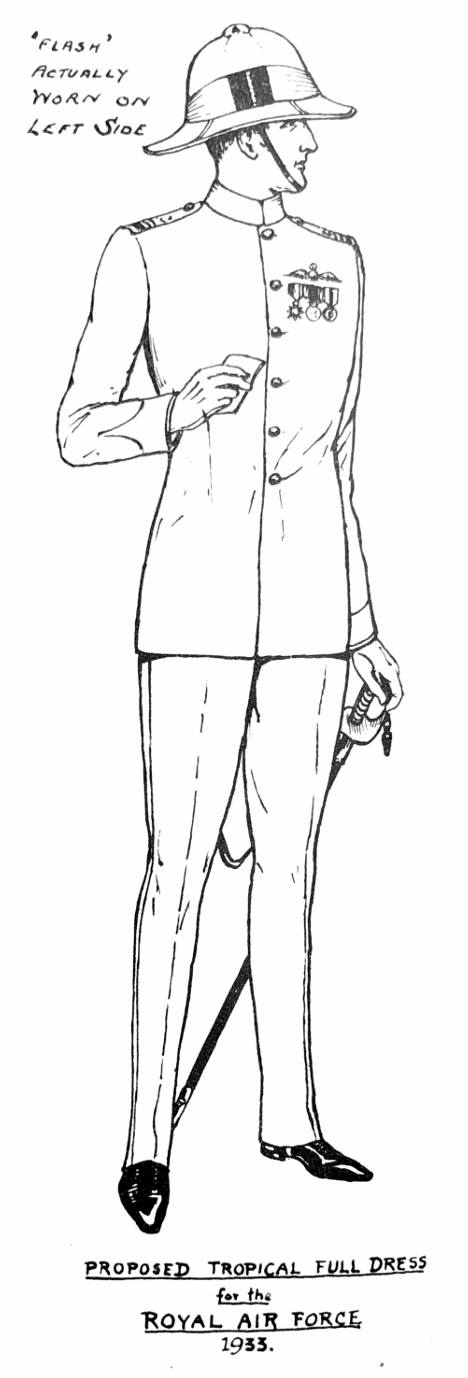 |
Source - Air Ministry Order A230/1933 dated 31 August 1933.
Tropical Service Dress - Introduction of New Badge of Rank for Warrant Officers
A new badge of rank for warrant officers for wear with tropical service dress has been introduced, and will supersede badges, arm, eagle and crown, left (Stores Ref. 22H/331) and right (Stores Ref. 2211/332), which are hereby declared obsolete. The new badge will be held on charge as follows: -
| Stores Ref. | Nomenclature. | Detail | Store. Per | Rate |
| 22H/349 | Badges, arm, Royal Arms. Gilding metal | With plate and pin, Tropical Service Dress WO | B each |
0 0 1¼ |
The new badge is to be worn on the right sleeve only, below the elbow. When the tunic, is not worn, the badge is to be worn on a strap on the right wrist. Demands for badges, on a scale of 3 for each warrant officer, are to be forwarded to No. 1 Stores Depot immediately.
The new badges are to be issued as soon as possible on repayment, and badges of existing pattern are not to be worn by warrant officers after issue of the new pattern has been made.
Warrant officers are to make their own arrangements for having a strap fitted to the badge.
Stocks of the existing pattern of badge are to be retained in store for a period of twelve months from the date of this order, after which disposal instructions will be issued.
AP 1086 and AP 830, Vol. III, will be amended in due course.
This order does not apply to warrant officers (2nd class).
Source - Air Ministry Order A194/1933 dated 20 July 1933.
Dress for Officers of the Royal Air Force - Approved Changes in Mess Dress and Full Dress
The following changes in dress for officers of the Royal Air Force have now been approved -
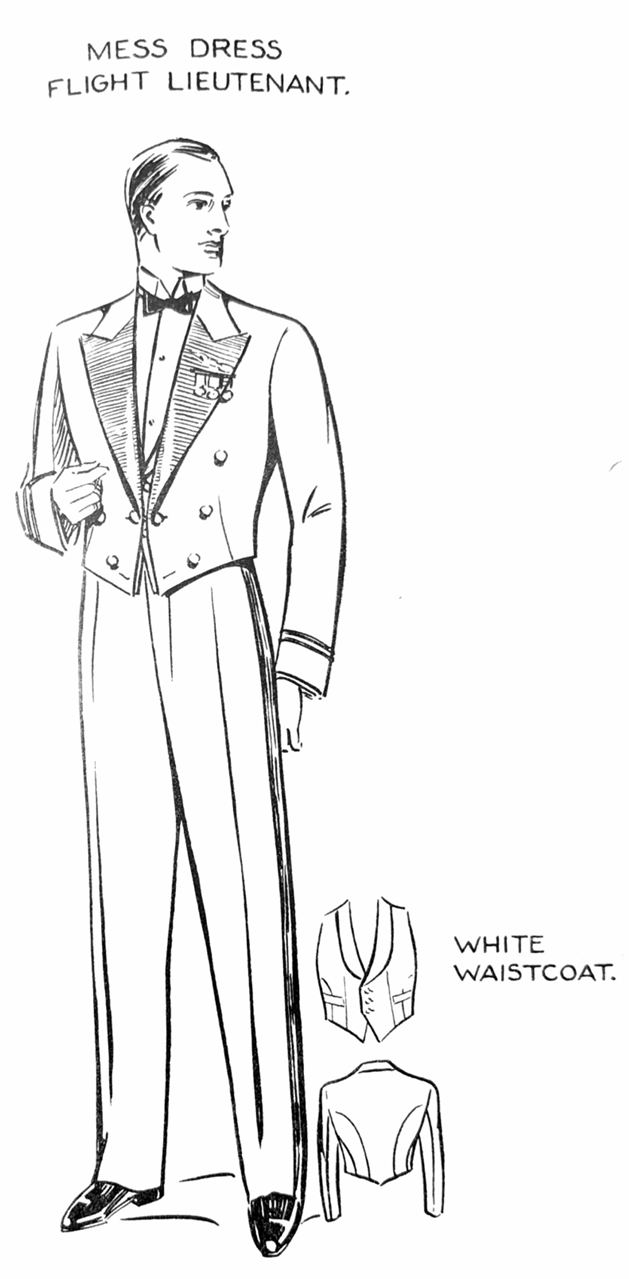
Mess Dress
Jacket
Shoulder straps and sleeve buttons have been removed and rank is now indicated by means of rows of gold wire lace round the cuffa at present worn in full-dress (home pattern).
The silk facings have been replaced by ribbed silk of similar colour but of harder wearing quality.
The cut of the jacket is slightly more pointed and the position of the buttons on the front of the jacket has been altered.
Flying badge - Officers who are entitled to wear the
flying badge will wear a gold embroidered miniature of the full-dress
flying badge on the left lapel of the jacket. The position of the badge
on the lapel will be
as follows: -
Top of crown to be 1½ in, below the inner end of the step opening of the jacket collar. This badge will also be worn by any officers who are entitled to wear the observer's badge (This sentence was deleted by AMO A402/38 - see below).
Sub-paras (i) (b) and (i) (c) - These alterations only apply to new jackets. Officers converting their present jackets need only comply with sub-paras (i) (a) and (i) (d)
Waistcoat.
A white waistcoat with roll collar and three buttons has been introduced for mess dress.
Overalls
Overalls of blue barathea as at present, but cut more loosely, will be worn. Officers of the rank of flight lieutenant to group captain will wear a stripe of gold wire lace 1¼ in. wide down the outside seams of the overalls. This lace has a stripe,1/16 in wide, of pale blue balladine silk, 3 in from each edge. The lace for air officers will be 1½ in wide, with a, stripe, 1/8 in, wide, of pale blue bahladine silk 7/16 in from each edge.
Cap.
The mess-dress cap for officers of the rank of wing commander and below is now abolished. Service dress caps will be worn with mess dress and mess undress when necessary.
Occasions when mess dress and mess undress are to he worn -
Mess dress - On all formal occasions, e.g., when dining as guests in the mess of another service, dances, etc., and when ordered by the CO.
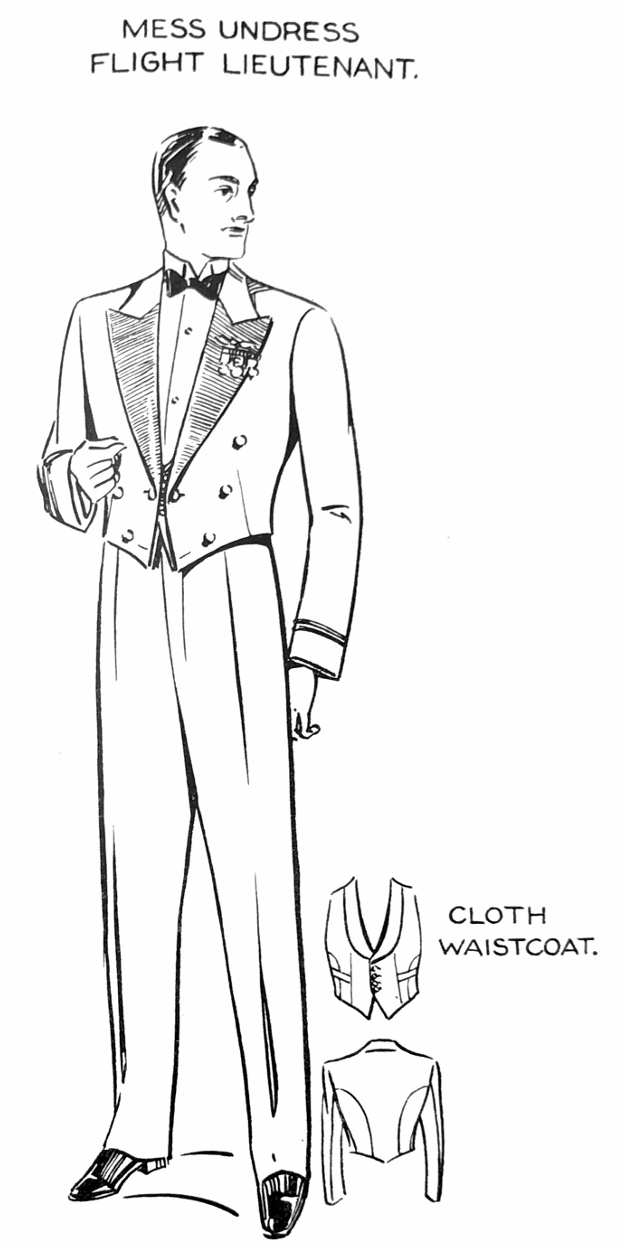
Mess undress - When dining in mess on ordinary occasions and when ordered by the CO.
Tropical mess dress - The flying badge (The pilot's and observer's badges - from AMO 402/38), when worn on tropical mess jacket, will be in the form of a detachable brooch.
Exceptions -
Subject to sub-para. (ii) below, all officers who are due to transfer to the Reserve or to retire before 1st January 1937, may be exempted from making the change. Any officer who is due to serve beyond 31st December 1936, should have his uniform changed before 20th June 1935, if serving at home, or in accordance with the instructions of the AOC, if serving abroad,
All officers within their promotion zones will be required to make the change except those officers who pass out of their zones on or before 31st December 1935, and who are due to retire before 1st January 1937.
AOCs should exercise their discretion in cases which are not covered by the above exemptions,
Full Dress
The new overalls, with gold lace stripe, as now approved, will also be worn with full dress (home pattern).
Mess dress -
Jacket, white waistcoat, and overalls with gold stripe, as now approved. Shirt, collar, tie and Wellington boots as previously approved. With the stiff-fronted shirt as authorised. either one or two plain gold studs may be worn.
Officers entitled to wear a device on the shoulder straps, e.g., Personal ADC to the King, will now wear the device on plain shoulder straps.
Mess undress - Jacket as now approved. Blue cloth waistcoat, overalls without gold stripe, and shirt, collar, tie and Wellington boots as previously approved.
Full dress (home pattern) - As previously approved, with the exception that the now overalls with gold lace stripes will he worn.
Mess dress (tropical pattern) - In commands where blue mess kit overalls are now worn, blue overalls, either with or without the gold stripe, will in future be worn as directed by the air or other officer commanding.
Observer's badge - For full dress the badge will consist of a wing of gold embroidery with an "0" of silver embroidery. When no decorations or medals are worn, the centre of the "0" of the badge will be midway between the top and seeond buttons of the tunic, the "0" being vertical and midway between the line of buttons and the sleeve seam of the tunic. When decorations or medals are worn, the lowest part of the "0" will be 1 in. above the centre ribbon. (added by AMO 402/38)
Full dress (tropical pattern) - The observer's badge, when worn with full dress, tropical, will be in the form of a detachable brooch. (added by AMO 402/38)
Full dress (tropical pattern) -
When blue overalls, as for full dress, are worn with tropical dress all officers will wear the white waistcoat and stiff fronted shirt worn with mess dress (home pattern).
When blue overalls, as for mess undress, are worn with tropical mess dress, the soft-fronted shirt and blue cummerbund will be worn.
Officers below the rank of fight lieutenant will wear
the white waistcoat and stiff-fronted shirt or cummerbund and Soft
fronted shirt on occasions as ordered for senior officers.
Introduction - These changes will be introduced in commands at home within six months from the date of issue of this order, and in commands abroad as soon as can conveniently he arranged under the directions of the air or other officer commanding. (AMO A453/38 deleted this paragraph)
Exemptions - Officers nearing the end of their careers will not be required to make these changes unless they elect to do so. (AMO A453/38 deleted this paragraph)
The trade is being notified of the changes simultaneously with the issue of this order. (AMO A453/38 deleted this paragraph)
Specimens of the gold wire lace for overalls are being sent to all commands, and a specimen mess kit will be sent out for the information of officers serving in commands abroad. (AMO A453/38 deleted this paragraph)
AP 1358 and KR & ACI will be amended in due course. (AMO A453/38 renumbered this as para 3)
 |
 |
Source - Air Ministry Order A311/1934 dated 20 December 1934.
Amended by AMO A28/1935 dated 14 February 1935
Dress for Officers of the Royal Air Force
AMO A311/34 is further amended as follows: -
Para 1, sub-para. (i). Add the following sub-paragraph
"(e) Officers of the Auxiliary Air Force will now wear the letter 'A' in gilt metal on the jacket collar in the following position: -
The bottom of the letter 'A' will be one inch above the inner end of the step opening, midway between the outer edge and the inner (rolled) edge."
(AMO A311/34, as amended by A28/35)
Source - Air Ministry Order A131/1935 dated 30 May 1935.
Dress for Officers of the RAF - Approved Changes in Mess Dress and Full Dress
AMO A311/34 is further amended as follows: -
Para 1, sub-para. (i). Add the following sub-paragraph
Sub-para (i) (e) was renumbered (i) (f) and the follwing was added: -
Observer's badge - Officers who are entitled to wear the observer's badge will wear a gold embroidered miniature badge on the left lapel of the jacket. The "0" of the badge is to be vertical and the highest point of the "0" is to be 1 in below the inner end of the step opening of the jacket collar. When miniatures are worn, the badge is to be placed directly above the centre ribbon.
Source - Air Ministry Order A402/1938 dated 27 October 1938.
Changes of Uniform for the Royal Air Force - Blue Serve Dress
Changes of Uniform for the
Royal Air Force - Tropical Dress (added 15 April 1937)
Changes of uniform for officers of the Royal Air Force have been approved for introduction as shown in subsequent paragraphs. A forecast of the changes has already been sent to all AOCs and a circular letter on the subject has been widely distributed to service outfitters.
Breeches, Puttees and Field Boots.
These articles are now obsolete as uniform.
Until 1st September 1936, at home, and as long as considered desirable by AOCs abroad, officers when not on parade may wear breeches etc, should they desire to do so in, order to wear out their present garments or field boots.
Trousers
Trousers without permanent turn-ups, for parade purposes and formal
occasions will be worn with service dress. Trousers with permanent
turn-ups are optional on other occasions. The trousers will be made of
barathea as at present.
Caps
An additional cap, to be known as the field service cap, has been approved. In future all officers will possess one round peaked cap as at present and one field service cap.
At home this change will be optional from 1st May 1936, and compulsory from 1st September 1936. In commands abroad, AOCs will issue instructions to meet local conditions.
Shirts and collars
White shirts and collars will be replaced by a blue service dress shirt with a semi-stiff collar to match.
This change will be introduced as for caps in para. 4 above
Gaiters
Blue web gaiters of the same colour and material as the web equipment
have been approved for wear by officers in bad weather. Particulars of
the gaiters will be issued to commands as soon as possible.
A summary of the new dress and the occasions on which it is to be worn is given in the appendix to this order,
Patterns of officers' blue shirting and collars have been circulated on a limited basis to all commands, and sealed patterns are available for inspection by outfitters who may wish to visit the Air Ministry for that purpose.
Warrant Officers, NCOs and Airmen.
A further order announcing the changes in blue service dress approved
for warrant officers, NCOs and airmen will be published in due course.
Meanwhile, existing stocks of clothing, including pantaloons and puttees, of
which considerable quantities are held, will continue to be issued until
further notice.
Tropical Dress
(i) Officers' dress - The changes in officers' dress will be compulsory
for officers proceeding overseas after 1st July 1937, but officers
proceeding overseas before that date may provide themselves with garments,
etc., of the new type, should they desire to do so. In commands
overseas, AOCs should make the change compulsory from a date suitable to
meet local conditions. During the transitional period, differing types
of garments must inevitably be worn in order to avoid hardship to individual
officers. The changes will be as follows:-
Helmet - When helmet is not worn, the home pattern service dress cap or field service cap will be worn.
Jacket with ranking braid of black and blue on detachable shoulder straps.
Shirt - of khaki bush type with collar attached for wear with or without jacket (when worn without jacket, ranking braid of black and blue will be worn on shoulder straps).
Tie - Plain black.
Trousers - without permanent turn-up.
Ankle boots )
Shoes ) as for service dress (home).
Gaiters )
Socks, black.
Shorts, khaki.
Stockings, khaki.
Gloves (home pattern)
(ii) In consequence of the above, the following items of tropical dress have been abolished: -
Shirts, khaki.
Collar, khaki.
Ranking braid, khaki and blue.
Breeches,
Puttees
Field boots
APPENDIX
Dress Changes, Officers - Blue Service Dress
(Sec AP 1358, Section II; page 7)
| Title of Dress | When to be worn | Items of Kit to be worn |
| No 5 Service Dress |
(a) Church parades (b) Courts martial. (c) Funerals. (d) Inspections (Except when full dress is specially ordered) |
Cap round peaked Jacket, service dress Trousers, service dress (not turned up) Shirt, blue, of approved shade Collar, blue, of approved shade and shape Tie, black or Gloves, brown leather.
|
| No 5A Field Service Dress |
(a) Active service. (b) All occasions of duty other than those for which, another dross is proscribed. |
Cap. Field Service,* Jacket, service dress Trousers, service dress (permanent turn ups optional). Shirt, blue, of approved shade collar, blue, of approved shade and shape Tie. black. |
* Where it is more convenient, or desirable, the service dress cap way be worn
at the option of the individual.
Source - Air Ministry Order A93/1936 dated 30 April 1936.
Amended - Air Ministry Order A109/1937 dated 15 April 1937 (regarding Tropical Dress)
Changes of Uniform for the Royal Air Force - Tropical Dress
The first 10 items referred to change in officers' dress in Air Ministry Order A93/1936 dated 30 April 1936.
Airmen's uniform - The changes in airmen's uniform will be as follows but owing to the stock position of certain items of uniform it is not anticipated that the changes under sub-paras (ii), (iii) and (iv) below, will become effective before the of 1938:-
The field service cap (home pattern) may be worn with tropical dress lieu of the service dress cap at the discretion of the AOC.
The open neck pattern jacket (now worn by warrant officers*) will be introduced for wear by all ranks, with collar and tie, in lieu of the present high-neck jacket.
Introduction of a khaki cotton bush shirt, with collar attached, for wear with tropical uniform. The shirt may be worn with or without jacket and according to the occasion, and rank badges will be worn on the bush shirt when it is worn without jacket.
Abolition of puttees and introduction of khaki stockings in lieu.
Introduction of black shoes as an optional issue in lieu of one pair of boots for wear as working dress.
Issue of blue web gaiters for wear when weather conditions render the necessary.
(i) With reference
para 11, sub-paras (iv) and (v) as from 1st August 1937, when an airman is
posted overseas he may be provided with two pairs of stockings khaki (Stores
Ref 22B/69) and one pair of shoes, black (Stores Ref 22D/317) on repayment,
prior to his departure from the United Kingdom
(ii) Issues are to be made from unit stocks and demands placed upon "A"
Equipment Depot, as necessary, quoting this order as authority.
Source - Air Ministry Order A109/1937 dated 15 April 1937.
Amended by Air Ministry Order A206/1937 dated 24 June 1937 and AMO 261/37 dated 12 August 1937 (* this phrase was removed).
Mess Dress and Full Dress Uniform - Flight Lieutenant
The alterations to mess dress and full dress overalls necessitated by the promotion of a flying officer to the rank of flight lieutenant will not be obligatory in the case of an. officer appointed to the higher rank in an acting capacity.
On attaining the substantive rank of flight lieutenant, the necessary alterations to uniform are to be effected immediately,
Source - Air Ministry Order A34/1938 dated 3 February 1938.
Change of Uniform for RAF Personnel in India
Approval has been given for the adoption of hats, pith (Stores Ref 22E/294) in place of the Wolseley helmet (Stores Ref. 22E/291) for wear with tropical service dress by RAF personnel serving in India.
Officers serving in India who possess serviceable Wolseley helmets may continue to wear them up to 1st December 1938, after which date the wearing of the pith hat will be compulsory. The wearing of the pith hat by airmen will take effect forthwith.
Pith hats will be issued as heretofore by the India Store Department to airmen proceeding from the United Kingdom to India,
The pith hat authorised for wear by officers is identical with that worn by airmen and a pattern is held at the Air Ministry. A pattern may also be seen at the India Store Department, Belvedere Road, Lambeth, SE1; that department will accept demands for pith helmets on repayment, from units, and individual officers who wish to avail themselves of this source of supply.
Puggarees (Stores Ref. 22E/44) will be fitted on pith hats in the same way as on helmets, Wolseley, old pattern (Stores Ref. 22E/291). The length of the puggaree however, is to be halved. It is to show, when fitted five folds, the distance between each fold being 3/16 in; the depth of the, puggaree at each side of the hat is to be 25/8 in. The flash is to be fitted as on the Wolseley helmet.
Wolseley helmets will continue to be worn with service dress, tropical, in all other oversea commands.
AP 830, Vol. III and AP 1358 will be amended in. duo course.
Source - Air Ministry Order A394/1938 dated 13 October 1938.
Amended by AMO A454/38 dated 8 December 1938 and AMO A119/39 dated 6 April 1939.
Air Observer's Badge - Manner of Wearing with Service Dress - Officers
Officers entitled to the observer's badge will wear the badge, with service dress on the left of the jacket immediately above the top line of the breast pocket, the "O" of the badge being vertical and directly above the button. When medal ribbons are worn, the badge will be placed directly above the centre of the top row of ribbons,
Source - Air Ministry Order A403/1938 dated 27 October 1938.
Issue of Uniform to Airmen of the Royal Air Force Volunteer Reserve
It has been decided that an issue of uniform in accordance with the scale laid down in para 8 below is to be made to airmen of the Royal Air Force Volunteer Reserve on enlistment.
The uniform is to be worn by airmen only when they are attending for drills and disciplinary training, when training with units of the Royal Air Force and at the kit inspections referred to in para 4 below.
Demands and issue -
Five copies of demands on Form 600 for uniform to the scale of para 8, supported by nominal rolls of the airmen to whom issue is to be made and by special size rolls if required, are to be prepared in accordance with AP 830, Vol. I, chapter 5, section 5, by the commandant of the town centre. A tailor will be required to attend at the town centre to measure the airmen in order to determine the size of the garments required (sea para 7). Four copies of the demands are to be submitted to Headquarters No. 26 (Training) Group, to ensure that the reservists on the nominal roil are entitled to the issue. After checking the demands, No. 26 (Training) Group will forward them to "A" Maintenance Unit.
On receipt of the demand, the clothing, etc, is to be despatched by "A" Maintenance Unit to the appropriate town centre, accompanied by one red and two blue copies of Form 800. It is essential that only complete kits shall be issued by "A " Maintenance Unit, and if any item of a kit is not available, the remainder of the items are to be held until a complete kit can be issued.
On its receipt at the town centre, the clothing, etc, is to be checked with the Forms 600, and any discrepancies are to be immediately reported by letter to "A" Maintenance Unit, a copy of the letter being forwarded to No 3 Maintenance Unit. Forms 800 are to be receipted by the commandant, discrepancies, if any, being noted thereon. One blue copy is to be retained and one blue and one red copy are to be forwarded to No l Maintenance Unit, where the number of kits issued is to be recorded in the articles-in-use ledger of the town centre and the blue copy, noted as to store charge, is to be forwarded to "A "Maintenance Unit.
The commandant of the town centre is to arrange for the attendance of the tailor (see para 7) when issues are being made to the reservists, in order to ensure correct fitting. A receipt for "one complete VR kit" is to be obtained on a loan card (Form 688) in respect of each airman. The loan cards are to be retained at the town centre.
A nominal roll is to be prepared and certified by the commandant to the effect that a complete kit has been issued to each airman named on the roll, and that receipts have been obtained from the airmen concerned, on Forms 688. The nominal roll is to be forwarded to No 3 Maintenance Unit, for retention.
Exchanges - Airmen are to be informed at the time clothing is issued that they will be held financially responsible for loss of the kit and for any damage other than by fair wear and tear. Kit inspections are to be held by commandants every six months and items which have become unserviceable are to be exchanged. Losses or damage by unfair wear and tear are to be made the subject of a charge against the individual concerned (see para 6). Exchanges are to be effected in accordance with the procedure set out in AP 830, Vol. I, chapter 10, section 3, except that the exchange voucher (Form 673) and the unserviceable items of kit are to be forwarded (if necessary by post) to the nearest RAF station for disposal in accordance with AP 830, Vol. I, chapter 35, section 2, the proceeds being credited to the public. Replacement items are then to be despatched by the equipment officer of that station to the town centre.
Returns - On completion of service of an airman in
the Volunteer Reserve, his clothing, etc, is to be returned to the town
centre, any deficiencies or damage not due to fair wear and tear being
charged against the airman (see para 6). The loan card (Form 66) is to
be endorsed as follows, and signed by the commandant -
"Kit withdrawn on............................198..., less the
following items which have been charged against the airman................."
The loan card is then to be forwarded to No 3 Maintenance Unit for
retention. The kit is to be despatched to "A" Maintenance Unit, accompanied
by a letter in duplicate listing the kit returned and requesting that a copy
of the letter duly receipted may be returned to the town centre. At
"A" Maintenance Unit the items are to be brought on charge by certificate
receipt voucher, two copies of which are to be forwarded to No 3 Maintenance
Unit. One copy of the certificate receipt voucher is to be
cross-referred to any Forms 664B raised in respect of deficiencies and
thereafter is to be used to strike the complete kit off articles-in-use
ledger charge. The second copy, duly noted, is to be returned to A
"Maintenance Unit. Serviceable items are to be taken into stock at "A"
Maintenance Unit and the unserviceable items disposed of in accordance with
AP 830, Vol. I, chapter 35, section 2, and the proceeds credited to the
public.
Charges for loss, etc - Charges for loss or damage not due to fair wear and tear are to be recorded by the commandant on Form 684B raised in duplicate. The two copies, after signature by the airman on the original and countersignature by the commandant, are to be forwarded to Headquarters, No. 26 (Training) Group, where the necessary recovery action is to be taken, and a copy of the voucher forwarded to No 3 Maintenance Unit in the case of a charge under para 5 or to the appropriate RAF unit in the case of a charge under para 4. The commandant is to ensure that vouchers are clearly marked to indicate to which unit the noted copy is to be returned. The unit is to file the noted copy of the Form 84B with the appropriate stores voucher.
Measurement and fitting - Instructions for the measurement and fitting of articles of clothing are contained in AP 830, Vol. 1, appendix 6. Headquarters, No. 26 (Training) Group, are in possession of stocks of the latest size rolls and will issue copies to commandants when required. Commandants of town centres are to arrange for the attendance of a competent tailor on the occasions laid down in paras 3 (i) and 3 (iv) above. The tailor will be required to carry out any necessary alterations to the garments in order to ensure correct fitting. Where possible, arrangements are to be made with the nearest RAF station for measuring, fitting and alterations to be executed by the tailoring contractor under the conditions of the station contract. In this event, bills are to be forwarded by the tailor to the commandant who, after certifying that the services have been satisfactorily performed, is to forward them to the RAF station for payment. Should it be impracticable to utilize the services of the RAF station tailoring contractor, the commandant is to make the most economical arrangements possible for a competent taller to carry out the work. In this case bills, after certification that the services have been satisfactorily performed and that the charges are reasonable, are to be forwarded to No 26 (Training) Group for payment.
Approved scale - The approved scale of clothing, etc., is as follows: -
| Nomenclature | Quantity |
| Bag, kit, universal | 1 |
| Collars, cotton | 3 |
| Shirts, cotton | 2 |
| Knife, clasp | 1 |
| Lanyard | 1 |
| Tie, black | 1 |
| Gloves, knitted | 1 pair |
| Boots, ankle | 1 pair |
| Cap, field service with badge | 1 |
| Coat, great | 1 |
| Jacket, blue grey (Airmen, 193$ pattern) | 1 |
| Trousers | 1 pair |
| Badges, airmen, embroidered eagle | 2 pairs |
| Badges, rank | 2 sets |
| Chevrons | as necessary |
| Gaiters, web | 1 pair |
Source - Air Ministry Order A1/1939 dated 5 January 1939.
The Auxiliary Air Force Badge and the RAF Volunteer Reserve Badge
His Majesty the King has approved the issue of two designs of silver badges in recognition of the valuable services which are being rendered by members of the Auxiliary Air Force and the RAF Volunteer Reserve.
The two badges will be described respectively as "The Auxiliary Air Force Badge" and "The Royal Air Force Volunteer Reserve Badge" and will be worn with civilian dress only. The object of the badges is to ensure that all members of the Auxiliary Air Force and the RAF Volunteer Reserve have some tangible form of showing that they are serving or past members of these forces.
The badges will be issued to all ranks of the Auxiliary Air Force, the Auxiliary Air Force Reserve and the RAF Volunteer Reserve who were serving on the 19th April 1939 or who join after that date.
The badges will be numbered and will remain the property of the Air Ministry. Each holder will be required to sign an acknowledgment of receipt on RAF Form 1057 in the case of the Auxiliary Air Force, and on Form 1058 in the case of the RAF Volunteer Reserve. Supplies of these forms are available at the Air Publications and Forms Store.
The following personnel will be allowed to retain the badge on ceasing to be serving members of the Auxiliary Air Force, the Auxiliary Air Force Reserve or the RAF Volunteer Reserve: -
Officers who have served for a period of not less than five years.
Airmen of the Auxiliary Air Force and Auxiliary Air Force Reserve who are discharged after not less than four years' service, and ,airmen of the RAF Volunteer Reserve who are discharged after not less than five years' service, with a character not less than "Good"
Every precaution is to be taken to ensure that a badge does not come into the possession of unauthorised persons. Where the loss of a badge is due entirely to unavoidable circumstances, arising out of the exigencies of service, it may be replaced at the public expense, but losses due to circumstances and accidents of private life will not be chargeable to the public. When a badge is lost, the fact and circumstances are to be reported immediately to the CO of the unit in which the individual is serving or last served in the case of the Auxiliary Air Force and the Auxiliary Air Force Reserve, or to the appropriate town centre commandant in the case of members of the RAF Volunteer Reserve who are under the administration of a town centre. Losses in other cases are to be reported to Headquarters, Reserve Command, or to the Officer i/c Records in the case of RAF Volunteer Reserve personnel directly recruited by him. A further issue on repayment or at public expense after a lapse of two months may be made if the explanation of the loss is considered reasonable, and provided that due precautions were taken to ensure the safety of the badge.
Detailed instructions regarding the issue of the badges and the accounting arrangements to be made therefor are contained in AMO A273/39.
Source - Air Ministry Order A265/1939 dated 13 July 1939.
The Auxiliary Air Force Badge
and the RAF Volunteer Reserve Badge - Accounting Instructions
Badges for the Auxiliary Air Force and the RAF Volunteer Reserve are to be demanded and accounted for in accordance with the following instructions.
Auxiliary Air Force Badges -
The unit equipment officer is to demand from ' A" Maintenance Unit a sufficient number of badges (Stores Ref. 22H/382) for all officers and other ranks on the strength of the unit on 1st June 1939 plus the estimated number for newly commissioned officers and recruits joining during the period ending 30th September 1939. On receipt, the badges are to be taken on main stock ledger charge and stored as valuable articles. Initial issues to personnel of the unit are to be struck off ledger charge by certificate issue voucher certified by the CO of the unit to the effect that the number of badges issued agrees with the strength of the unit on the date of issue and officers and other ranks entitled to the badge who have left the unit since 19th April 1939. The certificate issue voucher is to be supported by a nominal roll of the personnel, concerned. Subsequent issues (except replacement of lost badges - see sub-para (iii)) are also to be struck off ledger charge by certificate issue voucher, detailing the names of the recipients and bearing the CO's certificate that no previous issue has been made to the personnel concerned. A record of the personnel to whom badges have been issued, showing the serial numbers of the badges is to be maintained by the unit and kept up to date.
Surrendered badges are to be taken on charge by certificate receipt voucher detailing the names of the personnel concerned and the record is to be amended accordingly.
When a badge is issued in replacement of one lost, and it is decided that the charge is to be met by the individual concerned, the replacement issue will be made on repayment on Form 803 and the sum due is to be recovered from the individual at the time of issue and credited in the station cash account. A replacement issue made at public expense is to be struck off charge by certificate issue voucher supported by the authority of the CO of the unit and the receipt of the individual concerned.
RAF Volunteer Reserve Badges -
The commandant of the town centre is to prepare a demand on Form 600 (five copies) for a sufficient number of badges (Stores Ref. 22H/383) for all officers and other ranks on the strength of the town centre on 1st June 1939, plus the estimated number required for newly commissioned officers and recruits joining during the period ending 30th September 1939. Four copies of the demand are to be forwarded to "A " Maintenance Unit.
On receipt of the demand, " A" Maintenance Unit is to despatch the badges direct to the commandant of the town centre accompanied by one red and two blue copies of Form 600. When the badges are received, the Forms 600 are to be receipted by the commandant, one blue copy being retained and one blue and one red copy forwarded to No 3 Maintenance Unit, where the number of badges issued is to be recorded in the articles-in-use ledger of the town centre and the blue copy, noted as to store charge, forwarded to "A " Maintenance Unit. The badges are to be stored as valuable articles.
When initial issues to personnel of the town centre are made, the commandant is to prepare a nominal roil of the personnel to whom issue has been made, which, after certification by him, is to he forwarded to No 3 Maintenance Unit, where the number of badges issued is to be struck off the articles-in-use ledger by certificate issue voucher supported by the nominal roll. When subsequent issues are made (except replacements of lost badges - see sub-para. (v)) a, similar nominal roll is to be forwarded to No 3 Maintenance Unit, certified by the commandant to the effect that no previous issue has been made to the personnel concerned. The badges are thereupon to be struck off charge by certificate issue voucher as above. A record of all the-personnel to whom badges are issued, showing the serial numbers of the badges, is to be maintained by the commandant and is to be kept up to date.
Surrendered badges are to be retained for re-issue and a notification of their receipt is to be sent to No 3 Maintenance Unit, where the badges are to be brought on articles-in-use charge by certificate. receipt voucher, a copy of which is to be forwarded to the commandant. The withdrawal of a badge is to be noted in the record maintained by the commandant under, (iii) above.
When it has been decided that an individual is to charged for the replacement of a badge lost or damaged, Form 664B (in duplicate) is to be raised: by the commandant of the town centre. The two copies after signature by the individual concerned on the original and countersignature by the commandant, are to be forwarded to Headquarters, Reserve Command, where the necessary recovery action is be taken and a copy of the voucher, certified as to recovery, returned to the commandant. When the replacement badge is issued, the commandant is to obtain the receipt of the individual for the badge on the Form 664B, which is then to be forwarded to No 3 Maintenance Unit, where it is to be used to strike the badge off articles-in-use ledger charge. A replacement issue at public expense is to be made only on the authority of the commandant, who is to notify the issue to No 3 Maintenance Unit by letter accompanied by
the receipt of the individual concerned. No 3 Maintenance Unit is to strike the badge off articles-in-use charge by certificate issue voucher, supported by the letter from the commandant and the receipt.The procedure in sub-paras (i) to (v) is to be adopted in the case of officers of the administrative and special duties, medical and dental sections and holders of honorary RAFVR commissions, except that Reserve Command Headquarters, is to act as the town centre for this purpose. Badges demanded for these officers are to be recorded at No 3 Maintenance Unit on special articles-in-use ledger sheets entitled "Administrative and Special Duties, Medical and Dental Sections and holders of honorary RAFVR Commissions Badges".
Badges for AA and RAC scouts are to be demanded by the Officer i/c Recoids, who will act as commandant for this purpose; the procedure in sub-paras (i) to (v') is to, be adopted. The badges are to be recorded at No 3 Maintenance Unit on a special articles-in use ledger sheet entitled "AA and RAC Scouts Badges"
Acknowledgment of receipt - RAF Forms 1057 and 1058 for the Auxiliary Air Force and the RAF Volunteer Reserve respectively, are provided for the acknowledgment of receipt of the badges and when an initial issue is made a signed copy of the appropriate form is to be filed with the documents of the individual concerned.
Source - Air Ministry Order A273/1939 dated 13 July 1939.
Badges of Rank for Warrant Officers' Raincoats
With reference to AMO A39/34, it has been decided that worsted Royal Arms badges are to be worn on raincoats by warrant officers.
Badges will be worn on both sleeves and, will be either sown on or affixed with an adhesive solution, so that the lower edge of the badge is one-inch above the centre of the sleeve strap.
A free issue of two badges is authorised for all warrant officers in possession of the officers' pattern raincoat,
Source - Air Ministry Order A488/1939 dated 16 November 1939.
Wearing of Armlets
Airmen employed under the signals organisation as motor cyclist, despatch riders or drivers of light vehicles in connection with the despatch rider letter service will wear a distinctive blue and white armlet (Stores Ref. 22H/292) with field service dress, including the greatcoat or other outer garment.
The armlets will be worn on both arms, above the elbow, the white half being uppermost.
The wearing of these armlets by personnel, other than those referred to in para 1 above is forbidden.
Source - Air Ministry Order A502/1939 dated 23 November 1939.
Dress - Officers and Airmen
AMO A432/39 (currently unavailable) is amended as follows: -
Sub-para (i). Add at end: -
"except by officers (other than officers of the RAF Volunteer Reserve) posted to
India, who will include mess dress and mess undress in their kit."
(AMO A432/39 amended.)
Source - Air Ministry Order A513/1939 dated 30 November 1939.
AMO A432/39 (currently unavailable) is further amended as follows: -
Sub-para (vii). Add at end
"Those badges are to be strictly in accordance with the sealed patterns as illustrated below. The illustrations depict the exact sizes [sic].
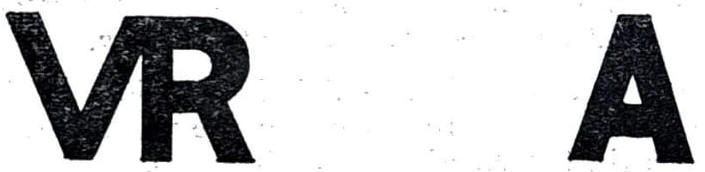
As worn on greatcoat shoulder strap
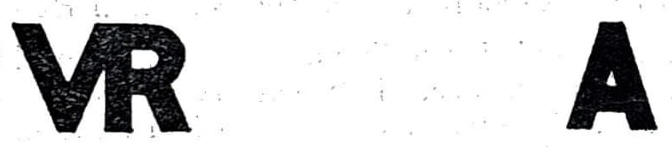
As worn on service dress jackets
(AMO A432/39, as amended by A.513/39, amended.)
Source - Air Ministry Order A538/1939 dated 14 December 1939.
Dress - Officers
The following revised descriptions of items of kit for officers have been approved: -
Boots, ankle - Black calf, with "Derby" front and a plain toe-cap having two rows of single stitching not more than 5/16 in apart (toe-caps are not to be punched, or brogued). The golosh to be without seams at the middle of the sides of the foot. Nine pairs of eyelet holes; no lace hooks. The sole to be of medium weight.
Shoes - Black calf, Oxford pattern, with plain toe-cap having two rows of single stitching not more than 3/16 in apart (toe-caps are not to be punched or brogued). Sole to be of medium weight.
The provision of ankle boots is optional, but if they are not provided a second pair of shoes must be held.
Pending a decision as to the retention of gaiters as an item of dress they are provisionally deleted from the scales of kit for officers.
Source - Air Ministry Order A525/1939 dated 7 December 1939.
Airmen - Scale of Clothing
Airmen equipped to Scale C11 of AP 830, VoLIII, handing in worn-out jackets for exchange, are to be allowed to retain the worn-out jacket in addition to the new jacket issued.
The worn-out jackets are to be patched and repaired as necessary under local arrangements and marked as "seconds" in the manner laid down for greatcoats in AP 830, Vol. I, chapter 15, section 12, in order to prevent irregular exchanges. No entry is to be made on Form 1862, in respect of the worn-out jacket retained by the airman.
Second jackets are to be used only for working parades and on occasions which do not necessitate appearance in public.
Airmen in possession of one pair of boots only, are to be issued with a second pair when the first pair is handed in for repair; subsequently two pairs are to be maintained. The additional pair of boots is to be recorded on Form 1862, by units at home stations, as an issue in excess of Scale C11.
AP 830, Vol. III, will be amended in due course.
Source - Air Ministry Order A526/1939 dated 7 December 1939.
Web Equipment - Officers
In view of the increased demand for officers' pattern web equipment, approval is hereby given for para. 2568 of KR & ACI to be waived in order that officers may purchase web equipment of airmen's pattern from service stocks.
Issues are, however, to be limited to cases where it is established that, in view of urgency or any other cause, the officer is unable to obtain his equipment direct from the trade. In such cases, the procedure laid down in AP 830, Vol. 1, chapter 14, section 7, is to be followed.
Source - Air Ministry Order A36/1940 dated 18 January 1940.
Airmen selected for Training for Aircraft Crew Duties - White Cap Peaks and Armlets - Introduction
White peaks, to be worn with field service caps, and white armlets, are hereby introduced for wear by airmen selected for training as members of aircraft crews in accordance with the scheme notified in AMO A476/39: -
| Stores Ref | Nomenclature | Detail | Class of Stores |
| 22H/403 |
Peaks, cap, field service: - White |
Flannel | B |
| 22H/404 |
Armlets: - White |
Flannel | B |
The peaks, cap, field service, white, will be issued to airmen immediately after selection for training in air crew duties, and will be worn while awaiting absorption into training and during the continuance of such training. They will be fixed to field service caps by means of two hooks sewn to the cap under the flap, which will fit into the tabs at each end of the reverse side of the fixed peak and placed in such a position as t ensure an exposed portion 1½ in. deep at the front of the cap. Particular care should be taken to ensure that the airmen in the classes indicated below are issued with the white cap peak.
Direct entry recruits for air crew duties who are employed on ground duties pending training vacancies.
Airmen remustered to under training air crew after failing in another category of air crew training and employed on ground duties pending training vacancies.
Airmen provisionally selected for commissioned rank will wear, in addition. a white armlet on the left sleeve of the service dress jacket and greatcoat, The armlet will be issued when airmen who have been selected pass to a service flying training school or to an air observers' navigation school* and will be worn until the airman passes out from training.
Demands for peaks and armlets on a scale of one peak and two armlets per entitled airman are to be submitted to the appropriate maintenance unit.
AP 1080 and AP 830, Vol. III, will be amended in due course.
Source - Air Ministry Order A102/1940 dated 22 February 1940, amended by AMO A496/41 dated 3 July 1941.
*"an air observers' navigation school" amended to "a bombing and gunnery school" by AMO A179/40 dated 21 March 1940.
Dress - RAF and WAAF Personnel
The regulations contained in this order will be observed until further notice by all commands which are under active service conditions. They supersede the instruction in AMO A432/39, which is hereby cancelled.
Full dress, mess dress and mess undress will not be worn on any occasion except by officers (other than officers of the RAF Volunteer Reserve) posted to India, who will include mess dress and mess undress in their kits, if they are in possession of these orders of dress.
Field service dress will be worn on all occasions by all ranks with the following exceptions: -
Officers and airmen, when at their stations may be permitted to wear plain clothes for the purpose of sports and athletic exercises for which a special dress is necessary.
Officers and airmen on leave from their place of duty for periods of not less than 24 hours may be permitted to wear plain clothes.
Plain clothes may not be worn in messes or institutes, nor elsewhere within station bounds, except when leaving or entering a station for the purpose of participating in sport or athletic exercises, as prescribed in sub-para. (i) above. Uniform must be worn when leaving or entering the station while on leave or pass as the case may be.
In the case of Iraq the minimum period of 24 hours stipulated in sub-para. (ii) above and the regulation as to the wearing of uniform when leaving or entering the station to which reference is made in the last sentence of sub-para (iii) may be varied at the discretion of the air officer commanding as circumstances may dictate from time to time. In consequence, officers and airmen posted to Iraq may include plain clothes in their kits.
Personnel proceeding to Eire on leave must wear plain clothes.
The principles enunciated in para 3, sub-para (i) to (iii) and para 4 will be observed by officers and airwomen of the Women's Auxiliary Air Force, who are not permitted to wear plain clothes when attending entertainments, including dances, held at RAF stations.
The service dress cap may be used by officers in lieu of the field service cap, at the option of the wearer.
Airmen kitted to the active service scale will wear the field service cap on all occasions, with the following exceptions: -
Airmen employed as motor cyclist despatch riders may wear the service dress cap when actually engaged on these duties.
Apprentices and boy entrants will wear the service dress cap when walking out.
RAF police controlled by the Provost Marshal, when actually engaged on police duties.
The wearing of orders, decorations and medals will cease, but their ribbons will be worn with field service dress.
Canes or sticks of any description will not be carried by officers or airmen when in uniform.
The distinguishing letters "A" and "VR" referred to in para 222 (ii) of AP 968 and in AMO A378/39 will continue to be worn by officers and airmen of the Auxiliary Air Force and the RAF Volunteer Reserve respectively. These badges are to be strictly in accordance with the sealed patterns, the gilding metal badge for officers being 3/8 inch in height for jackets and ½ inch in height for greatcoats.
(AMOs A432/39, A513/39 and A538/39 cancelled)
Source - Air Ministry Order A114/1940 dated 22 February 1940, amended by AMO A205/40 dated 11 April 1940, AMO A100/1941 dated 6 February 1941 and AMO A697/41 dated 28 August 1941.
Collar Badge - Education Officers
Approval has been given for a distinguishing collar badge to be worn by officers of the RAF Volunteer Reserve who are employed as education officers.
The badge, which is made of gilt metal, consists of crossed flambeaux surmounted by an eagle with outspread wings.
It will be worn on the service dress jacket, the lowest point of the badge being three-quarters of an inch above the inner end of the step opening of the jacket collar. The badge is to be in such a position that its vertical axis is parallel to the insid (rolled) edge, the top of the axis being midway between that and the outside of the collar.
The letters "VR" Already worn by officers of the RAF Volunteer Reserve will be placed centrally one-eighth of an inch above the top line of the collar badge,
Source - Air Ministry Order A116/1940 dated 22 February 1940.
Field Service Cap for Air Officers
Approval has been given for the introduction of a new pattern of field service cap and badge for wear by officers of air rank, in place of the present type of field service cap as described in AP 1358, para 41.
The new cap is of the some material and general design as the present field service cap, which was introduced by AMO A93/36, but, the tip, peak and flap are piped with light blue faced cloth.
The badge is similar to that approved for wear by air officers, as described in AP 1358, para 34, but the height of the badge is 2 inches and the width of the wreath is 15/8 inches.
The badge is to be worn on the left side of the cap, the centre of the eagle being 27/8 Inches from the edge of the top of the cap and the complete badge situated centrally between the top of the cap and the top edge of the flap.
This change will be compulsory and will be effected as soon as practicable after the receipt of this order.
AP 1358 will be amended in due course.
Source - Air Ministry Order A142/1940 dated 7 March 1940.
Distinguishing Badges for wear by Officers and Airmen serving in the Polish Units of the Royal Air Force
Distinguishing badges have been approved for wear by officers and airmen serving in the Polish units of the Royal Air Force.
The cap badge for wear by officers consists of the Polish eagle on a semi-circular shield surrounded by the Polish Hussar wings, all in silver embroidery with gold wire at the base of the wings on the roundels of the shield, on the crown and the beak and claws of the eagle and on the insets or the eagle's wings.
The badge is to be worn on the mohair band of the service dress cap in place of the RAF cap badge and a similar badge will be worn on the left breast pocket, of the service dress jacket.
The arm title badge for officers consists of the word "POLAND" in ½ inch letters embroidered in light blue silk, arranged in an are of a circle on a background of blue-grey barathea cloth.
The position of the badge will be an follows :-
Greatcoat and service dress jacket - On both sleeves, the centre of the badge being 1½ inches below the top centre point of the sleeve seam.
Raincoat - On both sleeves, the lower edge of the badge being 1½ inches above the upper edge of the sleeve strap and placed symmetrically above it.
Arrangements have been made for the supply of officers' badges.
Airmen's badges are hereby introduced as follows: -
| Stores Ref | Nomenclature | Detail | Class of Stores |
| 22H/405 | Badges, cap - Polish airmen | White metal | B |
| 22H/406 | Badges, arm - "Poland " | Embroidered | C |
The cap badge is of similar design to that worn by officers but is made of white metal and is to be worn on the left side of the field service cap in the normal cap badge position.
The arm badge consists of the word "POLAND" embroidered in light blue and will be worn on both sleeves of the jacket and greatcoat immediately below the badge, arm, eagle.
Demands to the scale of one cap badge per airman and two arm badges for each greatcoat and jacket held are to be submitted to the appropriate maintenance unit.
AP 1086 will be amended in due course.
Source - Air Ministry Order A157/1940 dated 14 March 1940.
Dress - Officer and Airmen
The instructions contained in this order are to be brought to the notice of all ranks periodically.
Greatcoats, officers' and warrant -
When worn with the collar turned down, the bottom three buttons on the right side will be fastened and the lapels turned back.
When worn with the collar turned up, all the buttons on the right side will be fastened. (Note. - The wearing of the collar turned down with all the buttons on the right side fastened is restricted to full dress.)
The belt, will be worn outside (except with full dress, when it is worn inside).
The buttons in the slit at the back will be kept fastened.
Greatcoats, airmen's pattern -
When worn with the collar turned down all four buttons on the right side will be fastened except for walking out, when the top button may be left unfastened and the lapels folded back.
When worn with the collar turned up. all four buttons on the right side will be fastened.
Greatcoats - general instructions to all ranks -
The collar is normally to be worn turned down.
The collar may be worn turned up, in the prescribed manner in the following circumstances: -
On parade, when specially ordered.
When not on parade during cold and inclement weather.
The collar may not be worn partially turned up.
Caps, service dress - Caps will be placed evenly on the head.
Caps, field service - These will be worn on the right side of the head so that the lower button is in the centre of the forehead and the edge of he cap in one inch above the centre of the right eyebrow.
Anti-gas respirators - These are to be immediately available at all times.
Flying badge - The RFC flying badge in obsolete and in not to be worn with RAF uniform.
Footwear - Ankle boots or shoes must conform to the approved patterns.
The principle of this order will apply to WAAF personnel.
Source - Air Ministry Order A171/1940 dated 21 March 1940, amended by AMO A206/40 dated 11 April 1940).
Officers' Shirts - introduction of New Pattern
To meet the demand for a warmer shirt for wear in cold weather, approval is hereby given for officers to wear at any time of the year shirts of blue-grey angola material as an optional alternative to the poplin shirt. The only type of collar to be worn is that of semi-stiff poplin.
The new shirts will be similar to the present approved pattern, except that buttoned cuff of single thickness material may be worn,
Samples of the approved material mounted on cards are being sent to commands for distribution to centrally situated units for the information of all concerned and officers are to satisfy themselves that the material of shirts purchased is strictly in accordance with the approved pattern.
Source - Air Ministry Order A209/1940 dated 11 April 1940.
Badges of Rank to be worn by Sub-Officers of the Women's Auxiliary Air Force
Approval is hereby given for the following badges of rank to be worn on both sleeves of raincoats, greatcoats and jackets, by sub-officers of The Women's Auxiliary Air Force: -
| Rank | Pattern | Position |
| Under officer | Royal Crown in light blue and red embroidery surrounded by a laurel wreath in light blue embroidery | The centres of the badge is to be 6½ in. from the bottom of sleeve. |
| Senior Sergeant | Chevrons. blue, worsted, three-bar surmounted by a gilding metal crown. | The lowest point of the chevron is to be 9½ in. below the sleeve head seam and the crown is placed ¾ in. above the chevrons. |
| Sergeant | Chevrons, blue, worsted, three-bar | The lowest point of the chevrons is to be 9½ in. below the sleeve head seam |
| Corporal | Chevrons blue, worsted, two-bar. | The lowest point of the chevrons is to be 9½ in. below the sleeve head seam |
The chevrons and crowns worn by senior sergeants, sergeants and corporals of the Women's Auxiliary Air Force are similar in all respects to these approved for wear by flight sergeants, sergeants and corporals of the |Royal Air Force.
Badges for under officers are hereby introduced: -
| Stores ref | Nomenclature | Detail | Class of Store |
| 22H/408 | Badges, Arm, Under Officers | Embroidered | C |
The relevant air publications will be amended in duo course.
Source - Air Ministry Order A212/1940 dated 11 April 1940.
Web Equipment - Officers
Approval is hereby given for the free issue of airmen's pattern web equipment to officers of the RAF Volunteer Reserve, officers of the Auxiliary Air Force and airmen granted commissions for the duration hostilities serving at home or overseas in accordance with the following scales
Home scale (for officers serving at home)
| Attachments brace | 1 pair |
| Brace, left | 1 |
| Brace, right | 1 |
| Holster | 1 |
| Pieces, side | 1 pair |
| Pouch, ammunition or carrier, magazine | 1 |
| Straps, adjustment | 1 |
| Lanyards, pistol, blue | 1 |
Overseas scale (for officers posted for service
overseas) -
As for home scale with the addition of -
| Carrier, water bottle | 1 |
| Haversack | 1 |
Authority, is given for the officers referred to in para 1 above to purchase from service stocks airmen's pattern water bottles when the overseas scale becomes necessary.
Web equipment issued free is to be maintained by officers at their own expense. The issue is to be made in accordance with AP 830, Vol I, Chapter 14, paras 1-5, and is to be recorded on Form 667B as "web equipment (home scale) 1 set" or "web equipment (overseas scale) 1 set", as appropriate.
All other officers at home and abroad who are required to be in possession of a pistol or revolver (see KR & ACI, para 2566) will provide themselves, at their own expense, with web equipment, but until further notice officers serving at home need not be in possession of a water bottle, waterbottle carrier and haversack.
The officers referred to in para 4 above will, in future, obtain officer's pattern equipment through the trade, the facilities for purchase of airmen's pattern web equipment from service stocks now being withdrawn. Lanyards, pistol, blue (Stores 23/91) May however, be obtained by these officers, on prepayment, from service stocks, and the procedure laid down in AP 830, Vol. I, chapter 14, section 7, is to be followed.
For the purpose of carrying arms, officers will wear the waistbelt with one supporting brace only, together with holster and pouch and blue lanyard. The brace without loop will be used and will be inserted in the metal fitting on the left side of the belt at the back and will be brought over the right shoulder, the plain front end being attached to the buckle on top of the left brace attachment. When the haversack and waterbottle are carried, both supporting braces will be worn as laid down in para. 62 of AP 1358 (Dress Regulations for Officers).
The personnel referred to in para 1 above who may have purchased at their own expense items of such equipment (whether officers' or airmen's pattern) since mobilisation or embodiment, may submit claims to their units for a refund on the basis of the cost of airmen's pattern web equipment (i.e. vocabulary rates plus 11 per cent departmental expenses). Payment will be effected on presentation of a claim certified to the effect that the claimant has not at any time received a free issue; units will verify the accuracy of these certificates by cross-reference to Forms 667B which will then be endorsed as follows
"Cash allowance for the refund of the cost of web equipment issued in accordance with AMO A362/40. Voucher............Cash A/C month of............."
The entry on the Form 667B will be authenticated by the signature of the accountant officer making the refund.
KR & ACI and AP 1358 will be amended in due course
(AMOs A36/40 and A208/40 cancelled)
Source - Air Ministry Order A362/1940 dated 6 June 1940, amended by AMO A509/40 dated 18 July 1940,AMO A584/1940 dated 8 August 1940 and AMO A712/40 dated 26 September 1940.
Uniform - Warrant Officers and Airmen appointed to Commissioned Rank
Warrant officers on appointment to commissioned rank may be permitted to retain, if they so. desire, their field service cap, one service dress jacket and one pair of trousers, provided the articles are in a sound and serviceable condition.
The garments are to be charged for at 50 per cent of the vocabulary rate and the necessary modifications to the jacket are to be carried out at the expense of the warrant officer concerned.
Garments retained in accordance with the provisions of this order may be regarded as forming part of the Scale of Kit laid down in AP 1358, Appendix 1, Table D (i), or may be held, if so desired, in addition to the normal scale of uniform to be provided on appointment to commissioned rank.
Brushes and button sticks may be retained by all airmen on appointment to commissioned rank. All other items of uniform clothing and necessaries held by such airmen are to be returned to store
Source - Air Ministry Order A424/1940 dated 27 June 1940.
Wearing of Flying, Observer's or Air Gunner's Badge
It has been necessary to review, in the light of present conditions, the regulation in para 4 of AMO A552/39 which gives to an officer or airman qualified in accordance with para 2 of that order to wear the air gunner's badge, the option of wearing the flying, observer's or air gunner's badge.
All members of an air crew carry a large measure of responsibility and their several duties are closely co-related. In these circumstances, it is considered desirable that the role of each member of an air crew should be readily identifiable, by the appropriate distinguishing badge.
It has been decided, therefore, that in future, members of air crews, irrespective of their possession of one or other of the distinguishing badges shall not in any circumstances wear a distinguishing badge other than that appropriate to their particular duties for so long as they are actively employed as members of air crews.
When an officer or airman ceases to be regularly employed on air crew duties and reverts to ground duties he may elect to wear any one of the badges for which he may have qualified.
AMO A552/39 is accordingly amended as follows -
Para 4, line 2. Delete from " but " to end of paragraph.
(AMO A552/39 amended.)
Source - Air Ministry Order A440/1940 dated 4 July 1940.
Distinguishing Badges for wear by Belgian and Czechoslovakian Officers and Airmen serving in the Royal Air Force
Distinguishing arm title badges have been approved for wear by Belgian and Czechoslovakian officers and airmen serving in the Royal Air Force.
-
The arm badge for officers consists of the word "BELGIUM" in 7/16 in. letters or" CZECHOSLOVAKIA "in 3/8 in, letters, as appropriate, embroidered in light blue silk, arranged in an are of a circle on a background of blue-grey melton cloth.
The position of the badge will be as follows: -
Greatcoat and service dress jacket - On both sleeves, the centre of the badge being 1½ in. below the top centre point of the sleeve seam.
Raincoat - On both sleeves, the lowest points of the badge being 1½ in. above the upper edge of the sleeve strap and placed symmetrically above it.
The arm badge for airmen consists of the word "BELGIUM" or "CZECHOSLOVAKIA", as appropriate, embroidered in light blue on a rectangular background of dark blue cloth and will be worn on both sleeves of the jacket and greatcoat below the badge, arm, eagle.
Airmen's badges are hereby introduced as follows -
| Stores Ref | Nomenclature | Class of Store |
| 22H/419 | Badges, arm - "Belgium" | C |
| 22H/420 | Badges, arm - "Czechoslovakia" | C |
Demands to the scale of two arm badges for each greatcoat and jacket held are to be submitted to the appropriate maintenance unit.
AP 1086 will be amended in due course.
Source - Air Ministry Order A555/1940 dated 1 August 1940.
Wearing of Armlets, Geneva Cross
Under the Geneva Convention of 1929, articles 9 and 21 (AP 804, Manual of Air Force Law, Appendix B, refers) personnel engaged exclusively in the collection, transport and treatment of the wounded and sick and in the administration of medical formations and establishments, and chaplains attached to armies, are to be respected and protected under all circumstances. Such personnel are to wear, affixed to the left arm, an armlet bearing the distinctive sign issued and stamped by a military authority.
Authority, therefore, is hereby given for the following personnel, serving at stations in the United Kingdom and in other theatres of war, to be issued with armlets, Geneva Cross (Stores Ref. 22H/236): -
Medical officers, dental officers and chaplains.
Members of Princess Mary's RAF Nursing Service, and attached qualified
nurses.
Airmen, group 'M'.
Sick quarters attendants, WAAF.
Dental clerk orderlies, WAAF.
Members of voluntary aid detaclñnents.
Airmen and civilian personnel attached exclusively for duties as above.
it is most important that these armlets should be worn only by the above
mentioned personnel.
In addition, Article 9 of the Geneva Convention provides that personnel specially trained to be employed, in case of necessity, as auxiliary nurses or stretcher bearers, for, the collection, transport and treatment of wounded and sick, and furnished with a proof of identity, shall enjoy similar treatment, but are not entitled to, wear the distinctive armlet. Issue of armlet, Geneva Cross, is not to be made to members of first aid parties.
Instructions regarding the issue of identity certificate or other proof of identity to personnel referred to in paras 2 and 3 above, and the issue of SB armlets to stretcher bearers will be promulgated later.
AMO A143/40 is accordingly further amended as follows: -
Appendix I, 22 H. Insert the following new item: -
Ref No Nomenclature Qty per Airwoman Remarks 236 Armlets, Geneva Cross 1 Sick quarters, attendants and dental clerk orderlies
AMO A183/40 is accordingly further amended as follows
Appendix A Section 22H. Insert the following new, item -
| Ref No | Nomenclature | Qty | Remarks |
| 236 | Armlets, Geneva Cross | 1 | Airmen, group M, and those attached exclusively for such duties |
AMO A361/40 is accordingly amended as follows: -
Appendix, Section 22H. Against "Armlets, Geneva Cross, in column 7, delete "For airmen of the medical branch and those attached thereto", and substitute "For airmen, group M and those attached exclusively for such duties."
(AMO A143/40, as amended by A303/40, amended. AMO A183/40 as amended by A320/40 and A343/40, amended. AMO A361/40 amended.)
Source - Air Ministry Order A556/1940 dated 1 August 1940.
Distinguishing Badges for wear by Rhodesian Personnel serving in the Royal Air Force and the Women's Auxiliary Air Force
Distinguishing arm title badges have been approved for wear by Rhodesian officers and airmen and airwomen serving in the Royal Air Force and the Women's Auxiliary Air Force.
-
The arm badge for officers consists of the word "RHODESIA in 7/16 in. letters arranged in an are of a circle.
For wear with home pattern service dress the letters will be embroidered in light blue silk on a background of blue grey melton cloth.
For wear with tropical pattern service dress the letters will be embroidered in red silk on a background of khaki cloth
The position of the badge will be as follows: -
Greatcoat, service dress jacket and tropical service dress jacket -
On both sleeves, the centre of the badge being 1½
in below the centre point of the sleeve head seam.
Special arrangements are being made for the issue of arm badges for wear by officers serving in the Middle East Command and instructions will be issued later.
-
The arm badge for airmen and airwomen consists of the word "RHODESIA in 7/16 in. letters on a rectangular background.
For wear with blue grey uniform the letters will be embroidered or woven in light blue on a dark blue background.
For wear with tropical uniform the letters will be woven in red on a khaki background.
The appropriate badge will be worn on both sleeves of jackets, greatcoats and khaki drill frocks immediately below the badge, arm, eagle, blue-grey or red.
The conditions of eligibility for the badge are as follows
Birth in Northern or Southern Rhodesia, or
residence in Northern or Southern Rhodesia for three continuous years, irrespective of the date of leaving Rhodesia, or
residence in Northern or Southern 'Rhodesia, irrespective of the length of such residence, in the case of personnel who joined the Royal Air Force or Southern Rhodesia Air Force whilst in Rhodesia, or who left Rhodesia for service in the Royal Air Force or the Women's Auxiliary Air Force
Airmen's and airwomen's badges are hereby introduced as follows :-
| Stores Ref | Nomenclature | Class of Store |
| 22H/426 | Badge, arm - "RHODESIA," blue-grey, airmen and airwomen | C |
| 22H/427 | Badge, arm - "RHODESIA," red, airmen and airwomen | C |
Demands to the scale of two arm badges for each greatcoat, jacket and khaki drill frock held by entitled airmen are to be submitted to the appropriate maintenance unit,
Source - Air Ministry Order A760/1940 dated 10 October 1940, amended by AMO A564/41 dated 24 July 1941.
Badges, Arm, Ground Gunner, Blue-grey - Introduction
A distinguishing arm badge, consisting of the letters "GG"
above a laurel wreath, all in light blue silk on a dark blue background, for
wear by airmen qualified as ground gunners under the terms of AMO A371/40,
is hereby introduced: -
| Stores Ref | Nomenclature | Class of Store |
| 22H/430 | Badges, Ground gunner, blue-grey | C |
The badge will be worn on the right sleeve of the service dress jacket, the centre of the badge being nine inches below the sleeve head seam.
Demands to the scale of one badge for each jacket held by entitled airmen are to be submitted to the appropriate maintenance unit.
AP 1086 will be amended in due course.
Source - Air Ministry Order A761/1940 dated 10 October 1940.
Armlets for Railway Transport Officers - Introduction
A distinguishing armlet, for wear by railway transport officers, consisting of a band of scarlet cloth 3¾ in. wide, with letters "RTO" ¾ in in height embroidered in black silk, surmounted by an eagle and crown in gilt metal in the centre, is hereby introduced:-
| Stores Ref | Nomenclature | Class of Store |
| 22H/429 | Armlets - Railway transport officers | B |
The armlet will be worn on the right arm above the elbow on the service dress jacket or greatcoat when worn.
The armlets are to be regarded as unit equipment, accounted for as articles in use and issued to entitled officers as required.
The relevant air publications will be amended in due course.
Source - Air Ministry Order A781/1940 dated 17 October 1940.
Distinguishing Arm Badge for Wear by Officers of United States Nationality serving in the Eagle Squadron of the Royal Air Force
A distinguishing arm badge has been approved for wear by officers of United States nationality serving in the Eagle Squadron of the Royal Air Force.
The badge is in light blue embroidery on a background of blue-grey melton cloth and comprises a spread eagle holding in dexter claw a sprig of laurel and in sinister claw five arrows, the whole surmounted by the letters "E.S."
The badge will be worn on both sleeves of the greatcoat and service dress jacket, the top of the badge being 1½ inches below the sleeve head seam.
Source - Air Ministry Order A818/1940 dated 31 October 1940.
Armlets, Movement Control - Introduction
Distinguishing armlets for wear by officers and airmen engaged on movement control duties are hereby introduced -
| Stores Ref | Nomenclature | Class of Store |
| 22H/467 | Armlets, Movement Control, Officers | B |
| 22H/413 | Armlets, Movement Control, Airmen | B |
The officer's armlet consists of a band of scarlet cloth 3¾ inches wide, with letters "MC" ¾ in in height embroidered in black silk surmounted by an eagle and crown in gilding metal in the centre. The airmen's armlet consists of a band of scarlet cloth 3¾ inches wide with black cloth letters "MC" 2 inches in height in the centre.
The armlets are to be worn on the right arm above the elbow on the service dress jacket, or greatcoat when worn.
The armlets are to be regarded as unit equipment, accounted for as articles-in-use and issued to entitled officers and airmen as required.
AP 830, Vol. III, AP 1086 and AP 1358 will be amended in due course.
Source - Air Ministry Order A847/1940 dated 14 November 1940.
Wearing of Arm Badges by Aircrafthands/Musicians - Approval
Approval is hereby given for the wearing of badges, arm, band, gilding metal (Stores Ref. 22H/263), by airmen classified as aircrafthands/musicians.
The badge will be worn on both sleeves of the service dress jacket and the khaki drill frock, the lowest point of the badge being 9 inches below the sleeve head seam.
The scale of issue to entitled airmen will be two badges for each jacket held, and two additional badges may be issued where khaki drill clothing is authorised.
Source - Air Ministry Order A848/1940 dated 14 November 1940, amended by A14/41 dated 2 January 1941.
Distinguishing Badge for RAF Officers serving in Units of the Fleet Air Arm
The distinguishing badge, consisting of a small silver anchor and cable of silver embroidery surrounded by a laurel wreath in gold embroidery, which is worn on the left sleeve by RAF officers serving in units of the Fleet Air Arm, will not be worn on return of such officers to RAF duty.
Source - Air Ministry Order A852/1940 dated 21 November 1940.
Airmen on Active Service - Custody of Medals
The following instructions will govern the arrangements for the safe custody of the medals of airmen proceeding on active service and para 267 of KR & ACI is to be regarded as modified accordingly.
When a state of active service is declared at a command abroad the medals of airmen serving therein will be placed in safe custody under arrangements sanctioned by the air or other officer [commanding]. Similar action will, be taken when airmen proceed on active service abroad, the medals being sent to the RAF Record Office for safe custody if the airmen are serving on the home establishment at the time of proceeding abroad.
The medals will invariably be accompanied by nominal and descriptive lists.
In accordance with the above instructions, the, medals of airmen on the home establishment will not in future be withdrawn unless the airmen are proceeding abroad on active service. Airmen serving on the home establishment whose medals have been withdrawn May if they so desire, apply to the RAF Record Office for the medals to be returned to them..
Source - Air Ministry Order A886/1940 dated 28 November 1940.
Recommendations for Awards - Non-Disclosure
Attention is directed to the provision in para 240 of KR & ACI, that whenever a recommendation is made that an officer or airman should be awarded an order, decoration or medal, other than a war medal or long service and good conduct medal, the fact will not be divulged, either directly or indirectly, to the officer or airman or any of his relatives.
It is also forbidden to inform the relatives of a deceased or "missing" officer or airman that a recommendation would have been made if he had remained with his unit.
Source - Air Ministry Order A901/1940 dated 5 December 1940.
Airmen Deceased Discharged or Transferred to the Reserve - Surrender of Uniform and Issue of Plain Clothes
Airmen discharged from the service or transferred to the reserve during the period of hostilities will be permitted to retain one pair of boots and all necessaries in their possession. Uniform and other items are to be withdrawn and taken into store, and no credit will be allowed in respect of them.
All clothing and necessaries of deceased airmen will be regarded as public property. They are to be withdrawn and, returned to store.
Airmen appointed to commissioned rank will be permitted to retain only the items detailed in AMO A424/40.
If it is found that any item returnable under the above arrangements is deficient, the airman will be charged with its value, assessed in accordance with the usual procedure. The cost of making good any articles which have suffered damage other than through fair wear and tear will also be recovered from the airman.
After the discharge or transfer to the reserve of an airman has been recommended, issues to make good any deficiencies in his kit are to to be made, except that on airman discharged unfit direct from hospital is to be supplied with one pair of boots, one pair of drawers, two shirts, four collars and two pairs of socks, if these are not already in his possession. When an airman's discharge is approved before he has received a complete set of clothing and necessaries, further issues towards issues of his kit are not to be made.
Airmen recommended for invaliding, discharge or transfer to the reserve will be informed by the CO, who will provide facilities to enable them to obtain plain clothes from home prior to departure.
A civilian suit and cap, or a cash allowance in lieu equal to the current vocabulary price, may be made to airmen who make application for such issues, except as provided in paras 9 and 10 below.
When an airman makes application for civilian clothes or the cash allowance in lieu the accountant officer is to record the fact on Form 887, stating which of the alternatives has been issued to him. In the event of the airman being recalled for service from the reserve, the endorsement on Form 887 is to be carried forward to each subsequent Form 887 raised in respect of his account.
Airmen transferred to the reserve will not be entitled to any further issue of plain clothes or plain clothes allowance when finally, discharged, whether or not they have been recalled for service.
Plain clothes or an allowance in lieu are not to be issued to the following : -
Airmen discharged under KR and ACI, para 652, clauses (6), (7), (8) or (9).
Recruits or reservists discharged after less than one month's service,
Boys discharged for having enlisted without the consent of their parents, or airmen: relegated to the reserve for an offence on enlistment.
Airmen appointed to commissions.
Airmen discharged for immediate re-enlistment into another arm of HM Forces.
Plain clothes May however, be issued to personnel under (i) and (ii) above where the individual does not possess plain clothes and is without sufficient funds to provide them. The vocabulary price of the clothing issued is to be charged against the airman's account and any debtor balance caused thereby is to be dealt with in the usual manner.
Airmen discharged on medical grounds who are not in possession of a civilian greatcoat may be supplied, with a free issue if their discharge or transfer to the reserve takes place between 1st October and 31st March; a similar issue may be made if, discharge or transfer to the reserve takes place at any other time provided the issue is recommended by the medical board. An allowance equivalent to the current vocabu1ry price of a civilian greatcoat may be made in lieu to any such personnel who prefer to make their own arrangements. In such cases, the CO is to satisfy himself that a greatcoat is actually purchased before the airmen is discharged or transferred to the reserve.
An airman discharged other than on medical grounds between 1st October and 31st March who is without a civilian greatcoat or funds to provide one, may be supplied from RAF stocks provided the issue is recommended by the medical officer who examines the airman, prior to discharge or transfer to the reserve. The vocabulary price of the greatcoat is to be charged against the airman's account and any debtor balance caused thereby is to be dealt with in the usual manner.
Units at home are to submit demands for plain clothes and civilian greatcoats to the appropriate maintenance unit. As regards locally recruited airmen overseas, the terms of this order will apply except that plain clothes may be purchased locally or an allowance equivilent to the local contract price issued in lieu.
The instructions in this order are to become operative at once. In the case of applications received from airmen discharged or transferred to the reserve since 2nd September 1939, accountant officers may issue such additional payments as would have been admissible if this order had been effective at the date of the individual's discharge or transfer except as otherwise provided in para 15 below.
In the case of airmen discharged or transferred to the reserve on or before 30th June 1940, while serving in a command in which quarterly clothing allowance was in issue, or transferred to another command solely for the purpose of discharge or transfer to the reserve on or before that, date, additional cash payments beyond those authorised by KR & ACI will not be admissible. Such airmen are to be dealt with in accordance with AP 830, chapter 15, section 4.
Source - Air Ministry Order A922/1940 dated 12 December 1940.
RAF Clothing and Equipment of Airmen transferred to the Royal Navy
Airmen transferred to the Royal Navy are to take with them their full RAF kit which is to be surrendered at the naval establishment concerned when naval kit is issued.
Arrangements have been made with the Admiralty for such RAF kits to be forwarded to the RAF Station, Gosport, and, to facilitate checking, the accountant officer of the airman's last RAF station is to forward to Gosport a nominal roll of airmen transferred, giving details of any deficiencies recorded on the deficiency list (Form 1383) at the date of transfer.
This procedure does not apply to items held on charge by airmen on Form 667B. Such items are to be returned to store at the RAF unit.
Source - Air Ministry Order A940/1940 dated 19 December 1940.
Tropical Shirts for RAF Officers
.Approval is hereby given for officers serving overseas to wear tropical shirts of cotton twill in place of the poplin shirt described in AP 1358. The new approved pattern is provided with short sleeves.
Officers proceeding overseas for the first time will he required to provide themselves with tropical shirts of the new approved pattern, but officers now serving overseas, or officers already in possession of tropical kit, will be permitted to wear shirts of alternative material in their possession until replacement is necessary.
AP 1358 will be amended in due course.
Source - Air Ministry Order A33/1941 dated 9 January 1941.
Distinguishing Badge for Wear by Personnel employed on Enemy Bomb Disposal Duties
A distinguishing arm badge has been approved for wear by personnel employed on enemy bomb disposal duties. The badge for wear with home pattern service dress depicts a bomb, with the letters 'B' and 'D' on either side of it, within a laurel wreath, embroidered or woven in light blue on a dark blue background. For tropical service dress the badge will he of the same design but in red on a khaki background.
The badge will be worn on the right sleeve of the service dress jacket or khaki drill frock. In the case of NCOs and leading aircraftmen, it will be worn immediately above the chevrons or airscrew badge. In the case of aircraftmen, 1st and 2nd class, the badge will be affixed nine inches below the sleeve head seam. It will not be worn on the greatcoat.
The badge may be worn by armourers who have qualified at the bomb disposal course, and will not be withdrawn unless an airman is removed from bomb disposal duties for inefficiency or unsuitability. Aircrafthands selected for duty with a bomb disposal squad may also wear the badge while so employed but it will be withdrawn on relinquishment of those duties.
Officers posted for duty with bomb disposal squads may wear on the right arm when actually engaged on bomb disposal work, a light blue cloth armlet, 3½ inches wide, bearing the badge described in para 1 for home pattern service dress.
The following items aro hereby introduced: -
| Stores Ref | Nomenclature | Class of store |
| 22H/475 | Badges, Arm, Bomb disposal, blue-grey | C |
| 22H/476 | Badges, Arm, Bomb disposal, red | C |
| 22H/477 | Armlets, bomb disposal | B |
Demands to the scale of one badge for each jacket or frock held by entitled airmen and one armlet for each entitled officer are to be submitted to tile appropriate maintenance unit.
AP 1086 will be amended in due course.
Source - Air Ministry Order A69/1941 dated 23 January 1941.
Allied and Associated Forces - Uniforms Distinguishing Marks and Identity Cards
A list of the various uniforms and distinguishing marks, worn by officers and other ranks of Allied and Associated Forces serving in the United Kingdom is given at the appendix to this order. Royal Canadian Air Force and Royal New Zealand Air Force uniform is similar in design and material, to RAF uniform. Royal Australian Air Force uniform is of similar design to RAF uniform but the material is of royal blue colour.
All ranks of Allied Air personnel whether commissioned or enlisted in the RAF Volunteer Reserve, or otherwise, will ultimately be in possession of a RAF Identity Card, Form 1250F, issued by the Permit Office, Provost Marshal. Form 1250F is identical with Form 1250, except that it is overprinted in red on the front with the word "Foreign" and overstamped with the nationality of the holder.
The issue of these identity cards is not yet complete. In the meantime the majority of such personnel as are not already in possession of Form 1250F should be in possession of a RAF Identity Card, Form 1250.
Forms 1250 and 1250F contain a personal description, a photograph and the signature of the holder.
Every officer serving in the Allied and Associated land forces will carry at all times a Foreign Officer's Identity Card (DR Form l0a) containing a photograph of the holder. All other ranks of such forces will carry at all times their Army pay hook (AB64) as a means of identification.
Any officer or other rank who claims to he serving with any of the forces mentioned, found to be dressed other than as described in the appendix to this order is to be asked to produce his identity card, or AB64. If unable to do so, he is to be detained for further inquiries to be or until he is formally identified by an officer of the unit or force to which he belongs.
APPENDIX
| Country | Air Force Personnel | Army Personnel | ||||
| Brief description of uniform | Cap badge | Collar | Left shoulder | Right shoulder | Colour of battle dress or service dress material | |
| Kingdom of Norway | No personnel of the Norwegian Air Force are at present serving in the United Kingdom. A further announcement will be made regarding the uniform to be worn when personnel have completed their training | Officers - Norwegian
Lion rampant in gold on red enamel circular button, diameter 5/6
in. Above this badge, two silver stripes connect with a
circular woollen badge ¾ in in
diameter, centre red, with white, blue and white concentric circles Other ranks - Ordinary Lion button in oxydised metal 5/6 in. in diameter, no silver connecting stripes, but the same circular woollen badge as worn by officers. |
Badges of rank on collar | 'Norge' or 'Norway' in light khaki lettering on darker khaki ground | Norwegian flag | As in British Army. British battle dress also worn. Norwegian Staff, Ministry of Defence and Mission wear dark grey-green uniforms with broad green stripes down the trousers, |
| Kingdom of Holland | Officers - Dutch Naval uniform
(dark blue). golden propeller, under a golden crown on
each lapel. On the cap a propeller and crown surrounded by
laurel wreath. Other ranks - Dutch Naval uniform |
Dutch Lion over the word 'Nederland'* or, 'Netherland' in brass on khaki background. * Being winbdrawn |
Officers wear rank badges on the lapels M of collar - according to arms of service. | Dutch Lion over the word 'Nederland' or, 'Netherland' in orange on khaki background
|
None | As in British Army. British battle dress also worn. Some officers still wear blue-grey cord uniform. Gendarmes wear dark blue uniform with "Aiguillettes". |
| Kingdom of Belgium | Belgian air personnel are serving n the Royal Air Force and wear RAF Volunteer Reserve uniform with the distinguishing arm badge "Belgium" in light blue on a dark blue background. | Belgian Lion in brass and tricolour in
cloth on forage cap. Officers wear Belgian caps with regimental badges and tricolour button, |
Badges of rank on collar | 'Belgium' in red on khaki background. | Belgian flag | As in British Army. British battle dress also worn. Various Uniforms are still in use. |
| Republic of Czechoslovakia | Czechoslovakian air personnel are serving n the Royal Air Force and wear RAF Volunteer Reserve uniform with the distinguishing should badge "Czechoslovakia" in light blue on a dark blue background. Some members of the Czechoslovakian Air Force who are under training on transfer from the Army may for a short time be wearing Czechoslovak Army uniform. | Officers - Lion in brass Other ranks - Lion in dull metal |
None |
'Czechoslovakia' in red on khaki background. Badges of rank on shoulder straps | Same as for left | As in British Army. British battle dress also worn. Light khaki uniform of Czech Army still worn by staff. |
| Republic of Poland | Polish Air Force personnel wear uniform of RAF pattern with the distinguishing should badge 'Poland' in light blue on dark blue background but with Polish cap badges - Polish badges of rank on the collar and brass buttons with the Polish Eagle on jacket and greatcoat. Members of the Polish Air Force who are awaiting incorporation into effective services wear a dark blue Polish uniform of the same pattern as that of the French Air Force with the exception of the cap badge and distinguishing flying badge. | Polish Eagle in oxydised silver and Polish rank distinctions. | Gouget patches of various colours according to arms of service. | 'Poland' on red background | Same as for left | As in British Army. British battle dress also worn. Polish pattern is still used, a distinctive feature of which is the polygonous (square crowned) cap. |
| Free French Forces | Officers - Normal French Air
Force uniform (dark blue cloth with gold braid and badges). NCOs - Navy blue uniform with polished brass buttons and gold rank braid; dark blue navy cap with embroidered gold wings. Aircraftmen - Navy blue uniform with orange wool and gold rank braid. Basque beret of very dark navy blue, approximately 25 cm in diameter. |
Various head dresses | When French uniforms are worn, arms of
service distinctions are worn on the collar. |
'France' in white on khaki background | Same as for left | As in British Army. British
battle dress also worn. Officers still wear French
uniform as battle dress, with rank badges on sleeves in gold or
silver or a combination of both, according to rank, "France " on both shoulders in gold or silver, corresponding to rank badge. |
Source - Air Ministry Order A95/1941 dated 6 February 1941.
Distinguishing Badge for wear by Dutch Officers and Airmen Serving in the Royal Air Force
Distinguishing arm title badges have been approved for wear by Dutch officers and airmen serving in the Royal Air Force.
The arm badge for officers consists of the word " NETHERLAND" in 7/16 in. letters, embroidered in light blue silk, arranged in an are of a circle on a background. of blue-grey melton cloth.
The position of the badge will be as follows :-
Greatcoat and service dress jacket - On both sleeves, the centre of the badge being 1½ in below the centre point of the sleeve head seam.
Raincoat - On both sleeves, the centre of the badge being 1½ in. above the upper edge of the sleeve strap and placed symmetrically above it.
The arm badge for airmen consists of the word "NETHERLAND" embroidered or woven in light blue on a dark blue rectangular background and will be worn on both sleeves of the jacket and greatcoat below the badge, arm, eagle.
Airmen's badges are hereby introduced as follows: -
| Stores Ref. | Nomenclature | Class of Store |
| 22H/474 | Badges: -
Arm: - Netherland |
C |
Demands to the scale of two arm badges for each greatcoat and jacket held by Dutch airmen serving with the Royal Air Force are to be submitted to the appropriate maintenance unit.
AP 1086 will be amended in due course.
Source - Air Ministry Order A144/1941 dated 27 February 1941.
Link Trainer Instructor - Revision of Conditions of Service, etc.
Further to AMO A107/41 it has been decided to modify the conditions of service for Link trainer instructors, group I, and the following instructions replace those announced in AMO A634/40.
Personnel for training as Link trainer instructor will be drawn from the following sources: -
Candidates from civil life who are in possession of a civil pilot's licence (class A), are under the age of fifty years, are likely to prove good instructors and are able to lecture. Selected candidates will be attested in the RAF Volunteer Reserve for the period of the present emergency. They will be entered as aircrafthands, group V, in the classification of aircraftman, 2nd class, for training as Link trainer instructor. On posting for training as Link trainer instructor they will be reclassified leading aircraftman and placed in group I for the purpose of pay.
Airmen not above the rank of sergeant, other than those selected for or undergoing training for air crew duties, who have not less than 20 hours' recent solo flying experience. Lists of recommended airmen together with Form 200 should be forwarded by AOCs to the Air Ministry (TF 4). Only in exceptional circumstances will airmen with basic trades be selected, and the recommendations of such airmen should be limited accordingly. Selected airmen will be remustered for training as Link trainer instructor in their existing rank and trade group, or as leading aircraftman, group I, whichever is the more advantageous.
Should airmen with basic trades be selected they must clearly understand that their employment as Link trainer instructor is subject to the requirements of the service and that they may be required to remuster to their former trades at any time.
Selected candidates will be required to undergo a course of instruction at the Central Link Training School and will be categorised on Central Flying School principles. In addition directly entered candidates will be required to undergo the normal recruits course.
Airmen who successfully pass the course of instruction will be remustered to Link trainer instructor, group I, and will be promoted to temporary sergeant, if this rank is not already held. Those who fail to qualify will: -
if directly entered as volunteers, be discharged unless they elect to remuster to or for training in a trade for which they may be considered suitable, or to aircrafthand, group V. If remustered to a trade they will be reclassified according to the standard attained at the trade test; if remustered for training in a trade, or to aircrafthand, they will be reclassified, as aircraftman, 2nd class.
if with a basic trade, revert to such trade and assume the substantive rank they would normally have held had they not been selected for training as Link trainer instructor.
if entered under AMO A469/39, as amended by A416/40 and A803/40, be dealt with as under (i) above.
if entered under the National Service (Armed Forces) Acts, be remustered as provided in sub-para (i) above.
Responsibilities and duties - Link trainer instructors are required to give instruction in general instrument flying, ranging from elementary to advanced tuition and including standard blind approach (Lorenz) and ZZ.
(AMO A634/40, as amended by A788/40, cancelled).
Source - Air Ministry Order A149/1941 dated 6 March 1941.
Distinguishing Badges for Wear by Dominions Personnel serving in the Royal Air Force and Women's Auxiliary Air Force
In addition to the ' RHODESIA" badge referred to in AMO A760/40, the following distinguishing arm title badges have been approved for wear by dominions officers and airmen and airwomen serving in the Royal Air Force and the Women's Auxiliary Air Force, under the conditions set out in para 6 below: -
CANADA.
AUSTRALIA.
NEW ZEALAND.
SOUTH AFRICA.
NEWFOUNDLAND
Arm badges for officers consist, respectively, of the words shown in para 1 above, in 7/16 in. letters arranged in an are of a circle.
For wear with home pattern service dress the letters will be embroidered in light blue silk on a background of blue-grey melton cloth.
For wear with tropical pattern service dress the letters will be embroidered in red silk on a background of khaki cloth.
The position of the badge will be as follows
Greatcoat, service dress jacket and tropical service dress jacket.
On both sleeves, the centre of the badge being 1½
in. below the centre point of the sleeve head seam.
Special arrangements are being' made for the issue of arm badges for wear by officers serving abroad and instructions will be issued later. -
Arm badges for airmen and airwomen consist, respectively, of the words shown in para 1 above, in 7/16 in. letters on a rectangular background.
For wear with blue-grey uniform the letters will be embroidered or woven in light blue on a dark blue background.
For wear with tropical uniform the letters will he woven in red on a khaki background.
The appropriate badge will be worn on both sleeves of jackets, greatcoats and khaki drill frocks immediately below the badge, arm, eagle, blue-grey or red.
It should be noted that for airmen of the Royal Canadian Air Force and the Royal Now Zealand Air Force the words "CANADA" and "NEW ZEALAND", respectively, form an integral part of the eagle arm badge and appear above the eagle.
By arrangement with the respective dominions Governments the following conditions of eligibility for the badges have been approved: -
(i) Canada
Birth in Canada;
or
Residence in Canada for not less than five continuous years, ending within two years of joining the Royal Air Force or the Women's Auxiliary Air Force.
Australia
Birth in Australia or
Residence in Australia for not less than three continuous years, irrespective of the date of leaving Australia or
Residence in Australia, irrespective of the length of such residence, in the case of personnel who loft Australia to join the Royal Air Force or the Women's Auxiliary Air Force.
New Zealand
Birth in New Zealand or
Residence in New Zealand for three continuous years irrespective of the date of leaving New Zealand.
South Africa
Birth in the Union of South Africa or
Residence in the Union of South Africa for at least two continuous years, provided Union nationality has been retained or
Residence in the Union of South Africa for less than two years provided the individual concerned entered the Union for permanent residence, that he or she left the Union in order to join the Royal Air Force or the Women's Auxiliary Air Force, and that his or her intention is to resume domicile in the Union on completion of his or her service.
Airmen's and airwomen's badges are hereby introduced as follows: -
| Stores ref | Nomenclature | Class of Store |
| Badges, arm: - | ||
| 22H/519 | "CANADA", blue-grey, airmen and airwomen | C |
| 22H/520 | "CANADA", red, airmen and airwomen | C |
| 22H/521 | "AUSTRALIA", blue-grey, airmen and airwomen | C |
| 22H/522 | "AUSTRALIA", red, airmen and airwomen | C |
| 22H/523 | "NEW ZEALAND" blue-grey, airmen and airwomen | C |
| 22H/524 | "NEW ZEALAND", red, airmen and airwomen | C |
| 22H/525 | "SOUTH AFRICA", blue-grey, airmen and airwomen | C |
| 22H/526 | "SOUTH AFRICA", red, airmen and airwomen | C |
| 22H/548 | "NEWFOUNDLAND", blue-grey, airmen and airwomen | C |
| 22H/549 | "NEWFOUNDLAND", red, airmen and airwomen | C |
Demands to the scale of two arm badges for each greatcoat, jacket and khaki drill frock held by entitled airmen and airwomen are to be submitted to the appropriate maintenance unit. Urgent provision action is being taken and demands will be met as soon as possible.
AP 1086 will be amended in due course.
Source - Air Ministry Order A219/1941 dated 27 March 1941. amended by AMO A563/41 dated 24 July 1941.
Distinguishing Badge for Wear by Officers and Airmen Qualified as Radio Operators (Air) - Introduction of New Pattern
Approval has been given for a new distinguishing badge for wear by officers and airmen who have qualified as radio operators (air) in accordance with requirements notified in Air Ministry Orders from time to time.
The badge is of similar design to the air gunner's badge described in AMO A547/39, but has the letters " RO" 9/16 inch high, within the laurel wreath, in place of the letters "AG". It is to be worn as prescribed for the air gunner's badge, and may also be worn on the suit, air crew (see para 5 of AMO A909/40).
Until further notice AOCs will authorise the wearing of the new badge when an officer or airman, not being qualified to wear the observer's badge or air gunner's badge, has successfully completed a course of instruction as radio operator (air) at an operational training unit.
Awards will be recorded in unit personnel occurrence reports.
Badges, radio operator (air) for airmen are hereby introduced: -
| Stores Ref | Nomenclature | Detail | Class of Store |
| 22H/547 | Badges, Radio operator (air) | Embroidered |
C |
Demands according to the number of jackets held by airmen entitled to the badge on the basis of one per jacket, are to be submitted to the appropriate maintenance unit.
AP 1086, AP 830, Vol. III, and AP 1358 will be amended in due course.
Source - Air Ministry Order A402/1941 dated 29 May 1941.
Identity Discs - Abbreviation to be used to denote Christian Scientist
All concerned with the preparation of identity discs are to ensure that the abbreviation "C.Sci." is used to denote thereon the religious denomination of personnel who declare themselves to be Christian Scientists.
Source - Air Ministry Order A423/1941 dated 5 June 1941.
King's Badge for Invalided Personnel
His Majesty has approved the institution of a badge for personnel invalided from the naval, military and air forces and the merchant navy and fishing fleet, through wounds or other disablement attributable to service during the war.
The badge will be issuable to the undermentioned personnel (when invalided as in para 1 above)
Persons commissioned or enlisted in the Royal Air Force, its reserves and auxiliaries.
Women medical officers commissioned for employment with the Royal Air Force.
Members of the Women's Auxiliary Air Force.
Members of Princess Mary's RAF Nursing Service and its reserve.
Nursing members of the Voluntary Aid Detachments serving with Princess Mary's RAF Nursing Service.
Persons of foreign nationality invalided as above and falling within the above-mentioned categories will be eligible for the badge if serving as individuals but not if serving as members of allied or free air forces, i.e., the Czechoslovak, Free French, Dutch, Norwegian or Polish Forces.
The badge is of white metal, one inch in diameter, and consists of the Royal and Imperial Cypher surmounted by a crown and surrounded by a circular band bearing the inscription "For loyal service". It is fitted with a buttonhole attachment for men and a brooch attachment for women.
Distribution of the badge will be undertaken by the Ministry of Pensions, on behalf of the Air Ministry. Issue will be automatic and applications for the badge need not, therefore, be forwarded.
Source - Air Ministry Order A574/1941 dated 31 July 1941.
Officers' Dress - Shirts and Collars
Shirts and collars approved for wear by RAF officers are described below: -
Shirts -
Blue poplin of approved shade and ordinary trade pattern.
Angola, of approved shade, with buttoned cuffs.
Collar - Blue, semi-stiff pattern, to match the poplin shirt.
No alternative to the approved semi-stiff collar is allowed and shirts with fixed collars are not to be worn.
Source - Air Ministry Order A603/1941 dated 31 July 1941.
Wearing of Flags and Emblems
Service personnel, when not on parade, may wear the national flower or emblem in the head-dress on St George's Day, St Andrew's Day, St David's Day and St Patrick's Day, according to nationality, and the poppy on Remembrance Day.
Flags and emblems (such as Alexandra roses sold on authorised flag days may also be worn by service personnel, when not on parade. Flags and emblems must be of reasonable dimensions and worn over the right breast pocket.
Para 186 of KR & ACI is to be regarded as modified accordingly for the duration of the war.
Persons engaged in the selling of flags and emblems are not to be permitted to enter RAF stations, camps and establishments for that purpose.
(AMO A102/40 cancelled.)
Source - Air Ministry Order A662/1941 dated 21 August 1941.
Tropical Clothing - Airmen proceeding to India
The provisions of AP 830, Vol 1, chapter 15, para 27, are to be held in abeyance until further notice, and frocks, khaki drill (Stores Ref. 22E/355 to 375 or 376 to 394), hats, pith (Stores Ref. 22E/412 to 425), and trousers, khaki drill (Stores Ref. 22E/486 to 506); required in accordance with AP. 830, Vol. III, Scale C51, by airmen proceeding to India, and hitherto demanded from the India Store Department, are, in future, to be issued from RAF stocks.
Demands for the necessary items are, therefore, to be submitted by personnel despatch centres to the appropriate maintenance unit, in the normal way.
AP 830, Vol. III, will be amended in due course
Source - Air Ministry Order A696/1941 dated 28 August 1941.
Dress - R.A.F. Police
Approval is hereby given for caps, other airmen (Stores Ref. 22F/380 to 394) to be worn by RAF police controlled by the Provost Marshal, i.e. the RAF police in the London area; those belonging to the mobile police for town patrols; those in the county areas and the Special Investigation Branch at Uxbridge. Demands are to be submitted to the appropriate maintenance unit.
AMO A114/40 was accordingly amended.
Service police in possession of a service dross cap are to hold one field service cap only.
The effective date of this order is 8th September 1941, and AP 830, Vol 111, will be amended in due course.
(AMO A114/40, as amended by A205/40 and A100/41, amended.)
Source - Air Ministry Order A697/1941 dated 28 August 1941.
Unauthorised Badges and Emblems
All personnel are to be warned, by suitable periodical notices in unit orders, that the wearing of unauthorised emblems, badges, buttons, etc, on uniform is an offence which renders them liable to disciplinary action. The habit, which is becoming prevalent in some squadrons, of leaving certain buttons of the jacket undone is also prohibited. Airmen are also to be reminded of the provisions of KR & ACI, para 2587, clause 6. Apart from the disciplinary aspect, airmen should be warned that badges, etc, offered for sale by shops are often either unauthorised or of an incorrect pattern and are usually sold at prices much above their real value. An airman is provided free with all his requirements and is only wasting money when he purchases articles from outside sources.
The only distinguishing shoulder titles indicating the country of origin which are at present allowed to be worn on RAF and WAAF uniform are as follows :-
Dominions personnel
RHODESIA (AMO A760/40.) CANADA (AMO A219/41.) NEW ZEALAND AUSTRALIA SOUTH AFRICA NEWFOUNDLAND (AMO A583/41.) Allied forces
POLAND (for Polish Air Force only) (AMO A413/41) BELGIUM (AMO A555/40.) CZECHOSLOVAKIA NETHERLAND (AMO A144/41.) and the special badge of the Eagle Squadron referred to in AMO A818/40.
(AMO N694/41 cancelled.)
Source - Air Ministry Order A858/1941 dated 16 October 1941, amended by AMO A991/41 dated 27 November 1941.
Dress - Personnel of the Royal Canadian Air Force
The following is a copy of an order which is in force in the Royal Canadian Air Force: -
"632 - DISTINCTIVE SHOULDER BADGES FOR UNITED STATES CITIZENS SERVING IN THE RCAF - (30th May 1941).
Officers and airmen who are citizens of the United
States of America and who joined the RCAF subsequent to 2nd September
1939, are entitled to wear a distinctive shoulder badge as follows: -
For Service in Canada
Officers - a badge lettered "U.S.A"
Airmen - a badge lettered "U.S.A" below the albatross.
For Service Overseas
Officers - a badge with the word "Canada" above and the letters "U.S.A" below.
Airmen - a badge with the word "Canada" above and the letters "U.S.A" below the albatross.
Units are to indent for requirements forthwith. Officers are to be supplied on repayment, and airmen are to receive a free issue."
It appears that the existence of this order is not generally known to officers of the Royal Air Force and that, on certain stations, the wearing of the badge has been forbidden. It should be noted that this is a matter which is outside the jurisdiction of officers commanding RAF stations.
It is emphasised, however, that the privilege of wearing the letters on the shoulder is confined to the classes of personnel mentioned in the Canadian order, and is not accorded to RAF personnel, even though they may be United States citizen.
Source - Air Ministry Order A1078/1941 dated 18 December 1941.
Wearing of Uniform by Personnel who have been Invalided from the Royal Air Force on account of Wounds or other Injuries attributable to War Service
Authority is given for officers and airmen who have been invalided from the Royal Air Force on account of wounds or other injuries attributable to war service to continue to wear their appropriate uniform as long as they remain as patients under treatment in the hospital in which they were being treated at the time of invaliding.
Source - Air Ministry Order A1083/1941 dated 26 December 1941.
Wearing of Uniform
It is a general rule that officers not serving on the active list of the Royal Air Force or not holding commissions in Class CC of the Reserve of Air Force Officers shall wear uniform, save under the provisions of KR & ACI, para. 207, clause 1.
The rule applies equally to officers' who have been released from air force service, temporarily or indefinitely, and to holders of honorary commissions employed with the Royal Air Force,
Deviations from this rule are to be made only in the most exceptional circumstances and Air Ministry authority must be obtained in each case. Uniform worn under this authority is to bear the badges of the rank which the officer concerned has been allowed to retain.
Applications for permission to wear uniform under para. 3 above must be submitted to the Air Ministry (DPS) through the usual channels and must state full particulars of the circumstances which are considered to necessitate the wearing of uniform.
Unless their contract specifies otherwise, the grant of
permission under para. 3 to wear uniform will not render officers eligible
for the grant of an outfit allowance (with consequent tax concessions), for
disability benefits applicable to serving officers,
or for medica1, travelling or other facilities available either on an
entitlement or privilege basis to personnel serving on the active list.
The wearing of naval or military uniform by persons filling posts established for the Air Ministry or RAF units is forbidden.
(AMO A310/40 cancelled)
Source - Air Ministry Order A180/46 dated 24 January 1946.
Badges, Parachute Instructor - Introduction
With reference to AMO A1079/45, the undermentioned badges are hereby introduced: -
| Stores Ref | Nomenclature | Class of Store |
| 22H/822 | Badges: -
|
C |
Demands as necessary are to be submitted to the appropriate maintenance unit.
The relevant air publications will be amended.
Source - Air Ministry Order N223/46 dated 7 March 1946.
Air Traffic Control
In conformity with international practice, the use of the term "flying control" is to be discontinued forthwith and in all future correspondence the term "air traffic control" is to be used.
The Deputy Directorate of Flying Control, Air Ministry, is to be renamed the Deputy Directorate of Air Traffic Control (short title DDAC). Amendments to this effect will be issued in due course to all relevant publications and documents.
Source - Air Ministry Order N324/46 dated 4 April 1946.
AMO N663/46, dated 25 Jul 1946 made the following amendment: -
AMO N324/46 is amended as follows :-
Para 2, line 2. Delete from "Air" to" DDAC)" and substitute: -
"Traffic Control (Air) (short title DDTC Air)."
N 324'46 amended.)
Wearing of Ribbons and Aircrew Badges
(This order affects para. 1429 of AP 837)
Certain changes, as summarised below, in the manner of wearing medal ribbons and badges have been approved.
Ribbons of Orders, decorations and medals, seven- sixteenths of an inch in length will in future, be worn in rows placed immediately and centrally above the left breast pocket at intervals of one-eighth of an inch between rows. The order of wearing ribbons will invariably be as laid down in para. 232 of KR & ACI.
The first (or bottom) row will consist of not more than four ribbons, a second row being formed when from five to eight ribbons are worn.
When the number of ribbons worn is insufficient to make up a
complete second row, the short row will be placed centrally above the row
immediately below. Thus, when ribbons are worn, the second (or top)
row will consist of two ribbons and the first or bottom) row of four
ribbons.
(Note - This involves a change from the previous practice of wearing
the short row at the bottom).
Further rows will be formed as necessary, each consisting of
not more than four ribbons, except when the space between the edge of the
lapel or collar is insufficient the rows will be shortened to display as
many ribbons as possible in the available
space.
When worn with medal ribbons, aircrew badges will be placed centrally above the top row. When this results in the badge being partially, obscured by the lapel or collar it will be moved towards the sleeve seam to display as much of the badge as the available space allows.
When worn with tropical service dress, ribbons will be arranged as described above but will be placed on removable bars instead of being sewn on the jacket.
To avoid putting personnel to unnecessary expense, any alteration to ribbons made necessary by this order may be effected when new uniform is purchased or alteration is required to be made to ribbons of existing uniform.
Para. 233 of KR & ACI will be amended accordingly.
Source - Air Ministry Order A460/46 dated 23 May 1946.
Combined Operations Badge - Introduction for wear by RAF Personnel
(This order affects para. 1424 of AP 837)
It has been decided by the three service departments that, as, in future, personnel may be attached for a tour of duty with Combined Operations as part of their normal service, sufficiently strong grounds do not exist for the retention of the Combined Operations Badge in peacetime. With effect, therefore, from 1st July 1946, the Combined Operations Badge will no longer be worn by naval, military and RAF personnel.
(AMOs A1186/42 and A481/44 cancelled.)
Source - Air Ministry Order A536/46 dated 20 June 1946.
Campaign Stars, Emblems, Defence Medal, War Medal 1939-45, India Service Medal 1939-45 - Claims from Service Personnel - Wearing of the "Despatches" Emblem
The King has approved the institution of the War Medal, 1939-45 and the India Service Medal, 1939-45 for service between 3rd September 1939, and 2nd September 1945. Variations, as summarised in paras. 4 to 7 below, in the qualifying conditions for certain Campaign Stars and the Defence Medal have also been approved. The ribbons of the new medals will be issued as soon as they become available.
WAR MEDAL, 1939-45
(a) This Medal will be awarded for 28 days' full-time
service in the armed forces during the period from 3rd September 1939 to 2nd
September 1945, wherever that service may have been rendered. The
Medal may be granted in addition to Campaign Stars and the Defence Medal.
Operational service brought to an end by death, wounds or other disability
attributable to service, capture by the enemy or the cessation of
hostilities on 2nd September 1945, will qualify a recipient of one of the
Campaign Stars for the award of the War Medal even though the service may
not amount to 28 days in all. This concession will not apply to an
individual who does not qualify for a Campaign Star. When service was
ended by capture by the enemy it will be a condition that there should have
been freedom from blame. When the 1939-45 Star or one of the other
Campaign Stars has been awarded for operational service of less than 28
days, the War Medal will be granted in addition.
(b) The ribbon is in the red, white and blue of the Union Flag. There is a
narrow central red stripe with a narrow white stripe on either side. There
are broad red stripes at either edge, the two intervening stripes being in
blue.
INDIA SERVICE MEDAL, 1939-45
This Medal will be awarded only to members of the Indian Forces for three years' non-operational service in India or elsewhere but will not be awarded to those qualifying for the Defence Medal. It May however, be granted in addition to Campaign Stars and the War Medal, if earned. Candidates for this medal must conform to administrative instructions to be issued by the appropriate Indian authority.
PACIFIC STAR, BURMA STAR, ITALY STAR, FRANCE AND GERMANY STAR
It is no longer a condition of award of these Stars for service on land or in the air that the 1939-45 Star must first be earned. The effect of this change is that an individual will qualify for the appropriate Star by his first day or service in the qualifying land area or, for aircrews not based in that area, by the first sortie over the qualifying land or sea areas. All subsequent time spent in or over these areas will be reckonable for the 1939-46 Star. For service at sea, however, the requirement to earn the 1939-45 Star remains for all except the France and Germany Star.
ATLANTIC STAR
The requirement to earn the 1939-45 Star remains subject to the following modification. Personnel who have served twelve months at sea in areas of active operations, any six months of which have been in the Atlantic Star area, maybe awarded that Star in addition to the 1939-45 Star. Similarly, aircrews who have served four months in an operational unit, any two months of which qualify for the Atlantic Star, may be award that Star in addition to the 1939-45 Star.
AIR CREW EUROPE STAR
The requirement to earn the 1939-45 Star remains, subject to the following modification. Aircrews who have served four months in an operational unit, any two months of which qualify for the Air Crew Europe Star, may be awarded that Star in addition to the 1939-45 Star.
DEFENCE MEDAL
The time qualification of twelve months for service with the forces in non-operational areas overseas from the country of residence, is reduced to six months for service in areas subjected to enemy air attack or closely threatened.
WEARING OF THE "DESPATCHES" EMBLEM
The bronze oak leaf emblem denoting the award of a mention in despatches will henceforth he worn horizontally, and with the stem towards the wearer's right, on the ribbon of the War Medal 1939-45. AMO A1179/45 will be amended accordingly.
ADMINISTRATIVE DETAILS
For ease of reference, administrative instructions for all Campaign Stars issued in connection with the recent hostilities, the Defence Modal and the War Modal 1939-45 are given below, the previous instructions in AMO A741/45 being cancelled.
Eligibility - The undermentioned classes of personnel are eligible for consideration: -
Officers and airmen of the British, Dominion, Colonial and Indian forces.
Officers of Princess Mary's Royal Air Force Nursing Service.
WAAF officers and airwomen.
VAD officers and nursing members.
Allied and other foreign nationals commissioned or enlisted in the British forces. (For further particulars see para. 33 below.)
Note. - Air Ministry civilians who have served abroad in uniform (e.g., holders of Class 'CC' (RAFO) and honorary commissions) are subject to the provisions of AMO A903/45, as amended by A260/46, and not to this order.
THE 1939-45 STAR
operational unit and place;
dates of qualifying service;
date of one operational sortie.
headquarters and place;
dates of service there;
details of all sorties during that period (stating dates and aircrew category).
Note. - Flying personnel only are eligible for consideration under this heading
| From | To | ||
| (i) | Belgium | 10th May 1940 | 19th June 1940 |
| (ii) | Boulogne-Le Touquet | 3rd June 1942 | - |
| (iii) | Bruneval | 27th February 1942 | 28th February 1942 |
| (iv) | Dieppe | 19th August 1942 | - |
| (v) | France | 10th May 1940 | 19th June 1940 |
| (vi) | Greece and Crete | 7th November 1940 | 31st May 1941 |
| (vii) | Hardelot | 21st April 1942 | 22nd April 1942 |
| (viii) | Holland | 12th May 1940 | 13th May 1940 |
| (ix) |
India, North-West Frontier | 3rd February 1940
18th June 1941 28th July 1942 |
24th May 1940 26th August 1941 18th August 1942 |
| (x) | Iraq | l0th April 1941 | 31st May 1941 |
| (xi) | Lofoten Islands | 4th March 1941 26th December 1941 |
- - |
| (xii) | Lucania (Italy) | 10th February 1941 | - |
| (xiii) | Madagascar | 5th May 1942 | 5th November 1942 |
| (xiv) | Norway | 14th April 1940 | 8th June 1940 |
| (xv) | Persia | 25th August 1941 | 28th August 1941 |
| (xvi) | St. Naza.ire | 27th March 1942 | 28th March 1942 |
| (xvii) | Sark | 3rd October 1942 | 4th October 1942 |
| (xviii) | Spitzbergen | 25th August 1941 16th May 1942 |
3rd September 1941 8th September 1943 |
| (xix) | Syria ..• | 8th June 1941 | 11th July 1941 |
| (xx) | Vaagso - | 27th December 1941 | - |
| (xxi) | Aleutian Islands (aircrew service only). | 3rd June 1942 | 16th August 1943 |
| (xxii) | Bismarck Archipelago (Enemy invasion) | 23rd January 1942 | 24th January 1942 |
| (xxiii) | Bismarck Archipelago: -
|
|
|
| (xxiv) | Borneo and Sarawak (Enemy invasion) | 31st December 1941 | 31st January 1942 |
| (xxv) | Caroline Islands: -
|
|
|
| (xxvi) | Celebes (Enemy invasion) | 26th January 1942 | 28th February 1942• |
| (xxvii) | Gilbert Islands: -
|
|
|
| (xxviii) | Hong Kong (Enemy invasion) | 8th December 1941 | 25th December 1941 |
| (xxix) | Iwo Jima (Allied invasion) | 19th February 1945 | 16th March 1945 |
| (xxx) | Java (Enemy invasion) | 5th March 1942 | 9th March 1942 |
| (xxxi) | Malaya (Enemy invasion) | 8th December 1941 | 15th February 1942 |
| (xxxii) | Marianas Islands-
|
|
|
| (xxxiii) | Molucca Islands (Enemy invasion)
|
30th January 1942
|
26th February, 1942
|
| (miv) | Nauru (Enemy invasion) | 8th December 1941 | 1st March 1942 |
| (xxxv) | Ocean Islands (Enemy invasion) | 25th August 1942 | 26th August 1942 |
| (xxxvi) | Okinawa . (Allied invasion) | 1st April 1945 | 21st June 1945 |
| (xxxvii) | Philippine Islands (including outer islands) (Alliedinvasion) | 20th October 1944 | 4th July 1945 |
| (xxxviii) | Solomon Islands (British Solomon Islands
Protectorate and Australian Mandated Territory): -
|
|
|
| (xxxix) | Sumatra (Enemy invasion) | 14th February 1942 | 23rd March 1942 |
| (xl) | Timor (Enemy invasion) | 20th February 1942 | 31st March 1942 |
| (xli) | Burma (Enemy invasion) | 22 February 1942 | 15th May 1942 |
| (xlii) | Burma '(Brig. Wingate's Force) | 7th February 1943 | 15th July 1943 |
| (xlii) | Burma (First Arakan campaign) | 1st December 1942 | 31st May 1943 |
| (xliv) | Burma (Special Force. General Wingate and General Lentaigne) | 15th February 1944 | 27th August 1944 |
| (xlv) | Sicily | 10 July 1943 | 17th August 1943 |
Note - Service in the operaions numbered (xxi) to (xl) above
qualifies also for the Pacific Star. (See para 19 below)
Service in the operations numbered (xli) to (xliv) above qualifies also
for the Burma Star. (See para. 20 below)
Service in the operation numbered (xlv) above qualifies also for the
Italy Star. (See para. 22 below).
See Appendix I for further details.
Non-aircrew personnel will qualify under this heading only by service in the prescribed areas. Time served in these areas may he added to qualifying service under other heading for the purpose of completing the periods of two or six months' operational service required before another star, other than the Africa Star, can be earned.
The following details must be inserted in line 1 of the claim form in respect of claimants under this heading
Flying personnel - particulars of unit, operation and qualifying
sortie, including the date.
Non-aircrew personnel - unit, operation and date(s).
The following details must be inserted in line 1 of the claim form for claimants under this heading
"Service afloat" means service while borne on the books of a seagoing vessel which goes to sea. Service in stationary depot ships, in non-seagoing balloon barrage vessels and at shore bases may not be reckoned. Personnel with less than six months' qualifying service under this heading will qualify, provided their qualifying service was terminated by wounds or other disability due to service or if they received an honour, decoration, mention in despatches or commendation for that service.
The following details must be inserted in line I of the claim form in respect of claimants under this heading
CLASP TO THE 1939-45 STAR
Nos. 1, 17, 19, 23, 25, 20, 32, 41, 43, 40, 54, 56, 64, 65, 66, 72, 73, 74, 79, 85, 87, 92, 111, 141, 145, 151, 152, 213, 219, 222, 229, 234, 235, 246, 238, 242, 248, 249, 253, 257, 264, 266, 302, 303, 310, 312, 401 (No 1 RCAF Squadron), 501, 504, 600, 601, 602, 603, 604, 605, 607, 609, 610, 611, 615 and 616. Service with the Fighter Interception Unit will also qualify.
The following details must, be inserted in line 2 of the claim form for claimants for this emblem
COs are not to admit claims for this highly-prized emblem which are open to any possible doubt. The clasp is not available for personnel who flew in aircraft other than fighters, notwithstanding that they may have been engaged with the enemy in the air during the qualifying period.
THE ATLANTIC STAR
Service in fishing vessels working on or near the coast and in other coastal craft will not qualify.
The last six months - Personnel who were engaged in operational service of a nature to qualify for this Star at any time between 9th November 1944, and 8th May 1945 (both dates included) will be awarded the Atlantic Star. The 1939-45 Star will not be awarded in addition when operational service of less than two months (for aircrews) or six months (for sea-going personnel) has been rendered.
THE AIR CREW EUROPE STAR
Flying personnel who between 3rd September 1939, and 5th June 1944 and after completing the full qualifying period for the 1939-45 Star, completed two months' (60 days') service in a unit engaged in operational flying over Europe (including the United Kingdom) from United Kingdom bases and made at least one operational sortie during the period. Service in operations at sea will not be a qualification for this Star. As an exception to the foregoing rule, flying personnel who have completed four months' (120 jays) operational service, any two months (60 days) of which qualify for this star, May however, be awarded both the 1939-45 and Air Crew Europe Stars.
Flying personnel whose qualifying service under sub-para. (a) above commenced, at least 60 days before 5th June 1944, but is of less than 60 days' duration, provided it was terminated by wounds or other disability attributable to service or they were granted an honour, decoration, mention in despatches or commendation for that service (see also para 25 below).
The following details must be inserted in line 6 of the claim form in respect of claimants for this star
Operational unit and station
Dates of qualifying service
Particulars of sortie during qualifying service
Particulars of casualty or decoration, etc (when applicable) .
THE FRANCE AND GERMANY STAR
- Personnel who, at any time between 6th June 1944 and 8th May 1945, served with a unit or formation stationed in France Belgium, Holland or Germany. The following details must be inserted in line 7 of the claim form for claimants under this heading: -
- Unit
- Place
- Dates of qualifying service
- Personnel embarked for duty in HM ships or Merchant vessels who at any time between 6th June 1944, and 8th May 1945 have served afloat in the North Sea south of a line from the Firth of Forth to Kristiansand (South) in the English Channel or the Bay of Biscay east of 6° W, provided the service was in direct support of land operations in France, Belgium, Holland or Germany. The following details must be inserted in line 7 of the claim form in respect of claimants under this heading: -
- Name or number, of vessel.
- Full details of a qualifying voyage, including the date.
- Flying personnel who, at any time between 6th June 1944, and 8th May 1945, flew on operations against the enemy over Europe. Operations at sea in the areas listed in sub-para (b) above in direct support of land operations in France, Belgium, Holland or Germany will qualify. Other operations at sea and sorties from the Mediterranean area will not qualify. The following details must be inserted in line 7 of the claim form in respect of claimants under this heading: -
- Unit
- Station.
- Full details, including date, of a qualifying sortie.
CLASP TO THE ATLANTIC STAR, THE AIR CREW EUROPE STAR AND THE, FRANCE AND GERMANY STAR
THE AFRICA STAR
Particulars of unit, place and dates of qualifying service must be inserted in line 3 of the claim form for claimants under this heading.
CLASP TO THE AFRICA STAR
A list of units qualifying under this heading appears at Appendix II to this order.
THE PACIFIC STAR
| From | To | |
| Bismarck Archipelago | 23rd January 1942 | 2nd September 1945 |
| Borneo and Sarawak | 17th December 1941 | 2nd September 1945 |
| Caroline Islands | 8th December 1941 | 2nd September 1945 |
| Celebes | 26th January 1942 | 2nd September 1945 |
| Gilbert and Ellice Islands | 10th December 1941 | 2nd September 1945 |
| Guam | 12th December 1941 | 2nd September 1945 |
| Iwo Jima | 8th December 1941 | 2nd September 1945 |
| Java | 5th March 1942 | 2nd September 1945 |
| Marianas | 8th December 1941 | 2nd September 1945 |
| Marshall Islands | 8th December 1941 | 2nd September 1945 |
| Molucca Islands | 30th January 1942 | 2nd September 1945 |
| Nauni | 8th December 1941 | 2nd September 1945 |
| New Guinea | 7th March 1942 | 2nd September 1945 |
| Ocean Island | 25th August 1942 | 2nd September 1945 |
| Okinawa | 8th December 1941 | 2nd September 1945 |
| Philippine Islands | 10th December 1941 | 2nd September 1945 |
| Solomon islands (British Solomon Islands Protectorate and Australian Mandated Territory) | 1st February 1942 | 2nd September 1945 |
| Timor | 20th February 1942 | 2nd September 1945 |
| Wake Island . .•. | 22nd December 1941 | 2nd September 1945 |
| China | 11th December 1941 | 15th February 1942 |
| Malaya | 8th December 1941 | 15th February 1942 |
| Hong Kong | 8th December 1941 | 25th December 1941 |
| Sumatra * | 14th February 1942 | 23rd March 1942 |
Service in China and Malaya after 15th February 1942, and in Sumatra after 23rd March 1942, is a qualification for the Burma Star and not the Pacific Star. Service in the undermentioned areas will not qualify
| Phoenix Islands |
| Samoa Islands |
| Fiji Islands |
| New Hebrides |
| New Caledonia |
| Cocos Islands |
The following details must be inserted in line 8 of the claim form in respect of claimants under this heading
THE BURMA STAR
| From | To | |
| Burma | 11th December 1941 | 2nd September 1945 |
| Bengal and Assam | 1st May 1942 | 31st December, 1943 |
| Bengal and Assam (East of Brahmaputra) | 1st January 1944 | 2nd September 1945 |
| China | 16th February 1942 | 2nd September 1945 |
| Malaya | 16th February 1942 | 2nd September 1945 |
| Sumatra | 24th March 1942 | 2nd September 1945 |
Service in China and Malaya. before 18th February 1942, and in Sumatra
before 24th March 1942, is a qualification for the Pacific Star and not the
Burma Star.
The following details must be inserted in line 9 of the claim form in
respect of claimants under this heading: -
(See para. 21 below as to award of a clasp to this star.)
CLASP TO THE PACIFIC STAR AND THE BURMA STAR
THE ITALY STAR
| From | To | |
| Aegean | 11th June 1943 | 8th May 1945 |
| Corsica | 11th June 1943 | 4th October 1943 |
| Dodoesneac | 11th June 1943 | 8th May 1945 |
| Greece | 11th June 1943 | 8th May 1945 |
| Italy (including Elba | 11th June 1943 | 8th May 1945 |
| Pantellaria | 11th June 1943 | - |
| Sardinia | 11th June 1943 | 19th September 1943 |
| Sicily | 11th June 1943 | 17th August 1943 |
| Yugoslavia | 11th June 1943 | 8th May 1945 |
(Note - Service in Sicily between 10th July 1943 and 11th August 1943,
qualifies for the 1939-45 Star also - see para. 11, sub-para. (f), item (xlv)
The following details must be inserted in line
10 of the claim form for
claimants under this heading: -
- Unit and country.
- Dates of service.
The Italy Star is not an alternative award and may be granted in addition to any other stars for which claimants have qualified or may become qualified.
THE DEFENCE MEDAL
|
Mediterranean area |
From | To |
| Cyprus | 3rd September 1939 | 8th May 1945 |
| Egypt and Anglo-Egyptian Sudan | 3rd September 1939 13th May 1943 |
9th June 1940 8th May 1945 |
| Gibraltar | 3rd September 1939 | 8th May 1945 |
| Malta | 3rd September 1939 13th May 1943 |
9th June 1940 8th May 1945 |
| North Africa | 13th May 1943 | 8th May 1945 |
| Palestine | 3rd September 1939 | 8th May 1945 |
| Sinai | 3rd September 1939 | 8th May 1945 |
| Syria and Lebanon | 3rd September 1939 12th July 1941 |
7th June 1941 8th May 1945 |
| Indian Ocean | ||
| Aden | ||
| Andaman islands | 3rd September 1939 | 22nd March 1942 |
| Ceylon | 3rd September 1939 | 8th May 1945 |
| Iraq | 3rd September 1939
1st June 1941 |
9th April 1941 8th May 1945 |
| Maldive Islands | 3rd September 1939 | 8th May 1945 |
| Mauritius | 3rd September 1939 | 8th May 1945 |
| Nicobar islands | 3rd September 1939 | 22nd March 1942 |
| Persia | 3rd September 1939 29th August 1941 |
24th August 1941 8th May 1945 |
| Seychelles | 3rd September 1939 | 8th May 1945 |
| Pacific area | ||
| Christmas Island | 3rd September 1939 | 2nd September 1945 |
| Fanning island | ||
| Fiji Islands | ||
| New Caledonia | ||
| New Hebrides | ||
| Northern Territory, Commonwealth of Australia, North of latitude 14° 30' South | ||
| Norfolk Island | ||
| Phoenix Island | ||
| Tonga Island | ||
| Torres Strait Islands | ||
| Union Island | ||
| Washington Island | ||
| Western Samoa | ||
| West Atlantic area | ||
| Falkland Islands | 3rd September 1939 | 8th May 1945 |
Personnel normally resident elsewhere than in the United Kingdom will qualify by six months' service in the United Kingdom between 3rd September 1939 and 8th May 1945. (Citizens of Eire will not be regarded as serving overseas when serving in the United Kingdom.) For the purpose of determining the country of residence, certain territories have been grouped together and an individual normally residing anywhere in the group will not be regarded as serving overseas from or outside the country of residence when serving elsewhere within the group. These groups are as under: -
| (i) | (ii) |
| Cyprus | Kenya |
| Syria | Tanganyika |
| Lebanon | Uganda |
| Palestine | Nyasaland |
| Egypt | Northern Rhodesia |
| Zanzibar |
For
claimants under (a) above - full details of all non-operational service.
For
claimants under (b) above - unit, station and dates of service.
For
claimants under (c) above - unit, station, country and dates of service.
For
claimants under (d) above - unit, station, dates of service and particulars of decoration or casualty.
Those wishing to add previous service in the Home Guard or in any of the eligible civilian services to service in the RAF under (a) above, must obtain certificates on Army Form B.2068 (Home Guard) or Form DM 3 (Civilian Services). The forms are available through the usual supply channels and when completed must be sent by the individuals concerned to the appropriate addresses as indicated at Appendix III to this order. On return from the certifying authorities, the certificates must be handed to COs to support claims to the medal on RAF Forms 2825 or 2826, to which they must be firmly affixed. (Note. - It will not be necessary to obtain certificates in respect of previous service when the RAF service itself is sufficient to qualify.)
THE WAR MEDAL, 1939-45
GENERAL
ALLIED AND OTHER FOREIGN NATIONALS IN THE BRITISH FORCES
SUMMARY - ORDER OF WEARING, ETC
Earliest date of qualifying service Latest date of Alternative to Time qualification Clasps Emblems 1939-45 Star 3rd September 1939 2nd September 1945 -
6 months' operational service, or on land any operational service in specified campaigns.
Aircrew, 2 months.Aircrew of fighters in Battle of Britain,
10th July to 31st October 1940Gilt Rose Atlantic Star 3rd September 1939 8th May 1945 France and Germany and Air Crew Europe Stars. 6 months' operational service. Aircrew, 2 months. France and Germany or Aircrew Europe. Silver Rose Aircrew Europe Star 3rd September 1939 5th June 1944 France and Germany and Atlantic Stars 2 mouths' operational service France and Germany or Atlantic. Silver Rose Africa Star 10th June 1940 12th May 1943 -
Entry into operational area. RAF, 23rd Oct 1942 to 12th May 1943 Silver Rose. Pacific Star 8th December 1941 2nd September 1945 Burma Star Entry into operational area. Burma Silver Rose Burma Star 11th December 1941 2nd September 1945 Pacific Star Entry into, operational area. Pacific Silver Rose Italy Star 11th June 1943 8th May 1945 -
Entry into operational area. -
-
France and Germany Star 6th June 1944 8th Mar, 1945 Atlantic and Aircrew Europe Stars Entry into operational area. Atlantic Silver Rose Defence Medal 3rd September 1939 2nd September 1945 -
3 years, 1 year, 6 or 3 - Silver Laurel leaves* War Medal 3rd September 1939 2nd September 1945 -
28 days operational or non-operational service in the forces - Bronze Oak leaf§ *King's Commendation for brave conduct. Civil.
§ Mention in Despatches, King's Commendations for brave conduct or for valuable service in the air.(b) The scheme will permit an individual to wear five of the eight Campaign Star ribbons, and the Defence Medal and War Medal ribbons: -
1939-45 Star.
Air Crew Europe (or Atlantic or France and Germany) Star.Africa Star.
Pacific (or Burma) Star,
Italy Star.
Defence Medal.
War Medal.No person will be awarded more than one Clasp to any one Campaign Star, or will be able to wear more than one Emblem on any one of the Star ribbons, when the ribbon only is worn.
MACHINERY OF ISSUE
Completed claim forms (for all ranks), which must bear the unit stamp, are to be sent to the Air Ministry (S.7(d)).
Officers and airmen are to be warned that they must ensure the safe custody and preservation of the forms: which are the only evidence of their entitlement to wear ribbons. Duplicates of lost forms will not be issued.(b) When personnel are deemed to be qualified for a further star or stars after the first provisional assessment has been made, a supplementary claim form (RAF Form 2826) is to be completed. The detachable portion of the supplementary form is to be substituted for the detachable portion of the original form, which is to be destroyed. Completed supplementary forms are to be disposed of in the same way as the original forms. Further supplementary forms are to be used whenever it again becomes necessary to revise the assessment. Supplies of RAF Forms 2825 and 2826 are to be demanded through the usual channels. They are to be used, whenever possible, in preference to typed or roneod forms.
|
Ribbon |
1939-45 Star | 22A/711 |
| " | Africa Star | 22A/712 |
| " | Air Crew Europe Star | 22A/767 |
| " | Atlantic Star | 22A/766 |
| " | Burma Star | 22A/756 |
| " | France and Germany Star | 22A/757 |
| " | Italy Star | 22A/758 |
| " | Pacific Star | 22A/759 |
| " | Defence Medal | 22A/768 |
| " | War Medal 1939-45 | 22A/769 |
| " | India Service Medal 1939-45 | 22A/770 |
| Rosettes | silver | 22H/725 |
| " | silver-gilt | 22H/820 |
(AMO A741/45 and A904/45 cancelled.)
APPENDIX I
NORTH-WEST FRONTIER OPERATIONS
The services of personnel engaged in operations in Waziristan up to 31st December 1939, have been recognised by the grant of the India General Service Medal, 1936, with clasp "North-West Frontier, 1937-39", as indicated in AMO A72/41. The 1939-45 Star will be granted to air force personnel who took part in operations in Waziristan at any time during the periods and within the boundaries stated below: -
Ahmedzai Wazir Salient - 3rd February to 24th May 1940. -
Area "A". - From midnight 2nd to 3rd February 1940, to midnight 31st March to 1st April 1940. - Inclusive Thal to exclusive Kurram Muhammadzai, inclusive road Kohat-Bannu to inclusive Bannu, exclusive road Bannu-Pezu to exclusive Pezu, exclusive road Pezu-Tank to inclusive Tank, to inclusive Manzai, line of administrative border to inclusive Sherkhani, to inclusive Khajuri post, to inclusive Mir Ali, inclusive road Mir Ali-Thai. The railway is exclusive throughout.
Area "B". - From midnight 31st March to 1st April 1940, to midnight 15th to 16th Apri1, 1940. - Inclusive Thai to exclusive Kurram Muhammadzai, inclusive road Kohat-Bannu to inclusive Bannu, exclusive road Bannu-Pezu to exclusive Pezu, exclusive road Pezu-Tank to inclusive Tank, to inclusive Manzai, line of administrative border to inclusive Sherkhani, to inclusive Saidgi, to inclusive Datta Khel 4781, to exclusive Shewa, exclusive road Shewa-Thal to inclusive Thai. The railway is exclusive throughout.
Area "C" - From midnight 15th to 16th April 1940, to midnight 30th April to 1st May 1940. - Inclusive Thai to exclusive Kurran Muhammadzai, inclusive road Kohat-Bannu to inclusive Bannu, exclusive road Bannu-Pezu to exclusive Pezu, thence inclusive along the inter-district boundary between Bannu and Dera Ismail Khan to where it meets the administrative border, to inclusive Sherkhani, to inclusive Saidgi, to inclusive Datta Khel 4781, to exclusive Shewa, exclusive road Showa-Thal to inclusive Thal. The railway is inclusive throughout.
Area "D". - From midnight 30th April to 1st May 1940, to midnight 24th May 1940 - Exclusive Thal to exclusive Kurrarn Muhammadzai, inclusive road Kohat-Bannu to inclusive Bannu, exclusive road Bannu-Pezu, thence inclusive along the inter-district boundary between Bannu and Dera Ismail Khan district to where it meets the administrative border, to inclusive Sherkhani, to inclusive Saidgi, to inclusive Datta KheI 4781, to exclusive Shewa, exclusive road Shewa-Thai. The railway is exclusive throughout.
Tochi Valley - 18th June to 26th August 1941
Datta Khel - 28th July to 18th August 1942
From boundary pillar II (W.6274) along Durand line to river Kaitu (X.2594) along river Kaitu. to Spinwam post (Z.4484) and to the junction of the rivers Kaitu and Kurram (Z.6084), thence south along river Kurram to Bannu, thence to where river Shaktu crosses administrative border (X.4439), to Madamir Kalai (X.1123), to Razmak, thence due west to boundary pillar XIV (W.4724), thence along Durrand line to boundary pillar II.
Members of aircrews who took part in the above-mentioned operations during the same periods, but operated from stations outside the geographical limits specified, will also be eligible for the 1939-45 Star.
APPENDIX II
UNITS QUALIFYING FOR CLASP TO AFRICA STAR
| Units | Time in qualifying area |
| Advanced Air Headquarters WD | From 23.10.42 onwards |
| Rear Air Headquarters WD | From 23. 10.42 onwards |
| No 205 Group | From 6.12.42 onwards |
| No 210 Group | From 8.2.43 onwards |
| No 211 Group | From 23.l0,42onwards |
| No 212 Group | From 23.10.42 onwards |
| No 214 Group | From 1.5.43 onwards |
| No 216 Group (Advanced) | From 23.10.42, to 3.1.43 |
| Wings | |
| No 231 | From 15.11.42, to 28.11.42, then from 3.12.42 onward |
| No 232 | From 31.1.43 onwards |
| No 232 (Advanced) | From 23.10.42 onwards |
| No 233 | From 23.10.42, to 6.1.43 |
| No 234 | From 23.10.42, to 28.11.42 |
| No 235 | From 14.11.42, to 28.11,42, then from 30.4.43, onwards |
| No 236 | From 13.11.42, to 2.12.42, then from 10.5.43, onwards |
| No 238 | From 12.11.42, to 28.11.42,then from 15.3.43, onwards |
| No 239 | From 23.10.42, to 28.11.42 |
| No 243 | From 23.10.42, to 11.2.43 |
| No 244 | From 6.12.42 onwards |
| No 245 | From 26.12.42 onwards |
| No 247 | From 19.11.42 onwards |
| No 247 (Detach) | From 10.11.42, to 19.11.42 |
| No 249 | From 20.1.43 onwards |
| No 285 | From 6.12.42 onwards |
| No 3 SA | From 2.10.42, to 28.11.42, then, from 31.1.43, onwards |
| No 7 SA | From 25.10.42 onwards |
| RAF Stations | |
| Benina | From 17.12.42 onwards |
| Castel Benito | From 17.2.43 onwards |
| El Adem | From 12.12.42 onwards |
| Squadrons | |
| No 6 | From 28.1.43 onwards |
| No 14(Detach.) . | From 6.12.42, to 31.1.43. |
| No 33 | From 23.12.42 onwards |
| No 37 | From 6.12.42 onwards |
| No 38 | From 31.1.43 onwards |
| No 38 (Detach.) | From 23.10.42 onwards |
| No 39 (Detach.) | From 6.12.42, to 28.2.43 |
| No 40 | From 6.2.43 onwards |
| No 46 | From 31. 1.43 onwards |
| No 46 (Detach.) | From 3.1.43, to 31.1.43, then from 28.2.43, onwards |
| No 47 (Detach.) | From 6.12.42 onwards |
| No 55 | From 31.3.43 onwards |
| No 55 (Detach.) | From 3.1.43, to 31.1.43 |
| No 70 | From 6.12.42 onwards |
| No 73 | From 23.10.42 onwards |
| No 80 | From 23.10.42 onwards |
| No 89 | From. 31.1.43 onwards |
| No 89 (2nd and 3rd Detach.) . . . | From 25.10.42 onwards |
| No 92 | From 23.10.42, to 28.11.42 |
| No 94 | From 31.1.43 onwards |
| No 104 | From 28.2.43onwards |
| No 108 | From 10.5.43 onwards |
| No 112 | From 23.10.42 onwards |
| No 117 | From 30.4.43 onwards |
| No 117 (Detach.) | From 25.10.42 onwards |
| No 123 | From 30.4.43 onwards |
| No 127 | From 23.10.42, to 28.11.42 |
| No 134 | From 30.4.43 onwards then.... |
| No 145 | From 23.10.42, to 28.11.42, then from 6.12.42, onwards |
| No 148 | From 6.12.42, to 18.12.42, then from 31.1.43, onwards |
| No 162 | From 19.4.43 onwards |
| No 162 (Detach, at Mersa Matruh) | From 23.10.42, to 28.1142 |
| No 178 | From 27.2.43 'onwards |
| No 203 | From 31.3.43 onward |
| No 203 (Detach) | From 6.12.42 onwards |
| No 208 | From 23.10.42, to 22.12.42 |
| No 213(Detach.) | From 31.3.43 onwards |
| No 216 (Detach) | From 28.2.43, to 12.4.43 |
| No 221 (Detach) | From 6.12.42, to 31.1.43 |
| No 223 | From 31.3.43 onwards |
| No 223 (Detach.) | From 3.1.43, to 31.3.43 |
| No 250 | From 23.10.42 onwards |
| No 252 | From 21.4.43 onwards |
| No 252 (Detach) | From November 1942 |
| No 260 | From 23.10.42, to 28.11.42, then from 6.12.42, onwards |
| No 267 (Detach.) | From 25.10.42 onwards |
| No 274 | From 20.11.42 onwards |
| No 454 | From 31.3.43 onwards |
| No 601 | From 23.10.42, to 28.11.42, then from 6.12.42, onwards |
| No 603 | From 29.3.43 onwards |
| No 680 (Detach.) | From 28.2.43 onwards |
| No 815 FAA | From 25.10.42, to 28.11.42, then from 6.12.42, onwards |
| No 826 FAA | From 23.10.42, to 28.11.42, then from 6.12.42, to 31.1.43 |
| No 3 RAAF | From 25.10.42 onwards |
| No 450 RAAF | From 25.10.42 onwards |
| No 451 RAAF | From 31.1.43 to 28.2.43 |
| No 458 RAAF | From 6.12.42, to 31.1.43 |
| No 459 RAAF | From 22.12.42 onwards |
| No 462 RAAF | From 21.1.43 onwards |
| No 1 SAAF | From 23. 10.42 onwards |
| No 2 SAAF | From 23.10.42 onwards |
| No 3 SAAF | From 31.3.43 onwards |
| No 4 SAAF | From 23.10.42 onwards |
| No 5 SAAF | From 23.10.42 onwards |
| No 7 SAAF | From 23.10.42, to 20.11.42, then from 29.1.43 onwards |
| No 12 SAAF | From 23.10.42 onwards |
| No 15 SAAF | From 25,11.42 onwards |
| No 21 SAAF | From 25. 10.42 onwards |
| No 24 SAAF | From 23.10.42 onwards |
| No 28 SAAF | Dates not known but operated in qualifying area |
| No 40 SAAF | From 9.11.42 onwards |
| No 41 SAAF | From 30.4.43 onwards |
| No 60 SAAF | From 25.10.42 onward |
| No 417 RCAF | From 28.2.43 onwards |
| No 417 RCAF (Detach.) | From 3.1.43 onwards |
| Bretagne FF | From 31.3.43 onwards |
| No 13 (H) | From 30.4.43 onwardss |
| No 13 (H) (Detach.) | From 31.3.43 onwards |
| No 335 (H) | 23.10.42, to 18.11.42 |
| No 971 (Balloon) | From 25.10.42, to 31.1.43 |
| No 976 (Balloon) | From 3.1.43 onwards |
| No 977 (Balloon) (and. Detach) | From 25.10.42 onwards |
| No 981 (Balloon) | From 31.3.43 onwards |
| No 982 (Balloon) | From 31.3.43 onwards |
| No 2911 RAF Regiment | From 30.4.43 onwards |
| No 2915 RAF Regiment | From 30.4.43 onwards |
| No 2916 RAF Regiment | From 30.4.43 onwards |
| No 2917 RAF Regiment | From 30.4.43 onwards |
| No 2918 RAF Regiment | From 30,4.43 onwards |
| No 2919 RAF Regiment | From 30.4.43 onwards |
| No 2920 RAF Regiment | From 30.4.48 onwards |
| No 2921 RAF Regiment | From 30.4.43 onwards |
| No 2922 RAF Regiment | From 30.4.43 onwards |
| No 2923 RAF Regiment | From 30.4.43 onwards |
| No 2926 RAF Regiment | From 30.4.43 onwards |
| No 2927 RAF Regiment | From 30.4.43 onwards |
| No 2930 RAF Regiment | From 30.4.43 onwards |
| No 2931 RAF Regiment | From 30.4.43 onwards |
| No 2932 RAF Regiment | From 30.4.43 onwards |
| No 2033 RAF Regiment | From 30.4.43 onwards |
| RAF Regiment WD Headquarters | March 1943 onwards |
| RAF Regiment WD Headquarters - A Squadron | March 1943 onwards |
| RAF Regiment WD Headquarters - B Squadron | March 1943 onwards |
| RAF Regiment WD Headquarters - C Squadron | March 1943 onwards |
| RAF Regiment WD Headquarters - D Squadron | March 1943 onwards |
| Meteorological Units | |
| No. 1583 Meteorological Flight | From 10.12.42 onwards |
| No 1564 Meteorological Flight | From 1.2.43 onwards |
| No 3 Mobile Meteorological Unit | From 1.11.42 onwards |
| No 12 Mobile Meteorological Unit | From 1.11.42 onwards |
| No 13 Mobile Meteorological Unit | From 1.11.42 onwards |
| No 14 Mobile Meteorological Unit | From 31.3.43 onwards |
| No 23 Mobile Meteorological Unit | From 1.1.43 onwards |
| Air Ministry Experimental Stations | |
| No 214 | From 14.2.43 onwards |
| No 215 | From 6.12.42 onwards |
| No 216 | From 21.1.43 onwards |
| No 220 | From 23.10.42 onwards |
| No 221 | From 24.1.43 onwards |
| No 252 | From 14.2.43 onwards |
| No 257 | From 8.11.42, to 28.11.42 |
| No 260 | From 8.11.42, to 28.11.42 |
| No 274 | From 25.10.42, to 28.11.42, then from 13.12.42, onwards |
| No 275 | From 31.1.43 onwards |
| No 278 | From 25.10.42 onwards |
| No 282 | From 10.1.43 onwards |
| No 294 | From 1.11.42 onwards |
| No 295 | From 31.1.43 onwards |
| No 510 | From 23.10.42 onwards |
| No 515 | From 23.10.42 onwards |
| No 522 | From 23.10.42 onwards |
| No 535 | From 10.1.43 onwards |
| No 602 | From 25.10.42, to 1.3.43 |
| No 606 | From 23.10.42 onwards |
| No 607 | From 23.10.42, to 7.3.43 |
| No 608 | From 23.10.42, to 7.3.43 |
| No 609 | From 1.11.42 onwards |
| No 610 | From 29.11.42, to 26.3.43 |
| No 629 | From 7.3.43 onwards |
| No 832 | From 3.1.43 onwards |
| No 845 | From 29.11.42 onwards |
| No 846 | From 7.3.43 onwards |
| No 880 | From 15.11.42, to 28.11,42, then from 31.1.43 onwards |
| No 881 | From 31.1.43 onwards |
| No 886 | From 3.1.43 onwards |
| No 888 | From 19.1.43 onwards |
| No 889 | From 31.1.48 onwards |
| No 890 | From 25.4.43 onwards |
| No 899 | From 9.5.43 onwards |
| No 5020 | From 25.4.43 onwards |
| No 5030 | From 4.4.43 onwards |
| Wireless Units | |
| No 13 | From 23.10.42 onwards |
| No 14 | From 3.12.42, to 30.4.43 |
| No 15 | From 6 12.42 onwards |
| No 16 | From 28.2.43 onwards |
| No 17 | From 28.2.43 onwards |
| No 30 | From 30.4.43 onwards |
| No 31 | From 6.12.42, to 28.2.43 |
| No 34 | From 31.3.43 onwards |
| No 35 | From 30.4.43 onwards |
| No 36 | From 6.12.42 onwards |
| No 38 | From 30.4.43 onwards |
| No 41 | From 28.2.43 onwards |
| No 43 | From January 1943 onwards |
| Heavy Mobile W/T Units | |
| No 4 | From 27.12.42, to 10.4.43 |
| No 5 | From 8.11.42, to 10.4.43 |
| No 6 | From 26.11.42 onwards |
| No 10 | From 31.1.43 onwards |
| Mobile Signals Units | |
| No 50 | From 23.10.42, to 28.11.42, then from 1.12.42 onwards |
| No 51 | From 23.10.42, to 28.11.42, then from 1.12.42 onwards |
| No 104 | From 23.10.42, to 28.11.42, then from 28.12.42 onwards |
| No 105 | From 9.11.42 onwards |
| No 200 | From 1.1.43 onwards |
| No 201 | From 1.2.43 onwards |
| No 204 | From 23.10.42, to 28.11.42, then from 1.12.42 onwards |
| No 206 | From 1.12.42 onwards |
| No 208 | From 1.4.43 onwards |
| No 212 | From 18.12.42 onwards |
| No 226 | From 1.2.43 onwards |
| No 301 | From 1.1.43 onwards |
| No 302 | From 1.2.43 onwards |
| No 303 | From 23.10.42, to 28.11.42, then from 1.12.42 onwards |
| No 304 | From 23.10.42, to 28.11.42, then from 1.12.42 onwards |
| No 310 | From 1.12.42 onwards |
| No 311 | From 1.12.42 onwards |
| No 314 | From 1.12.42 onwards |
| No 315 | From 1.12.42 onwards |
| No 400 | From 1.1.43 onwards |
| No 401 | From 1.1.43 onwards |
| No 402 | From 23.10.42, to 28.11.42, then from 1.12.42 onwards |
| No 403 | From 1.2.43 onwards |
| No 404 | From 23.10.42, to 28.11.42, then from 1.12.42 onwards |
| No 409 | From 1.12.42 onwards |
| No 410 | From 23.10.42, to 28.11.42, then from 1.12.42, onwards |
| No 500 | From 1.1.43 onwards |
| No 502 | From 23.10.42, to 28.11.42, then from 1.12.42, onwards |
| No 504 | From 1.2.43, to 1.3.43 |
| No 707 | From 1.12.42 onwards |
| No 711 | From 1.4.43 onwards |
| Air Stores Parks | |
| No 31 | From 23.10.42 onwards |
| No 32 | From 23.10.42, to 28.11.42, then from 3.1.43, onwards |
| No 33 | From 6.12.42 onwards |
| No 36 | From 11.1.43 onwards |
| No 37 | From 6.12.42 onwards |
| No 40 | From 25.10.42, to 6.12.42, then from 3.1.43 onwards |
| No 40 (Detach.) | From 6.12.42 onwards |
| Maintenance Units | |
| No 113 | From 1.2.43 onwards |
| No 114 | From 1.3.43 onwards |
| No 117 | From 30.4.43 onwards |
| No 121 | From 6.12.42 onwards |
| No 122 | From 23.10.42 onwards |
| No 124 | From 23.10.42, to 28.11.42, then from 6.12.42, onwards |
| No 136 | From 22.11.42 onwards |
| No 141 | From 30.4.43 onwards |
| No 159 | From 30.4.43 onwards |
| Embarkation Units | |
| No 25 | From 25.10.42 onwards |
| No 53 | From 6.12.42 onwards |
| No 66 | From January 1943, onwards |
| Personnel Transit Centres | |
| No 25 | From 25.10.42 onwards |
| No 29 | From 15.3.43 onwards |
| No 30 | From 1.4.43 onwards |
| No 38 | From 15.3.43 onwards |
| No 39 | From 1.4.43 onwards |
| Medical Units | |
| No 21 MRS & MFH | From 23.10.42 onwards |
| No 22 MRS & MFH | From 6.12.42 onwards |
| No 24 MRS & MFH | From .23.10.42 onwards |
| No 25 MRS & MFH | From 3.1.43 onwards |
| No 1 Mobile Sanitary Unit | From 30.4.43 onwards |
| No 3 Mobile Sanitary Unit | From 30.4.43 onwards |
| No 4 RAF Hospital | From 8.3.43 onwards |
| No 4 Anti Mal. Control Unit | From 2.5.43 onwards |
| Re-arming and Refuelling Parties | |
| No 51 | From 23.10.42 onwards |
| No 52 | From 26.12.42 onwards |
| No 53 | From 23.10.42 onwards |
| No 54 | From 6.12.42 onwards |
| No 55 | From 6.12.42 onwards |
| No 55 (Headquarters and B Section) | From 23.10.42 to 6.12.42 |
| No 57 | From 31.1.43 to 15.2.43 |
| No 58 | From 31.1.43 onwards |
| No 59 | From.3.1.43 to 15.2.43 |
| No 60 | From 6.12.42 to 15.2.43 |
| Repair and Salvage Units | |
| No 1 | From 23.10.42 to 28.11.42, then from 6.12.42 onwards |
| No 2 | From 6.12.42 onwards |
| No 3 | From 6.12.42 onwards |
| No 51 | From 6.12.42 onwards |
| No 53 | From 6.12.42 onwards |
| No 54 | From 3.1.43 onwards |
| No 54 (Advanced) | From 6.12.42 onwards |
| No 55 | From 30.4.43 onwards |
| No 57 | From 3.1.43 onwards |
| No 58 (Detach.) | From 6.12.42 onwards |
| No 59 | From 23.10.42 |
| No 61 | From 6.12.42 onwards |
| Advanced Salvage Unit | From 23.10.42 onwards |
| No 1 Forward Salvage Section | From 23.10.42 onwards |
| Staging Posts | |
| No 11 | From 28.2.43 onwards |
| No 12 | From 31.1.43 onwards |
| No 16 | From 22.3.43 onwards |
| No 17 | From 22.3.43 onwards |
| No 60 | From 31.1.43 to to 22.3.43 |
| No 61 | From 31.1.43 to 8.3.43 |
| Other Units | |
| No. 4 S & T Column | From 20.12.42 onwards |
| No S & T Column | From 23.10.42 onwards |
| No 6 S & T Column | From 23.10.42 onwards |
| No 9 S & T Column | From 6.12.42 onwards |
| No 10 S & T Column | From 23.10.42 onwards |
| No 11 S & T Column | From 6.12.42 onwards |
| No 2 MT Light Repair Unit | From 23.10.42 onwards |
| No 1 Field Unit | From 6.12.42 onwards |
| No 4 Field Unit | From 23.10.42 to 31.3.43 |
| No 5 Field Unit | From 23.10.42 onwards |
| No 8 Field Unit | From 31.3.43 onwards |
| No 2 Mobile Service Unit (Torpedo) | From 6.12.42 onwards |
| No 1 GR Unit (Det) | From 3.1.43, to 30.4.43 |
| No 2 PR Unit (WD Det) | From 23.10.42 onwards |
| No 1 Bomber Group Maintenance Coy | From 23.10.42, onwards |
| No 2 Bomber Group Maintenance Coy | From 23.10.42, to 28.11.42, then from 6.12.42, onwards |
| No 5 Signals Centre | From 31.1.43 onwards |
| No 6 Signals Centre | From 31.1.43 onwards |
| No 8 Signals Centre | From 30.4.43 onwards |
| No 1 Coy, Sector Operations Room | From 28.2.43 onwards |
| No 2 Coy, Sector Operations Room | From 8.1.43, to 11.5.43 |
| No 15 Coy, Sector Operations Room | From 3.1.43 onwards |
| No 16 Coy, Sector Operations Room | From 3.1.43 onwards |
| No 17 Coy, Sector Operations Room | From 3.1.43 onwards |
| No 29 Coy, Sector Operations Room | From 23.10.42 to 28.11.42 |
| No 1 Coy. 3 Air F Signals | From 3.1.43 onwards |
| No 1 Coy. 4 Air F Signals | From 3.1.43 onwards |
| No 2 Coy. 4 Air F Signals | From 23.10.42 onwards |
| No 3 Coy. 4 Air F Signals | From 23.10.42, to 28.2.43 |
| No 1 Coy. 8 Air F Signals | From 23.10.42 onwards |
| No 2 Coy. 8 Air F Signals | From 3.1.43 onwards |
| No 3 Coy. 8 Air F Signals | From 3.1.43 onwards |
| No 1 Coy. 9 Air F Signals | From 31.3.43 onwards |
| No 2 Coy. 9 Air F Signals | From 31.3.43 onwards |
| No 3 Coy. 9 Air F Signals | From 31.3.43 onwards |
| No 1563 Meteorological Flight | From 8.1.43 onwards |
| No 1 ME Rest Centre | From 31.1.43 onwards |
| No 3 (ME) Aircraft Repair Unit | From 30.4.43 onwards |
| No 5 (ME) Aircraft Repair Unit | From 23.10.42, to 12.11.42,, then from 28.11.42, onwards |
| No 1 D and D Unit | From 23. 10.42 onwards |
| No 2 D and D Unit | From 23.10.42 onwards |
| No 7 D and D Unit | From 23.10.42 onwards |
| No 16 D and D Unit | From 31.143 onwards |
| No 19 D and D Unit | From 31.1.43 onwards |
| Sea Rescue Flight (Det) | From 6.12.42 onwards |
| No 209 Air/Sea. Rescue Base | From 31.1.43 onwards |
| No 211 Air/Sea. Rescue Base | From 31.1.43 onwards |
| No 212 Air/Sea. Rescue Base | From 31.1.43 onwards |
| No 213 Air/Sea. Rescue Base | From 31.1.43 onwards |
| No 22 ASR Unit | From 23,10.42 onwards |
| No 23 ASR Unit | From 9.4.43 onwards |
| No 24 ASR Unit | From 9.4.43 onwards |
| No 25 ASR Unit | From 9.4.43 onwards |
| No 26 ASR Unit | From 9.4.43 onwards |
| No 26 AACU (Det) | From 3.1.43 onwards |
| No 4 RAF Armoured W/T Unit | From 23.10.42, to January 1943 |
| RAF Signals. Section, 2 AASC | From 23.10.42 onwards |
| RAF Signals. Section, 5 AASC | From 23.10.42 onwards |
| WD Communications Flight | From 23.10.42 onwards |
| No 205 Group Communications Flight | From 6.12.42 onwards |
| Air Transport Centre | From 3.1.43 onwards |
| No 3 Field Photo Section | From May 1943, onwards |
| No 2 Armoured. Car Coy | From 23.10.42 onwards |
| No 1 Armoured. Car Coy | From 23.10.42 onwards |
| No 3 Section renumbered | |
| No 2 Section | |
| No 1 Air Ambulance Unit | From 23.10.42 onwards |
| No 7 S & T Column | From 20.1.43 onwards |
| No 20 "M" W/T Station | From 10.4.43 onwards |
| Stores, Det, El Adem | From 20.2.43 onwards |
| No 1437 (SR) Flight | From 23.10.42 onwards |
APPENDIX III
DEFENCE MEDAL
List of eligible services (other than Armed Forces) and addresses for obtaining Certificates of Service
Home Guard. - Send Army Form B.2068 to the appropriate County Territorial Army
Association. (In the case of the Ulster Home Guard, the Inspector-General, Royal
Ulster Constabulary, or the appropriate county commandant, Ulster Special
Constabulary.)
(Note. - For the Home Guard, the final date for qualifying service is 31st
December 1944.)
CD Warden Service (including shelter wardens). - Send DM 3 to the clerk of the local authority with which the service was given or, in the case of service given in the London deep tube shelters, to the Home Office, Whitehall, SW1. (With regard to civil defence duties performed at business or government premises, see also categories 16 and 35 below.)
CD Rescue Service (including former First Aid Party Service, or, in London, Stretcher Party Service). - Send DM 3 to the clerk of the local authority with which the service was given. (With regard to civil defence duties performed at business or government premises, see also categories 16 and 35 below.)
CD Decontamination Service. - Send DM 3 to the clerk of the local authority with which the service was given. (With regard to civil defence duties performed at business or government premises, see also categories 16 and 35 below.)
CD Report and Control Service. - Send DM 3 to the clerk of the local authority with which the service was given. (With regard to civil defence duties performed at business or government premises, see also categories 16 and 35 below,)
CD Messenger Service. - Send DM 3 to the clerk of the local authority with which the service was given. (With regard to civil defence duties performed at business or government premises, see also categories 16 and 35 below.)
CD Ambulance Service (including sitting case cars). - Send DM 3 to the clerk of the local authority with which the service was given. (With regard to civil defence duties performed at business or government premises, see also categories 16 and 35 below.)
CD First Aid Service (including first aid posts and points, public cleansing centres, mobile cleansing units and the Nursing Service for public air raid shelters). - Send DM 3 to the clerk of the local authority with which the service was given or, in the case of service given in London deep tube shelters, to the Home Office, Whitehall, SW1. (With regard to civil defence duties performed at business or government premises, see also categories 16 and 35 below.)
CD Gas Identification Service. - Send DM 3 to the clerk of the local authority with which the service was given. (With regard to civil defence duties performed at business or government promises, see also categories 16 and 35 below.)
*Rest Centre Service. - Send DM 3 to the clerk of the local authority with which the service was given.
*Emergency Food Service (including Queen's Messenger Convoy Service). - Send DM 3 to the clerk of the local authority with which the service was given.
*Canteen Service - Send DM 3 to the clerk of the local authority with which the service Was given.
*Administrative and information Centre Service (not Ministry of Information Service - see category 42 below). - Send DM 3 to the clerk of the local authority with which the service was given.
Mortuary Service. - Send DM 3 to the clerk of the local authority with which the service was given.
* Note - Members of these five services will qualify only where they have been engaged in a section of the service which had, or would have had, operational functions daring or immediately after enemy attacks, and were thus engaged on service which was qualifying serviee for war service (red) chevrons.
Fire guards who performed duties under a local authority In areas where the establishment of a fire guard organisation was compulsory or was approved by the Regional Commissioner (in Northern Ireland, the Ministry responsible) being service which was qualifying service for the award of chevrons for war service. - Send DM 3 to the clerk of the local authority with which the service was given.
(Note. - For local authority fire guards the final date for qualifying service is the date on which the area was deprescribed for fire guard purposes. Deprescription of areas took place on varying dates between September 1944, and 30th April 1945.)
Fire guards (including civil defence and fire brigade personnel) who
performed duties at government or business premises under arrangements made
tinder the Fire Guard (Business and Government Premises) Order, 1943, or any
previous provision (or under the corresponding Orders in Northern Ireland) being
service which was qualifying service for the award of chevrons for war
service. - Send DM 3 to the head of the establishment at government premises or
the occupier at business premises, at which the duties were performed.
In the case of duties performed in the City of London at business premises other
than -those at which the applicant was employed, claims should be sent to the
Town Clerk, Corporation of London, 55 to 61, Moorgate, London, EC1
(Note. - .For fire guards at government or business premises the final date for qualifying service is the date on which the area or the premises were depreseri bed for fire guard purposes. Deprescription took place on varying dates between September 1944, and 30th April 1945. For Civil Defence or Fire Brigade dutie8 at government or business premises the final date is 8th May 1945.)
Women's Voluntary Services/or Civil Defence, being members who were eligible for war service (red) chevrons by reason that they performed on behalf of a local authority duties analogous to those of the eligible local authority civil defence services, and were engaged in a section of the WVS which had, or would have had, operational functions during or immediately after enemy attacks. (WVS members who were enrolled members of one of the eligible local authority services should apply as laid down for categories 2 to 13 above). - Send DM 3 to the WVS Centre organiser.
Civil Nursing Reserve (Applications in respect of service in the Civil Defence First Aid Service should be made as laid down for category 8 above). - Send DM 3 to the employing authority with which the service was given.
Nurses or midwives in hospitals for which government departments or local authorities are responsible, or in the recognised voluntary hospitals. - Send DM 3 to the superintendent or secretary of the hospital in which the service was given.
National Fire Service (including service in a local authority Fire Brigade or the Auxiliary Fire Service prior to nationalisation). - Send DM 3 to the nearest fire station. (In the case of the National Fire Service (Northern Ireland), the Establishment Officer, Ministry of Home Affairs, Stormont, Belfast.)
Note. - For part-time members of the N.F.S. who were stood down at the end of 1944 or early in 1945, the final date for qualifying service is the date of discharge from the service or 8th May 1945, whichever was earlier.
Police (regular police, First Police Reserve, Police War Reserve, Women's Auxiliary Police Corps, Police Auxiliary Messenger Service, Special Constabulary). - Send DM 3 to the chief officer of police concerned. (In the case of the Ulster Special Constabulary, the appropriate county or city commandant.)
Royal Marine Police Special Reserve. - Send D.M,3 to the Chief Constable, RD Marine and Admiralty Civil Police, through head of establishment where duty performed.
Admiralty Civil Police - Send DM 3 to the Chief Constable, Royal Marine and Admiralty Civil Police, through head of establishment where duty was performed.
War Department Constabulary - Send DM 3 to the chief Constable, War Depart. merit Constabulary, Romney House Ill, Marsham Street, 8.W. 1.
Air Ministry Constabulary, - Send DM 3 to the Under-Secretary of State, Air Ministry (S 5(d)), Bush House, NW Wing, WC2, through head of establishment where the duty was performed.
Railway and Dock Police. - Send DM 3 to the chief police officer of the railway or dock authority concerned.
CD Services set up by railway, dock authority and canal undertakings - Send DM 3 to the appropriate undertaking concerned.
American Ambulance, Great Britain. - Send DM 3 to the Ministry of Health, Whitehall, London, SW1.
Civil Air Transport (Aircrew only). - Send DM 3 to the Ministry of Civil Aviation, Ariel House (CH.8(c)), Strand, WC2
Air Transport Auxiliary (Aircrew only). - Send DM 3 to the Ministry of Supply and Aircraft Production, Milbank, SW1.
Civil Defence Reserve. - Send DM 3 to the Home Office, Whitehall, London, SW.L
Kent County Civil Defence Mobile Reserve. - Send DM 3 to the Clerk of the Kent County Council, Maidstone, Kent.
West Sussex County Civil Defence Mobile Reserve. - Send DM 3 to the Clerk of the West Sussex County Council, Chichester, Sussex.
Coast Guard. - Send DM 3 to the Principal Establishment Officer, Ministry of War Transport, Berkeley Square House, London, W1.
Civil Servants forming departmental civil defence organisation - Send DM 3 to the departmental headquarters of head of the local establishment concerned.
Lighthouse keepers who served under the three General Lighthouse Authorities, and keepers of Light Vessels under those authorities, who do not qualify for the 1939-45 Star. - Send DM 3 to the General Lighthouse Authority concerned.
Port of London Authority River Emergency Service. - Send DM 3 to the General Manager, Port of London Authority, Trinity Square, London, EC3.
Clyde River Patrol. - Send DM 3 to the Flag Officer-in-Charge, St Enoch's Hotel, Glasgow.
Royal Observer Corps. - Send DM 3 to the Royal Observer Corps, Area Headquarters of the area in which the applicant served.
Volunteer stretcher bearers (Emergency Hospital Scheme). - In England, Wales and Northern Ireland, send DM 3 to the superintendent of the hospital concerned, In Scotland, to the Department of Health for Scotland, St Andrew's House, Edinburgh 1.
Male orderlies in casualty evacuation trains (Emergency Medical Service). - In England and Wales, send DM 3 to the Ministry of Health, Whitehall, London, SWl. In Scotland, to the Department of Health for Scotland, St Andrew's House, Edinburgh, I. In Northern Ireland, to the Ministry of Health and Local Government, Stormont, Belfast.
Emergency information officers and their helpers (who served under the Ministry of Information, and including deputy emergency information officers, announcers, drivers and messengers, if engaged in a section of the service which had, or would have had, operational functions during or immediately after enemy attacks). - Send DM 3 to the Regional Information Officer (Ministry of Information) for the Civil Defence Region in which the claimant served. .
RAF education officers serving in the United Kingdom. - Send DM 3 to the Under-Secretary of State, Air Ministry (ES.1), Alexandra House, Kingsway, WC2
Enrolled life, boatmen (RNLI) who do not qualify for the 1939-45 DM 3 to the Secretary, Royal National Lifeboat Institute, Boreham Wood, Elstree, Hertfordshire.
Source - Air Ministry Order A544/46 dated 24 June 1946.
Campaign Stars, Emblems, Defence Medal, War Medal 1939-45, India Service Medal 1939-45 - Claims from Service Personnel - Wearing of the "Despatches" Emblem
AMO A544/46 is amended as follows: -
Para 8, line 3. Delete "AMO A1179/45 " and substitute "AMO A1179/44
Para. 10, sub-para. (e), line 2. After "forces" insert: "and members of the Polish Air Force
Para. 11, sub-para. (f), page 6, first para. lines 2 to 4. Delete from "Time" to "earned".
Para. 13, sub-para. (b), line 1. After "personnel" insert "posted for aircrew duties"
Pars. 14, sub-para. (a), line 1. After "personnel" insert "posted for aircrew duties"
Para. 15, sub-para. (c), line 1. After "personnel" insert "posted for aircrew duties"
Para. 17, sub-para. (b), line 2. After "1943" insert "and while posted for aircrew duties,"
Para. 18, sub-para. (c), line 1. Delete "served in" and substitute "while posted for aircrew duties, flew on ".
Para. 23. sub- para (c).
Under heading "Indian Ocean"
below "Ceylon" insert "Cocos Islands 3rd September
1939 8th May 1945 ".below "Persia" insert "Rodriquez 3rd September
1939 8th May 1945".Under heading "Pacific area"
below 'Christmas Island" insert "Cook Islands";
below "Phoenix Island" insert "Rarotonga".Add, at end, the following new column (iii)
"(iii)
The Union of South Africa
South West Africa
Basutoland
Swaziland
Bechuanaland"Sub-para. (d), line 9, end of sentence. After "three" insert "or Six".
Para. 27.
Sub -para. (a).
Line 1. Delete "Normally" and substitute "Except as provided in sub-para. (b) below".
Line 3. Add at end "For this purpose, 'attachment for duty' means an attachment made to enable the individual to perform duties proper to a qualifying unit or formation as though he were posted thereto."
Sub-para. (b).
Line .2. Delete "normally".
Line 5. After "stars." insert: "Such application must be supported by a detailed statement (including dates) of the time spent in the qualifying area and must indicate the nature of the duties performed there."
Para, 33, sub-par-4, (a), Add the following new sub-para. (iii): -
"(iii) Members of the Polish Air Force."
(AMO A544/46 amended)
Source - Air Ministry Order A797/46 dated 24 June 1946.
AMO A544/46 is further amended as follows: -
Para. 3.
Line 1. Before "This" insert " (a) ". Delete "only".
Insert the following new sub-para. (b)
"(b) The India Service Medal 1939-45 may also be awarded to Europeans and Anglo Indians domiciled in India, who rendered three years' non-operational service in the British Forces in India or elsewhere and who have not qualified for the Defence Medal. Claims arising under this heading are to be referred to the Air Ministry (S.7(d)) for instructions before an award is made."
Para. 4, line 5. After "sea areas." insert
"The Italy Star is not available to aircrews based elsewhere than in the Mediterranean area."
Para. 19.
Sub-para. (a).
Line 4. Bismarck-Archipelago. Delete "23rd January "' and substitute "22nd January".
Line 17. Ocean Island. Delete "25th August, 1942" and substitute "8th December, 1941".
(AMO A544/46, as amended by AMO A797/46, amended.)
Source - Air Ministry Order A927/46 dated 7 November 1946.
AMO A544/46 is further amended as follows: -
Para. 10, Note, line 3. Delete "A903/45, as amended by A260/46" and substitute "A.996/46"
Para, 11,
Sub-para. (d) Delete this sub-paragraph.
Sub-para. (f) (xxii). Delete "23rd January" and substitute "22nd January".
Sub-pars. (f) (xxxv). Delete "25th August, 1942" and substitute "8th December, 1941".
Para. 17, sub-para, (d) Delete this sub-paragraph..
Para. 18, sub-para. (d) Delete this sub-paragraph.
Para. 28. Delete this paragraph and substitute: -
"28. Flying personnel employed on transport and ferrying duties - For the conditions of award of campaign stars to flying personnel employed on transport and ferrying duties see AMO A51/47."
(AMO A544/46, as amended by A797/46 and A 927/46, amended)
Source - Air Ministry Order A52/47 dated 23 January 1947.
AMO A544/46 is further amended as follows: -
para. 23, sub-para. (c).
Under heading "Mediterranean area" insert in alphabetical order: -
| "Anglo-Egyptian Sudan | 28th November 1941 | 12th May 1943 |
| Corsica | 5th October 1943 | 8th May 1945 |
| Pantellaria | 12th June 1943 | 8th May 1945 |
| Sardina | 20th September 1943 | 8th May 1945 |
| SiciIiy | 18th August 1943 | 8th May 1945" |
Under heading "Indian Ocean" below "Andaman Islands" insert :-
| Bengal and Assam (West of the Brahmaputra) | 1st January, 1944 | 2nd September, 1945" |
Below "Iraq" 'insert :-
| "Kenya |
3rd September, 1939 28th November 1941 |
9th June 1940 8th May 1945" |
Add at end, the following new column (iv)
"(iv)
Nigeria
Gambia
Sierra Leone
Gold Coast"
(AMO A544/46, as amended by A797/46, A 927/46, and A52/47 amended)
Source - Air Ministry Order A238/47 dated 27 March 1947.
AMO A544/46 is further amended as follows: -
para 19 sub-para (f) (xxiv) Delete this line and substitute: -
| "(xxiv) | North Borneo, Brunei, Sarawak and Dutch Borneo | (Enemy invasion) 8th December, 1941 3rd April, 1942" |
para. 19, sub-para. (a). Delete "Borneo and Sarawak 17th December 1941 2nd September 1945" and substitute-
| "North Borneo, Brunei, Sarawak and Dutch Borneo | 8th December, 1941 3rd April, 1942" |
para. 20, sub-para (a). Below "China" insert: -
| "Hong Kong | 26th December, 1941 2nd September, 1945" |
para. 23, sub-para. (c). Under heading "Pacific Area" add at end: -
|
"Hong Kong Malaya North Borneo, Brunei and Sarawak |
3rd September, 1939 7th December, 1941 " |
(AMO A544/46, as amended by A797/46, A927/46, A62/47 and A238/47, amended.)
Source - Air Ministry Order A594/1947 dated 24 July 1947.
Wearing of Ribbons and Aircrew Badges
Certain changes, as summarised below in the manner of wearing medal ribbons and aircrew badges have been approved but the provisions of para. 232 of KR & ACI. with regard to the order in which medal ribbons should be worn: remain undisturbed,
A row will consist of not more than four ribbons. When more than four ribbons are worn, they will be made up to display as many complete rows of four as possible and any remaining ribbons will be worn in a short row on top. Thus, if six ribbons (e,g,, DSO, DFC, and four campaign stars) are worn, the top row will consist of the DSO and DFC and the bottom row of the four campaign stars. If nine ribbons (e.g., CBE., DSO, DFC, four campaign stars, the Defence Medal and the War Medal 1939-4) are worn, the top row will consist of the CBE, the next lower row of the DSO, DFC and two campaign stars and the bottom row of the two remaining campaign stars, the Defence Medal and the War Medal 1939-45.
In order to ensure that no ribbon is either wholly or partly obscured by the lapel or collar, the upper row or rows will be shortened as necessary to display as many complete ribbons as possible in the space between the edge of the lapel or collar and the sleeve head seam,
The bottom row of ribbons will be placed immediately and centrally above the flap of the left breast pocket and each succeeding row will be placed centrally above the row immediately below it except when it is necessary for any row or rows to be shortened to conform to para. 3 above. T he space between the rows will he 1/8th of an inch. The length (or depth) of the ribbons will be 7/16th of an inch.
When worn with medal ribbons, aircrew badges will be placed centrally above the top row. When this results in the badge being partially obscured by the lapel or collar it will be moved towards the sleeve seam to display as much of the badge as the available space allows.
When worn with tropical service dress, ribbons will be arranged as described above but will be placed on removable bars instead of being sewn on the jacket.
To avoid putting personnel to unnecessary expense, any alteration to ribbons made necessary by this order may be effected when new uniform is purchased or alteration is rewquired to he made to ribbons of existing uniform.
Para,. 233 of KR & ACI will be amended accordingly.
(AMO A460/46 cancelled)
Source - Air Ministry Order A654/46 dated 25 July 1946.
RAF Blazers - Re-instatement of Authority to Purchase
Authority is hereby given to RAF officers to purchase blazers, as detailed in para. 2 below. The requisite number of clothing coupons i.e., ten, must be surrendered for the purchase of a blazer. The coupons to be used are those marked "Special" as defined in para. 34 of AMO 412/46.
Description of authorised blazers. -
The general blazer for RAF officers is double breasted, of all wool flannel, 12½ oz in weight, of a dark blue shade, with three patch pockets, four buttons on the front of the blazer and three on each cuff. The buttons are chromium-plated, indented with an eagle and a crown.
For officers who have represented the Royal Air Force at home at sports or games against the Royal Navy and/or Army, the blazer is single breasted, of the same material as the double breasted blazer, with three patch pockets. Three buttons will be worn on the front of the blazer and three on each cuff. In addition, a special badge consisting of an eagle and a crown worked in white silk will be worn on the breast pocket. Officers entitled, May if they specially desire, wear this badge on a double breasted blazer.
To prevent the wearing of the badge referred to in para. 2, sub-para. (b) above by unauthorised persons, every applicant for the badge must write to the honorary secretary of the particular RAF association or union for which he has played, for a certificate of authority signed by the secretary, to wear the badge. This certificate is to be sent to, or produced for inspection by, the firm from whom the blazer and badge are being ordered. Participation in so-called representative matches played under war emergency conditions (i.e., from September 1939, to the spring of 1946) does not qualify an officer to wear the blazer and badge referred to in para. 2, sub-para. (b) above, as such events do not rank in the annals. Qualification recommenced from the dates in 1946 on which the various RAF Sports Associations/Unions were re-opened on a peace-time basis.
Sealed patterns of the blazers may be seen on application to the Air Ministry (E13(a)), London.
(AMOs A147/32 and A642/43 cancelled)
Source - Air Ministry Order A801/46 dated 12 September 1946.
AMO A801/46 is amended as follows: -
Para. 1, line 4. Delete "A412/46" and substitute "A654/47".
(AMO A801/46 amended)
Source - Air Ministry Order A909/47 dated 13 November 1947.
AMO A801/46 is further amended as follows: -
Para. 1.
Line 1. Delete " officers " and substitute
"personnel ".
Lines 3.and 4 (as amended by A909/47). Delete from "The coupons" to end
of paragraph and substitute -
"The coupons to be used are, in the case of non-regular officers, those marked 'Special', as defined in para. 34 of AMO A654/47, and, in the case of regular officers and regular airmen, civilian coupons (SCC/30, SCC/15, SCC/10 or SCC/5 series)"
Source - Air Ministry Order A1056/47 dated 24 December 1947.
Authority to Purchase RAF Officers' Blue Shirts and Collars on Prepayment Terms from Store in the United Kingdom
Shirts, blue, RAF officers (Stores Ref. 22B/254-264, neckband, sizes 13½ in.-18½ in.), and collars, blue, RAF officers (Stores Ref. 22B/265-275, neckband sizes 14 in-19 in.), may now be purchased from store by RAF officers serving in the United Kingdom. Five clothing coupons are to be surrendered for each shirt and one clothing coupon for each collar, and the price to be paid is the basic vocabulary price, plus 10 per cent, departmental charges, plus purchase 'tax (at present 16⅔ per cent) on that total.
This authority is limited to the purchase of two shirts and four collars in any rationing period (i.e., 1st June until 31st May in the following year) per RAF officer, and all such purchases are to be recorded on the officer's clothing coupon book, to which reference is to be made prior to the sale. An officer whose clothing book is valid for less than one half of the coupon year may purchase only one shirt and two collars from store during that period. No purchase may be made within three months of leaving the Service.
AP 830, Vol 1 (War Supplement) chapter 14, will be amended.
Source - Air Ministry Order A937/46 dated 7 November 1946.
Campaign Stars, Defence Medal, War Medal, 1939-45 - Eligibility of Air Ministry Personnel borne on Civilian Establishments
Attention is drawn to AMO A544/46, as amended, regarding the institution of the War Medal, 1939-45 and the approval of variations in the qualifying conditions for certain Campaign Stars and the Defence Medal.
Campaign Stars
Civilians of the undermentioned categories who have served in uniform in army operational areas overseas, but who were borne on civilian establishments, are eligible for the award of the Campaign Stars indicated in AMO A544/46, under the conditions laid down therein :-
Financial advisers and audit staffs,
Members of Air Ministry resident establishment committees.
Education officers.
Officers of the Directorate General of Works.
Meteorological officers.
Technical assistants, RAF fire fighting services.
Technical officers of the Aeronautical Inspection Service.
Members of operational research sections.
Scientific officers.
Members of the British Bombing Survey Unit.
(b) Civilian categories who have flown on operational sorties with the Royal Air Force and who are eligible for the award of Campaign Stars may also qualify for the l939-45 Star provided that their flying service has included at least three operational sorties. Operational service brought to an end by death, wounds, or disability arising out of the first or second sorties will also be a qualification for the 1939-45 Star.
The War Medal, 1930-45
Civilians who qualify for Campaign Stars under para. 2 above will be eligible for the War Medal in addition. The conditions governing the award are laid down in AMO A544/46, omitting the requirement of the service being in the armed forces.
RAF education officers who served in the United Kingdom only and who thereby qualify for the Defence Medal will not qualify for the War Medal.
The Defence Medal
The Defence Medal will be granted in the following circumstances in addition to those laid down in AMO A259/46.
Civilians of the Directorate of Intelligence who held Class CC Commissions and who served in uniform, are eligible for the award of the Defence Medal for service in the United Kingdom, subject to the conditions laid down in AMO A259/40. Claims should be made on Form DM 2 under Category 44 of Form DM 1 and forwarded to S 1(a) for certification and issue of ribbon.
Civilians eligible for Campaign Stars. Civilians who qualify for Campaign Stars, will, if they served overseas from the place of residence for six months in a non-operational territory subjected to enemy air attack or closely threatened, be eligible for the Defence Medal. A list of such territories is given in AMO A544/46, para. 23, sub-para. (c). Service in areas not included in the list will not qualify for the Defence Medal. The subsequent award of one of the Campaign Stars will not supersede a previous grant of the Defence Medal.
Civilians not eligible for Campaign Stars who have served overseas. Civilians who are not eligible for Campaign Stars may be granted the Defence Medal for specified civilian service in military operational areas. The time qualification is three years. Further information regarding the specified civilian service earning the award of the Defence Medal will be issued as soon as possible.
Special award.
The Defence Medal will also be granted, without regard to the specified length of qualifying service to those British subjects who have received an award or King's Commendation for brave conduct or King's Commendation for valuable service in the air, provided that the recipient, when the award or King's Commendation was earned, was serving in a category eligible for the Defence Medal and that the distinction was granted in respect of service qualifying for the Defence Medal.
Recipients of the George Cross or the George Medal, will also be eligible specially for the Defence Medal.
Allied and other Foreign Nationals. Foreign subjects who were required to carry out, or who voluntarily undertook civil defence or other civil duties of the kind for which the Defence Medal is awarded, and who have no expectation of any comparable medal from their respective governments, will be granted the Defence Medal on the same terms as British subjects, regardless of nationality.
Claims -
Civilians in the categories referred to in para. 2 above and still serving in the overseas area in which their qualifying service was wholly given should apply the award of Stars or Medals on RAF Form 2825 or 2826, as appropriate, marking the forms on top of the front page, "Air Ministry Civilian". Provisional approval to awards will be given by the COs or heads of establishments and the detachable portion of the form will be given to claimants as evidence of their entitlement. No further applications made under AMO A903/45 will be approved and fresh applications should be made in accordance with this order.
Other civilians, whether serving at home at overseas, are to submit RAF Forms 2825 and 2826 to the Air Ministry as follows: -
|
8.1 (a) 8.1 (a) E 8.1 W.9 MO.10 S 5 (f) S 2 (Q) AD 1 (Science) Science I S 2 (Q) S 2 (Q)
|
Supplies of RAF Forms 2825 and 2826 should be obtained from the nearest RAF Station of from the Air Publications and Forms Store, 81, Fulham Roads London, SW3. When a claim made under this paragraph has been provisionally approved by the Air Ministry branch concerned, the detachable portion of the claim form will be completed and returned to the claimant with the appropriate ribbon (s).
Officers in any of the above-mentioned categories who have had previous Service in the Royal Navy, the Army or the Royal Air Force either as commissioned officers or in the ranks; should include in Forms 2825 and 2826 particulars of the whole of their qualifying service and submit the forms as directed in sub-para. (a) or (b) above.
Claims for the Defence Medal in respect of service in the United Kingdom only, are to be made in accordance with the instructions laid down in AMO A259/46
(AMOs A903/45 and A260/46 cancelled)
Source - Air Ministry Order A996/46 dated 5 December 1946.
Chaplains Badge - Method of Wearing when Worn with Bush Shirts
It has been decided in view of the ungainly appearance of the Chaplains badge when worn on the lapel of the collar of the bush shirt that it shall in future be worn immediately above the centre of the right breast pocket of the bush shirt.
With other forms of dress it will continue to be worn on the lapel of the collar of the jacket or blouse.
Source - Air Ministry Order A1004/46 dated 5 December 1946.
Long Service and Good Conduct Medal - Gratuity
(This order affects para. 1014 of AP 837)
In view of the re-introduction of promotion in substantive rank for airmen announced in AMO A795/46, it has been decided that an airman who qualified for the Long Service and Good Conduct medal while holding the war rank of temporary warrant officer shall be eligible to receive the gratuity associated with the medal as provided below: -
on termination of his service, unless be qualifies for rank element of pension in respect of service in the rank of warrant officer;
on promotion to the substantive rank of warrant officer;
on appointment to a commission.
Where an airman who already holds the medal is promoted to the war rank of temporary warrant officer, he May if he so desires, receive the gratuity at that stage.
(AMO A934/40 cancelled)
Source - Air Ministry Order A1016/46 dated 12 December 1946.
Campaign Stars - Qualifying Conditions for Service Personnel Engaged on Transport, Ferrying and Air Ambulance Duties
(This order affects para 251 of AP 837)
Eligibility - The following rules have been approved for flying personnel posted for duty as members of aircrews employed on transport and ferrying duties and for officers of the Medical Branch and nursing orderlies employed in ambulance aircraft. slights made by passengers and observers Will no qualify.
1939-45 STAR
Issues of ribbon may be made to the undermentioned: -
(i) Personnel who, between 3rd September 1939, and 2nd
September 1945, completed six months' flying on approved overseas
transport or ferrying routes (or a shorter period if service was
terminated by death, wounds or other disability due to service, or if an
honour, decoration, mention or commendation has been awarded for that
service, including at least three such overseas flights.
(ii) For this purpose trans-Atlantic flights, flights of a nature to
qualify for the Africa, Pacific, Burma, Italy or France and Germany
Stars, flights to Norway, Sweden or Russia, or across the Bay of Biscay
to Spain, Portugal and beyond, and including flights on the Foynes-Bathurst
route, will be doomed to have been flights on approved routes.
(iii) Flights from the United Kingdom to Eire will not be regarded as
overseas flights for this purpose. For the period from 9th May
1945, to 2nd September 1945, qualifying service will be confined to
flights involving landings in the prescribed operational land areas for
the Pacific and Burma Stars (see paras. 8, sub-para. (a) and 9, sub-para
(a) below).
Personnel who took part in the undermentioned special operations and made three landings in any prescribed area within the dates indicated. Participation in the evacuation of the Channel Islands between 19th and 21st June, 1940, will qualify, subject, to the completion of three landings on the islands during this period. Aggregation of landings in various operations is not permissible.
| From | To | ||
| (i) | Belgium | 10th May 1940 | 19th June 1940 |
| (ii) | Boulogne-Le Touquet | 3rd June 1942 | - |
| (iii) | Bruneval | 27th February 1942 | 28th February 1942 |
| (iv) | Dieppe | 19th August 1942 | - |
| (v) | France | 10th May 1940 | 19th June 1940 |
| (vi) | Greece and Crete | 7th November 1940 | 31st May 1941 |
| (vii) | Hardelot | 21st April 1942 | 22nd April 1942 |
| (viii) | Holland | 12th May 1940 | 13th May 1940 |
| (ix) |
India, North-West Frontier | 3rd February 1940
18th June 1941 28th July 1942 |
24th May 1940 26th August 1941 18th August 1942 |
| (x) | Iraq | l0th April 1941 | 31st May 1941 |
| (xi) | Lofoten Islands | 4th March 1941 26th December 1941 |
- - |
| (xii) | Lucania (Italy) | 10th February 1941 | - |
| (xiii) | Madagascar | 5th May 1942 | 5th November 1942 |
| (xiv) | Norway | 14th April 1940 | 8th June 1940 |
| (xv) | Persia | 25th August 1941 | 28th August 1941 |
| (xvi) | St. Naza.ire | 27th March 1942 | 28th March 1942 |
| (xvii) | Sark | 3rd October 1942 | 4th October 1942 |
| (xviii) | Spitzbergen | 25th August 1941 16th May 1942 |
3rd September 1941 8th September 1943 |
| (xix) | Syria | 8th June 1941 | 11th July 1941 |
| (xx) | Vaagso | 27th December 1941 | - |
| (xxi) | Aleutian Islands (aircrew service only). | 3rd June 1942 | 16th August 1943 |
| (xxii) | Bismarck Archipelago (Enemy invasion) | 23rd January 1942 | 24th January 1942 |
| (xxiii) | Bismarck Archipelago: -
|
|
|
| (xxiv) | Borneo and Sarawak (Enemy invasion) | 31st December 1941 | 31st January 1942 |
| (xxv) | Caroline Islands: -
|
|
|
| (xxvi) | Celebes (Enemy invasion) | 26th January 1942 | 28th February 1942• |
| (xxvii) | Gilbert Islands: -
|
|
|
| (xxviii) | Hong Kong (Enemy invasion) | 8th December 1941 | 25th December 1941 |
| (xxix) | Iwo Jima (Allied invasion) | 19th February 1945 | 16th March 1945 |
| (xxx) | Java (Enemy invasion) | 5th March 1942 | 9th March 1942 |
| (xxxi) | Malaya (Enemy invasion) | 8th December 1941 | 15th February 1942 |
| (xxxii) | Marianas Islands-
|
|
|
| (xxxiii) | Molucca Islands (Enemy invasion)
|
30th January 1942
|
26th February, 1942
|
| (miv) | Nauru (Enemy invasion) | 8th December 1941 | 1st March 1942 |
| (xxxv) | Ocean Islands (Enemy invasion) | 25th August 1942 | 26th August 1942 |
| (xxxvi) | Okinawa . (Allied invasion) | 1st April 1945 | 21st June 1945 |
| (xxxvii) | Philippine Islands (including outer islands) (Alliedinvasion) | 20th October 1944 | 4th July 1945 |
| (xxxviii) | Solomon Islands (British Solomon Islands
Protectorate and Australian Mandated Territory): -
|
|
|
| (xxxix) | Sumatra (Enemy invasion) | 14th February 1942 | 23rd March 1942 |
| (xl) | Timor (Enemy invasion) | 20th February 1942 | 31st March 1942 |
| (xli) | Burma (Enemy invasion) | 22 February 1942 | 15th May 1942 |
| (xlii) | Burma (Brig. Wingate's Force) | 7th February 1943 | 15th July 1943 |
| (xlii) | Burma (First Arakan campaign) | 1st December 1942 | 31st May 1943 |
| (xliv) | Burma (Special Force. General Wingate and General Lentaigne) | 15th February 1944 | 27th August 1944 |
| (xlv) | Sicily | 10 July 1943 | 17th August 1943 |
Note. - Those awarded the 1939-45 Star for service in the operations numbered (xxi) to (xl) above, will be awarded the Pacific Star also, without further stipulation. A similar arrangement will apply for the Burma Star in respect of the operations numbered (xli) to (xliv) and for the Italy Star in respect of the operation numbered (xiv) above.
ATLANTIC STAR
Issues of ribbon may be made to the undermentioned provided they have not qualified by previous service for the France and Germany Star
Personnel who, between 3rd September 1939, and 8th May 1946, and after qualifying for the 1939-45 Star, completed six months' flying on approved transport and ferrying routes over the Atlantic, including at least three flights. As an exception to this rule, those who completed 12 months' flying on approved routes, any six months of which qualify for this Star, may be awarded the Atlantic Star in addition to the 1939-45 Star.
Personnel whose service under sub-para. (a) above is of less than six months' duration, and was terminated by death, wounds or other disability due to service or in respect of which an honour, decoration, mention or commendation has been awarded, will qualify for this Star in addition to the 1939-45 Star.
Personnel who were engaged in service of a nature to quality for this Star at any time between 9th November 1944, and 8th May 1945, and who were not subsequently engaged in service qualifying for another star, may be awarded this star but not the 1939-45 Star.
FRANCE AND GERMANY STAR
Issues of ribbon may be made to personnel not qualified by
previous service for the Atlantic Star, who, between 6th June 1944, and 8th
May 1945, made three landings in Europe from bases In the United Kingdom.
Note - Flights from bases in the Mediterranean area will be a qualification for the Italy Star and not the France and Germany Star.
CLASP TO THE ATLANTIC STAR AND FRANCE AND GERMANY STAR
A candidate who qualifies for both the above-mentioned Stars will be awarded the one for which he qualified first, but will also be awarded a Clasp to denote that service qualifying for the other has been rendered. When ribbons alone are worn, the award of a Clasp will be denoted by a Silver Rose Emblem worn centrally on the ribbon.
AFRICA STAR
Issues of ribbon may be made to personnel who, between 10th June 1940, and 12th May 1943, completed: -
three flights over enemy-occupied territory in Africa, or
three flights between Malta and Gibraltar or between Malta and Egypt, including three landings in Malta or Egypt, or
three flights over the undermentioned operational land areas in Africa, between the dates specified
10th June 1940 to 12th May 1943 - North Africa (the whole of the territory between the Suez Canal and the Straits of Gibraltar being included).
10th June 1940 to 27th November 1941 - Abyssinia, Eritrea, Italian Somaliland and Kenya (excluding Tanganyika Territory and Uganda).
4th to 10th August 1940 - British Somaliland.
10th June 1940 to 12th May 1943 - Malta.
10th June 1940 to 27th November 1941 - Anglo-Egyptian Sudan.
CLASP TO THE AFRICA STAR
Silver rose emblems may be issued to personnel who, between 23rd October 1942, and 12th May 1943: -
flow in close support of the 1st and 8th Armies, or
landed in Malta with supplies or reinforcements for the garrison.
PACIFIC STAR
Issues of ribbon may be made to the undermentioned provided they have not qualified by previous service for the Burma Star: -
Personnel who made at least three landings in any of the undermentioned areas within the dates stipulated
| From | To | |
| Bismarck Archipelago | 22nd January 1942 | 2nd September 1945 |
| Borneo and Sarawak | 17th December 1941 | 2nd September 1945 |
| Caroline Islands | 8th December 1941 | 2nd September 1945 |
| Celebes | 26th January 1942 | 2nd September 1945 |
| Gilbert and Ellice Islands | 10th December 1941 | 2nd September 1945 |
| Guam | 12th December 1941 | 2nd September 1945 |
| Iwo Jima | 8th December 1941 | 2nd September 1945 |
| Java | 5th March 1942 | 2nd September 1945 |
| Marianas | 8th December 1941 | 2nd September 1945 |
| Marshall Islands | 8th December 1941 | 2nd September 1945 |
| Molucca Islands | 30th January 1942 | 2nd September 1945 |
| Nauni | 8th December 1941 | 2nd September 1945 |
| New Guinea | 7th March 1942 | 2nd September 1945 |
| Ocean Island | 25th August 1942 | 2nd September 1945 |
| Okinawa | 8th December 1941 | 2nd September 1945 |
| Philippine Islands | 10th December 1941 | 2nd September 1945 |
| Solomon islands (British Solomon Islands Protectorate and Australian Mandated Territory) | 1st February 1942 | 2nd September 1945 |
| Timor | 20th February 1942 | 2nd September 1945 |
| Wake Island | 22nd December 1941 | 2nd September 1945 |
| China | 11th December 1941 | 15th February 1942 |
| Malaya | 8th December 1941 | 15th February 1942 |
| Hong Kong | 8th December 1941 | 25th December 1941 |
| Sumatra | 14th February 1942 | 23rd March 1942 |
Landings in China and Malaya after 15th February 1942, and in Sumatra after 23rd March 1942, are a qualification for the Burma Star and not the Pacific Star. Landings in the undermentioned areas will not qualify: -
Phoenix islands
Samoa Ishuids
Fiji Islands
Now Hebrides
New Caledonia
Cocos Islands
Personnel who participated in the special operations numbered (xxi) to (xl) shown in para. 2, sub-para. (b) above. (see footnote to para. 2, sub-para. (b) above).
BURMA STAR
Issues of ribbon may be made to the undermentioned, provided they have not qualified by previous service for the Pacific Star: -
Personnel who made three landings in any of the
undermentioned areas within the dates indicated
| From | To | |
| Burma | 11th December 1941 | 2nd September 1945 |
| Bengal and Assam | 1st May 1942 | 31st December, 1943 |
| Bengal and Assam (East of Brahmaputra) | 1st January 1944 | 2nd September 1945 |
| China | 16th February 1942 | 2nd September 1945 |
| Malaya | 16th February 1942 | 2nd September 1945 |
| Sumatra | 24th March 1942 | 2nd September 1945 |
Landings in China and Malaya before 18th February 1942, and in Sumatra before 24th March 1942, are a qualification for the Pacific Star and not the Burma Star.
Personnel who participated in the special operations numbered (xli) to (xliv) in para. 2, sub-para. (b) above. (See footnote to para. 2, sub-para. (b) above).
CLASP TO THE PACIFIC STAR AND THE, BURMA STAR
A candidate who qualifies for both these Stars will be awarded the one for which he qualified first but will also be awarded a clasp to denote that service qualifying for the other has been rendered. When ribbons alone are worn, the award of the Clasp will be denoted by a Silver Rose Emblem worn centrally on the ribbon.
ITALY STAR
Issues of ribbon may be made to the undermentioned: -
(a) Personnel who made three landings in any of the undermentioned within the dates stipulated
| From | To | |
| Aegean | 11th June 1943 | 8th May 1945 |
| Corsica | 11th June 1943 | 4th October 1943 |
| Dodoesneac | 11th June 1943 | 8th May 1945 |
| Greece | 11th June 1943 | 8th May 1945 |
| Italy (including Elba | 11th June 1943 | 8th May 1945 |
| Pantellaria | 11th June 1943 | - |
| Sardinia | 11th June 1943 | 19th September 1943 |
| Sicily | 11th June 1943 | 17th August 1943 |
| Yugoslavia | 11th June 1943 | 8th May 1945 |
(Flights to Europe from bases in the Mediterranean area during the period from 11th June 1943, to 8th May 1943, will be a qualification for the Italy Star and not the France and Germany Star. Flights from bases elsewhere than in the
Mediterranean area will not be a qualification for this star.)
Personnel who participated in the special operation against Sicily during the period from 10th July 1043, to 17th August 1943. (See footnote to para. 2, sub-para. (b) above.)
QUALIFYING SERVICE OF LESS THAN SIX MONTHS' DURATION
Those who are awarded the 1939-45 Star for less than six months' qualifying service (e.g., for participation in one of the special operations listed in para. 2, sub-para (b) above), will be required to complete six months' service before beginning to qualify for the Atlantic Star.
SERVICE NOT TO COUNT CONCURRENTLY FOR TWO OR MORE STARS
Service qualifying for one of the Stars cannot run concurrently with service qualifying for any other Star.
ALLIED AND FOREIGN NATIONALS
The provisions of para 33 of AMO A544/46, as amended, will apply.
MACHINERY OF ISSUE, ETC
(a) The provisions of paras 36 to 38 of AMO A544/48, as
amended, will apply.
(b) RAF Form 2825 (or 2826) must be completed to show the undermentioned
particulars under the appropriate headings: -
Unit and place;
Dates of qualifying service (1939-45 Star and Atlantic Star only)
Full particulars (including dates) of three qualifying flights.
Source - Air Ministry Order A51/47 dated 23 January 1947.
AMO A51/47 is amended as follows: -
Para 2, sub-para. (b) (xxiv). Delete this line and substitute: -
| "North Borneo, Brunei, Sarawak and Dutch Borneo | (Enemy invasion) 8th December, 1941 3rd April, 1942" |
Para. 8, sub-para. (a). Delete," Borneo and Sarawak . . . 17th December, 1941 2nd September, 1945 " and substitute:-
| "North Borneo, Brunei, Sarawak and Dutch Borneo | 8th December, 1941 2nd September, 1945" |
Para. 9, sub-para. (a). Below "China" insert: -
| "Hong Kong | 26th December, 1941 2nd September, 1945" |
(AMO A51/47 amended)
Source - Air Ministry Order A595/1947 dated 24 July 1947.
Air Efficiency Award
The Air Efficiency Award is now available for members of the Women's Auxiliary Air Force whose service in that Force commenced before 4th September 1939.
Embodied service in the Auxiliary Air Force and Women's Auxiliary Air Force and mobilised service in the RAF Volunteer Reserve is now reckonable at double the rate applicable to peace-time service for the purpose of calculating qualifying service.
Off-prints of this order are being distributed and should be displayed on unit notice boards, in libraries and information rooms.
The consequential amendments to AMO A969/42 are contained in AMO A54/47 (not shown here)
Source - Air Ministry Order A53/47 dated 23 January 1947.
Efficiency Medal
The Efficiency Medal is now available for former officers, warrant officers, non-commissioned officers and men of the Territorial Army, who were serving on the active list of that force on 2nd September 1939 and were later transferred for service with the Royal Air Force.
The qualifying period is twelve years, embodied service from 3rd September 1939 (including RAF service) counting double time.
Officers and airmen who consider themselves qualified for the medal should submit applications to their COs as quickly as possible, for transmission to the Air Ministry (S 7(d)). Applications must include the following particulars, in respect of Territorial Army Service: -
Regiment or Corps.
Rank
Personal number.
Date enlistment or commissioning.
Off-prints of this order are being distributed and should be displayed on unit notice boards, in libraries and information rooms.
Source - Air Ministry Order A55/47 dated 23 January 1947.
Arrangements for Attendance at Investitures and for Disposal Of Decorations, etc by Post - Service Personnel
(This order affect, paras. 246, 1012 and 1426 of AP 837)
General
Invitations to attend investitures to receive insignia, decorations, etc, from the King will, in future, be extended only to those who have been appointed Knights Grand Cross, Knights Commander, Companions or Commanders of Orders of Chivalry (including the DSO) or who have been awarded one or more of the undermentioned decorations or medals: -
Victoria Cross
George Cross
Conspicuous Gallantry Modal
Distinguished Conduct Medal
Albert Medal
George Medal
So far as the exigencies of the service permit, eligible officers, airmen and airwomen will be summoned to attend investitures in order of the date of their awards. The summons will give precise information regarding the date, time and place of the ceremony and will be accompanied by a form on which application may be made for tickets for not more than two guest to view the ceremony. No person under seven years of age may attend as a guest.
All inquiries regarding decorations, etc, awarded to deceased officers, airmen and airwomen are to be referred to the Air Ministry (S 7(d)) and, in view of possible complications, care is to be taken to avoid the expression of opinions as to the person entitled to receive them.
Decorations, etc, other than those referred to in para. 1 above, will be despatched by registered post as soon as they become available and will be accompanied by a letter from His Majesty. Officers and airmen leaving the service before receiving their decorations should ensure that all changes of address are notified to the Air Ministry or the Air Officer i/c Records, as appropriate. Decorations, etc, for those still serving at the time of despatch, will be forwarded to them via their COs, who will collect receipts and forward them to the Air Ministry. The King has indicated that he does not wish to delegate authority to present those awards and formal presentation will not, therefore, be made in any circumstances.
Travelling
(a) Regulated travelling expenses, including travelling
allowance, will be allowed to officers, airmen and airwomen summoned to
attend investitures, and para. 3013 (e) of KR & ACI is to be regarded as
modified accordingly.
(b) A free third class return railway ticket will be allowed for each guest
for whom a ticket has been issued (see para. 2 above). The warrant
heading "Duty on which proceeding" will be completed by inserting the words
"Guest attending investiture" and the heading "Authority for journey" by
inserting" AMO A72/47".
(c) Guests (including officers attending as guests) who wish to travel first
class must themselves bear the difference in cost between the fare covered
by the warrant and the appropriate first class fare. First class
tickets may be obtained on production of warrants at booking offices and
payment of the difference in fares.
(AMOs 837/42 and A970/42 cancelled)
Source - Air Ministry Order A72/47 dated 30 January 1947.
Wearing of Mourning Bands at Service Funerals
The wearing of mourning bands, which was suspended for the duration of the war will be resumed. Mourning bands will accordingly be worn by all officers and warrant officers when in uniform at service funerals and associated memorial services held on the same day.
KR & ACI, para. 193, clause 3 will be amended in due course.
(AMOs A254/44 and A364/44 cancelled)
Source - Air Ministry Order A117/47 dated 13 February 1947.
The General Service Medal (Army and Royal Air Force) - Award for Service in parts of South-East Asia Command after 2nd September 1945, and for Mine Clearance Service after the Termination of Hostilities on 8th May and 2nd September 1945
The King has approved the award of the General Service Medal (Army and Royal Air Force) for service in specified operations in the South Eaat Asia Command after 2nd September 1945, and also for service in mine clearance generally, since that date and since the conclusion of hostilities in Europe.
ELIGIBILITY
The undermentioned classes of personnel are eligible for consideration: -
Officers and airmen of the British, Dominion, Colonial and Indian Forces.
Officers of Princess Mary's Royal Air Force Nursing Service.
Officers and airwomen of the Women's Auxiliary Air Force.
SERVICE IN OPERATIONS IN SOUTH EAST ASIA COMMAND
Issues of ribbon may be made to the undermentioned, who have not already been awarded the modal for previous service: -
Personnel who served on the posted strength of a unit based in the undermentioned operational land areas within the dates stipulated: -
Java and Sumatra from 3rd September 1945, to 30th November 1946.
French Indo-China from 3rd September 1945, to 28th January 1946. (Although the French assumed command on 1st January 1946, British forces subsequently remained operational under French overall command. The date 28th January has been selected as the date on which Major-General Gracey handed over command to Brigadier Maunsell, at which time the British forces in French Indo-China had been largely transferred.)
Flying personnel not qualified under sub-para. (a) above, who participated in the operations listed in paras 1 and 2 of Appendix I to this order, while borne on the posted strength of a unit specified therein, and who completed at least one sortie within the dates stipulated.
Flying personnel, not qualified under sub-para. (a) above, who participated in the removal by air of prisoners of war and internees from Java, Sumatra, Malaya, Siam, French Indo-China and the Andaman Islands to Singapore or other ports for onward shipment. Eligibility under this heading is confined to those posted for aircrew duties to a unit listed in para. 3 of Appendix I to this order and who completed at least one flight within the dates stipulated.
Non-aircrew personnel, not qualified under sub-para. (a)
above, who served for at least one month on the posted strength of a
unit listed in paras. 1, 2 and 3 of Appendix I to this order, within the
dates stipulated.
Personnel with less than one month's service under this heading will
qualify if their qualifying service was terminated by death or
evacuation due to disability attributable to service or if granted the
British Empire Medal or any higher British honour, decoration or medal,
or mention in despatches, or King's commendation for gallantry on a
specific occasion during that service.
Personnel who served for at least one week on official visits, inspections etc, on duty in the land operational areas defined in sub-paras. (a) (i) and (ii) above, within the dates stipulated.
BOMB AND MINE CLEARANCE
Issues of ribbon may be made to personnel who have not already been awarded this medal for previous service and who, between 9th May 1945, and a future date to be fixed later, completed 180 days' service on bomb and mine clearance anywhere in England, Scotland, Wales and Northern Ireland. Only those actively, engaged on the actual excavation down to, removal of or final disposal of, unexploded bombs or on clearance operations inside the perimeter fencing of live minefields, on the disarming of live mines or acting as water-jet operators will qualify. Other service in a unit engaged on bomb disposal or beach mine clearance will not qualify. Personnel with less than 180 days' service under this heading will qualify if their service was terminated by death or wounds attributable to such service or if granted the British Empire Medal or any higher British honour, decoration or medal, or mention in despatches or King's commendation for that service. Claims under this heading are to be referred to the Air Ministry (S 7(d)) for provisional approval. Claimants must disclose the rank and name of an officer who will be able to vouch for the exact nature of the duties performed.
Those already in Possession of the General Service Medal for service before 3rd September 1939 (e.g., Palestine between 19th April, 1936, and 3rd September 1939), will be awarded a clasp to denote participation in the operations listed in paras. 3 and 4 above. The award of a clasp will not be denoted by the wearing of an emblem when the ribbon is worn without the medal.
MACHINERY OF ISSUE
Units are to prepare and complete a claim form (specimen at Appendix II to this order (not included here)) for each person qualified for the medal or clasp. When the medal itself is awarded, the left-hand portion of the form is to be completed and disposed of as follows: -
Officers - by handing to the individual concerned.
Other ranks, airmen and airwomen - by pasting on Form 64, part I, page 3 (Paybook).
When the clasp is awarded the left-hand portion of the form
will not be completed, or detached.
Completed claim forms, which must bear the unit stamp, are to be sent to the
Air Ministry (S.7(d)) for officers and all Dominions personnel, and to the
Air Officer i/c Records, RAF Record Office (C1M.), Gloucester, for airmen
and airwomen other than Dominions personnel.
RIBBONS
Demands for the appropriate ribbon (Stores Ref. 22A/213), on the basis of 2½ inches of ribbon for each individual qualifying for the medal, are to be submitted through the usual channels.
APPENDIX I
Units operating over Java and Sumatra between 3rd September 1945, and the date of withdrawal, 30th November 1948, inclusive: -
| 27 Squadron | 194 Squadron |
| 47 Squadron | 215/48 Squadron |
| 62 Squadron | ACSEA Communication Squadron |
| 89 Squadron | Malaya Communication Squadron |
| 96 Squadron | 224 Group Communication Squadron |
| 117 Squadron | |
| 136 Squadron |
Units operating over French Indo-China, between 3rd September, 1945, and 28th January 1946:-
| 62 Squadron | 215/48 Squadron |
| 96 Squadron | 233 Squadron |
| 117 Squadron | 357 Squadron |
| 159 Squadron | 358 Squadron |
| 194 Squadron |
Units engaged in removal by air of internees and prisoners of war in South-East Asia to Singapore or other ports for onward shipment, between 3rd September. 1945 and '4th October, 1945
| 8 Squadron | 233 Squadron |
| 27 Squadron | 321 Squadron (British personnel only) |
| 31 Squadron | 355 Squadron |
| 47 Squadron | 366 Squadron |
| 48 Squadron | 357 Squadron |
| 62 Squadron | 358 Squadron |
| 89 Squadron | ACSEA Communication Squadron |
| 96 Squadron | Malaya Communication Squadron |
| 99 Squadron | 224 Group Communication Squadron |
| 117 Squadron | 1341 Special Flight |
| 136 Squadron | 12 Squadron RAAF |
| 159 Squadron | 23 Squadron RAAF |
| 160 Squadron | 25 Squadron RAAF |
| 194 Squadron | 200 Flight RAAF |
| 203 Squadron | |
| 215 Squadron |
Source - Air Ministry Order A128/47 dated 13 February 1947.
AMO A128/47 is amended as follows: -
Para. 3, sub-para. (d). Delete this subparagraph.
(AMO A128/47 amended)
Source - Air Ministry Order A887/47 dated 6 November 1947
Mentions in Despatches and King's commendations - Wearing of Emblems
A Mention in Despatches in the first World War, 1914-I8, is denoted by the wearing of the bronze oak leaf emblem of many leaves. It was granted up to 10th August 1920. A Mention in Despatches in the second World War, 1939-45, is denoted by the single bronze oak leaf emblem.
The single bronze oak leaf emblem will now be worn by those mentioned in despatches for operational service in the period between the two World Wars, that is, from August 1920 to 2nd September 1939, and for service after the cessation of hostilities in the second World War.
In this way, the single bronze oak leaf emblem will be worn by those granted a Mention in Despatches for service in one or other of the campaigns between the two World Wars, for instance, Waziristan 1921-24, Burma 1930-32, North-West Frontier 1935, etc., and for service in Palestine in the period from 19th April 1918, to 2nd September 1939. The emblem will be worn on the ribbon of the General Service Medal (Army and Royal Air Force) (1918) or the India General Service Medal (1908 or 1936).
Similarly, the emblem will be worn on the General Service Medal ribbon to denote a Mention in Despatches granted for service, for instance, in the Netherlands East Indies sincs 2nd September 1945, or for mine clearance work since 8th May 1945, in the European theatre, and since 2nd September 1945, in the Pacific, etc., theatre.
In some instances, a Mention in Despatches may have been granted to a person ineligible for the appropriate medal. The emblem will then be worn on the coat after all medal ribbons, or, should there be no other medal ribbons, in the position in which a single medal would be worn.
A King's Commendation for brave conduct or a King's Commendation for valuable service in the air, granted for service in the forces since the cessation of hostilities in 1945, will be indicated by the wearing of the single bronze oak leaf emblem. When a King's Commendation for brave conduct is granted for service during duties for which a General Service Medal is awarded, the emblem will be worn on the ribbons in the same way as an emblem indicating a Mention in Despatches. Otherwise the emblem will be worn on the coat in the manner described in para. (5) above.
Not more than one oak leaf emblem will be worn on the ribbon of any medal two or more Mentions in despatches or King's Commendations for brave conduct for service during duty recognised by the some medal will be marked by the wearing of one euib1ern only.
Source - Air Ministry Order A129/47 dated 20 February 1947.
Air Efficiency Award Position of Former Civilian Substitution Officers
Former civilian substitution officers who were commissioned in the RAF Volunteer Reserve under the provisions of para. 9 of AMO A766/41, as amended (which incorporates earlier orders) are ineligible for the Air Efficiency Award, which is available only for those who accepted the normal conditions of service in that force or the Auxiliary Air Force as they existed prior to the outbreak of hostilities.
Source - Air Ministry Order A178/47 dated 6 March 1947.
Introduction of Interim Form at New Dress for Officers
Until such time as a firm decision is made on the question of the re-introduction of mess dress for the Royal Air Force, the forms of dress detailed below are introduced for optional wear by officers on any occasion when evening dress is appropriate and it is necessary or suitable that uniform should be worn.
(a) Mess undress - May be worn by officers who are in
possession of this form of dress.
(b) Dinner dress. - Service dress jacket, trousers and shoes, with
soft white shirt, turned down soft white collar and black bow tie.
(o) Tropical mess dress. - White drill Eton style jacket with the roll neck
collar and detachable shoulder straps of blue cloth bearing gold ranking
braid of half-size width. Shoulder straps secured by buttons of the
mounted eagle and crown pattern to fixtures sewn underneath the shoulders of
the jacket. Three buttons, of mounted crown and eagle pattern (Stores
Ref. 22A/412 as regards size), arranged so that the lower one is 2½
inches from the edge. The second button in line with the link hole and
4½ inches from the edge. The third
situated in line with the two lower buttons equidistant from the middle
button. The fronts of the jacket fastening with a link of two similar
buttons Three small buttons on each cuff (Stores Ref. 22A/751 as
regards size). If gold buttons are not available gilt buttons may be
worn. Cummerbunds of RAF blue; white waistcoats with three gold or
gilt buttons if cummerbunds are not available. White soft fronted shirt with
turned down soft collar and black bow tie and black socks. Service
dress trousers or mess dress trousers, if available, and evening shoes or
Wellingtons. White trousers may be worn in those areas where climatic
conditions render the wearing of blue trousers unsuitable but AOCs-in-C are
responsible for issuing orders when the change-over of blue trousers to
white is to be effected. Miniature honours, decorations and medals or
miniature ribbons only and half-size woven aircrew badges may be worn on the
left lapel of jacket.
No additional uniform allowance or issue of additional clothing coupons will be made.
Officers should not purchase mess undress since it may be substantially changed or completely abolished.
Source - Air Ministry Order A284/47 dated 17 April 1947.
AMO A284/47 is amended as follows:
para. 2, sub-para. (c), line 13. Delete "mess dress trousers " and substitute "mess undress trousers".
(AMO A284/47 amended)
Source - Air Ministry Order A394/47 dated 15 May 1947.
AMO A284/47 is further amended as follows:
Para. 2, sub-para. (b). Delete this sub-paragraph and substitute: -
"(b) Dinner dress - Service dress jacket, trousers, and shoes with white shirt and, collar and black bow tie. A turned down collar may be used for normal wear but a stiff winged collar may be worn on more formal occasions such as guest nights, etc, if desired."
(A.M.D. A.284147, as amended by A.394147, amended.)
Source - Air Ministry Order A577/47 dated 17 July 1947.
Slouch Eat (Stores Ref 22E/631 to 644) - Position of Badges
It has been decided that the undermentioned badges are to be worn, and in the manner indicated, with the slouch hat: -
By officers and warrant officers - badges cap, eagle and crown (Stores Ref. 22H/331.)
By airmen and airwomen - badges, cap (Stores Ref. 22H/124 or 606).
Badges are to be positioned in the centre of the front of the hat and small holes for the badge punched two inches above the hat brim. Flashes (Stores Ref. 22H/1) will be declared obsolete.
The hat is normally to be worn with the left side of the brim turned up and affixed to the side of the hat by a press-stud. In very hot or wet weather, however, the hat may be worn with the brim turned down. The chinstrap when not required, is to be tucked up inside the bat.
Source - Air Ministry Order A286/47 dated 17 April 1947.
Dress - Airmen and Airwomen in Service Hospitals
When airmen and airwomen who are patients in service hospitals are permitted to leave the precincts of the hospital, they are to wear service dress instead of hospital blue clothing.
Airmen and airwomen. who are not permitted to leave the hospital precincts are to continue to wear hospital blue clothing of the authorised pattern.
In future, when airmen and airwomen are sent to hospital, they are to take with them, in addition to the items listed in para. 2600 of KR & ACI, service dress uniform, shirts, collars, underclothing and any other items necessary to enable them, when walking out, to leave the hospital properly dressed.
Airmen and airwomen may be provided with an additional kit bag in which to store that part of their kit not taken to hospital. This kit is to be checked and listed by the orderly NCO and retained in store.
On discharge from hospital, the airman or airwoman is to take his or her empty kit bag to the equipment section and take over, after checking, the kit left in custody. The kit bags used for holding the kit in store are to be regarded as articles in use on the station equipment officers' inventory.
Para.. 2600 of KR & ACI will be amended accordingly.
Source - Air Ministry Order A288/47 dated 17 April 1947.
Wearing of Uniform by Members of the RAF Educational Service who do not Receive Commissions in the RAF Education Branch
It has been decided that members of the RAF Educational Service serving at home who do not apply, or are not selected, for commissions in the RAF Education Branch and remain on civilian terms of service, will, subject to the provisions of this order, cease to wear uniform. The detailed arrangements will be as follows: -
Members of the RAF Educational Service whether serving on permanent or temporary appointments who were appointed prior to 3rd September 1939, and who for one reason or another are not commissioned in the RAF Education Branch will be required to relinquish their commissions in the RAF Volunteer Reserve with effect from a date three months after the date of this order.
Members of the RAF Educational Service appointed after 3rd September 1939, who are not appointed to commissions in the RAF Education Branch will have the option of relinquishing their commissions in the RAF Volunteer Reserve or retaining them until the termination of their service under the Air Ministry. The individuals concerned are to notify the Air Ministry (S 2(o)) within three months from the date of this order which course they wish to adopt. Those who elect to relinquish their RAFVR commissions will cease to wear uniform after the expiry of the three months' period mentioned above.
Further instructions will be published as to the position of members of the RAF Educational Service serving overseas. Pending the issue of such instructions they will retain their RAFVR commissions and continue to wear uniform while serving overseas.
(AMOs A629/41, A776/42 and A272/44 cancelled)
Source - Air Ministry Order A317/47 dated 24 April 1947.
AMO A317/47 is amended as follows: -
Para 2 Delete this paragraph and substitute: -
"2. Members of the RAF Educational Service serving overseas will retain their RAFVR commissions and continue to wear uniform. The provisions of para. 1, (a) and (b) above, will, however, apply, except that the period of three months therein will be reckonable from the date of disembarkation in the United Kingdom."
(AMO A317/47 amended)
Source - Air Ministry Order A639/47 dated 7 August 1947.
Wearing of Identity Discs
The regulations regarding the wearing of identity discs have been modified. In home commands, identity discs need not be worn by officers and are not to be worn by airmen and airwomen. In overseas commands and BAFO, discretion as to their continued wear is vested in the AOC-in-C, AOC or other OC an independent formation.
Custody and disposal of identity discs. -
Officers. - All officers of the Royal Air Force and Women's Auxiliary Air Force will retain possession of and be responsible for the safe custody of the identity discs whether they are on the active or retired lists or on the reserve.
Airmen and airwomen. -
Home commands and other commands in which the AOC-in-C, etc, has ordered discontinuance of the wearing of identity discs - Discs will be withdrawn and enclosed in a small envelope suitably labelled and placed with the individual's service documents (Form 1580).
On discharge. - Discs are to be forwarded to the Air Officer i/c Records, Ruislip, for retention with the original documents of the individual concerned.
On release - Discs will be retained by the individual concerned in accordance with the provisions of para. 320 of AP 3093.
Paras 2104 and 2537 of KR & ACI will be amended in due course.
(AMO A320/45 cancelled)
Source - Air Ministry Order A341/47 dated 1 May 1947.
Modifications to Officers' Home Pattern Dress and Introduction of New Items of Dress for Optional Wear
Officers' home pattern dress has now been modified as detailed below: -
RAF officers' dress: -
Service dress jacket. - The style of the service dress jacket is retained but without the lower pockets and with two side vents instead of one centre vent at the back. The jacket has three large front buttons above the belt and one flat plain button hidden underneath the belt. In place of the centre seam the jacket has a half patrol back. Blue and black ranking braid will continue to be won on the sleeves. Flying badges will be in gold.
Greatcoat. - The coat is in double-breasted style with wide collar and lapels, and deep plain cuffs. It has an inverted pleat at the back with a concealed vent from the waist which is fastened with hidden buttons. It has built-in shoulder straps and carries blue ranking braid, also a half belt at the back with two large buttons instead of the present full belt and buckle. The coat is made in a moss cloth but where this is unobtainable due to shortage of supply, the coat, as a temporary measure, may continue to be made in melton cloth.
Raincoat. - The raincoat is in blue gabardine, double-breasted with full belt. The coat has built-in shoulder straps with blue detachable ranking braid. The buttons are of plain bone.
Head dress. - The service dress cap is made with a higher stand-up front to retain the shape.
War service dress. - This dress will continue to be worn as working dress, and will be made in the regulation blue-grey serge, and the design of the blouse is modified and has plain revers and sleeves with pointed pattern cuffs; the shoulder straps and breast pocket have small RAF black buttons.
WAAF officers' dress: -
Service dress jacket - The style of the jacket is the same as for RAF officers, as in sub-para. (a) (i) above, with the exception that it has only a half belt at the front and a plain back with a centre seam.
Skirt. - A six-gore pattern.
Greatcoat. - The same as for RAF officers as in sub-para. (a) (ii) above.
Raincoat. - The same as for RAF officers as in sub-para. (a) (iii) above.
War service dress - The same as for RAF officers as in sub-para. (a) (v) above. The skirt is a six-gore pattern.
Head dress. - The service dress cap is designed with a high front and a blocked crown, shaped to fit closely to the head.
The following optional items of dress are introduced for wear: -
Coat for RAF and WAAF officers. - A coat in British warm style. but with a longer skirt, with gilt buttons, built-in shoulder straps carrying blue ranking braid, and plain sleeves each with two gilt buttons. The coat is in the same material as the greatcoat as described in para. (a) (ii) above. The coat may be worn instead of the greatcoat on all occasions except on parades, when service dress is ordered to be worn, and on ceremonial occasions.
Waistcoat for RAF officers. - A waistcoat in blue barathea, single-breasted with six small gilt buttons.
Silk stockings for WAAF officers. - Blue-grey silk stockings may be worn except on parade.
Officers are permitted to continue to wear the existing pattern uniforms until they need replacing, when they should ensure that the new uniforms conform to the modified designs. Sealed patterns of the modified uniforms are held in the Air Ministry (E.13), 50 Draycott Place, London, SW3.
The regulation blue-grey serge and blue-grey drill (for linings and pockets) is to be used in the. make-up of war service dress and, as tailors are unable to obtain these materials through normal channels, officers who desire to have war service dress made privately are to purchase the undermentioned items from store on prepayment at vocabulary rates, with the addition of ten per cent departmental expenses and purchase tax (33⅓ per cent) on that total, the procedure laid down in AP 830, Vol. I, chapter 14, section 7 being followed
Stores Ref Nomenclature 22A/201 Drill, No 1A, blue-grey (28 in. wide) 22A/93 Serge, blue-grey, No 2 (56 in. wide) 22A/584 Buttons, plastic, black, RAF, small, qty. 4 Each officer purchasing sufficient serge and drill for one suit of war service dress is to surrender eighteen clothing coupons at the time of purchase. The approximate quantities of serge and drill required for one suit are given hereunder for guidance: -
Build Length of serge required Yards
Length of drill required Yards
Small 2¾ 2⅓ Medium 3⅛ 2¼ Tall 3⅝ 2⅜
(AMO A685/44 cancelled)
Source - Air Ministry Order A414/47 dated 15 May 1947.
AMO A414/47 is amended as follows: -
Para. 1, sub-para. (a) (1), line 6. Add at end: -
"flying badges will be worn only on the service dress jacket as modified above. The existing embroidered badge will continue to be worn on the old style service dress jacket and on the blouse of the war service dress."
(AMO A414/47 amended.)
Source - Air Ministry Order A540/47 dated 26 June 1947.
WAAF Personnel - Permission to wear Silk Stockings
With effect from the date of this order, airwomen are to be permitted to wear silk stockings with uniform, on all occasions except parades.
Airwomen wishing to avail themselves of this concession should understand that the stockings, which must be of service grey colour, are not obtainable from service sources and are to be provided at their own expense. No additional clothing coupons will be issued for this purpose.
Source - Air Ministry Order A482/47 dated 12 June 1947.
RAF Long Service and Good Conduct Medal - Availability for Officers
Officers who have completed eighteen years' service, including not less than twelve years in the ranks of the regular forces, are now eligible for the RAF Long Service and Good Conduct Medal. Officers already in possession of the medal are eligible for a clasp thereto if; subsequent to the date of award of the medal, they have completed a further eighteen years' service including not less than nine years' service in the ranks.
Applications from officers who consider themselves qualified for the medal or clasp under these conditions, should be submitted to their COs as quickly as possible for transmission to the Air Ministry (S 7(d)). Awards of the medal or clasp to officers will not carry any financial benefit.
Source - Air Ministry Order A576/47 dated 17 July 1947.
Regulations Regarding the Wear of the Auxiliary Air Force Distinguishing Badge
Some doubt appears to exist as to the correct manner in which the AAF distinguishing badge "A" should be worn on uniform. For the information of all concerned, the badge will be worn in the manner indicated below: -
Officers -
(i) Service dress jacket. - The badge is in gilt metal, ⅜ inch in height and will be worn as follows: -
| Medical officers | ⅛ inch below medical badge |
| Chaplains | ⅛ inch above chaplains' badge |
| Dental officers | ⅛ inch below dental badge |
| Other officers | On the collar of the jacket, placed mid-way between the outer edge and the inner (rolled) edge in such a position that a line drawn vertically through the centre of the letter "A" shall be parallel to the inner (rolled) edge of the collar; the lowest point of the letter will be 1 inch above the inner end of the step opening. |
War service dress - The badge is in gilt metal,
⅜ inch in height and will be
worn as follows: -
| Flight Lieutenant and above | Midway between the top and bottom edges of the rank braid. |
| Flying officers and below | With the base of the letter "A" contiguous with the bottom edge of the rank braid. |
Greatcoat - The badge is in gilt metal ½ inch in height and will be worn in the same manner as indicated in sub-para. (ii) above.
The letter "A" will be embroidered in gold on each end, below the badge, on the scarf worn by chaplains at parade services.
Airmen. - The badge is in light blue on a dark blue background and consists of the letter "A" in worsted, ½ inch in height. It will be worn on the service dress jacket, the greatcoat and the blouse of the war service dress, on each sleeve, as follows: -
By warrant officers or master pilots, immediately below the Royal Arms, or the badge, arm, aircrew, master.
By all other airmen, immediately below the badge, arm, eagle.
Source - Air Ministry Order A584/47 dated 17 July 1947.
Stamping and Issue of identity Discs, Officers
The arrangement, whereby No 212 Maintenance Unit prepared and issued identity discs for all RAF and WAAF officers and officers of Princess Mary's Royal Air Force Nursing Service upon the authority of the Air Ministry, was discontinued on 30th June 1947.
In future, identity discs required by an officer should be prepared and issued by the station to which he/she is first posted for duty. In cases where, on return to the Service, an officer retains his/her service or personal number, no further issue of identity discs is necessary.
All units should arrange, as necessary, to issue identity discs to officers who have recently joined for duty or who join in future.
Source - Air Ministry Order A650/47 dated 7 August 1947.
Distinguishing Badges for Wear by Officers and Airmen of the RAF Volunteer Reserve
Approval has been given for the introduction of distinguishing badges for wear by officers and airmen of the RAF Volunteer Reserve.
The badges for officers are of gilt metal and consist of the letters "VR" ⅜ inch in height or
|
"VR" |
|
T |
¾ inch in height.
The "VR "badge will be worn by officers holding general RAFVR commissions only, or by officers holding dual commissions (whether engaged on general RAFVR duties or on ATC duties). The
|
"VR" |
|
T |
badge will be worn by officers holding commissions only in the Training branch of the RAF Volunteer Reserve.
Position of badge, when worn. -
The appropriate badge will be worn on the collar of the service dress jacket, above the inner end of the step opening, mid-way between the outer edge and the inner (roll) edge, placed in such a position that a line drawn through the centre of the badge is parallel to the inner (roll) edge.
On war service dress -
by flight lieutenants and above, the appropriate badge will be worn on the blouse mid-way between the top and bottom edge of the rank braid;
by flying officers and below, the bottom of the badge will be contiguous with the bottom edge of the rank braid.
On the greatcoat, the badge will be one inch in height and will be worn on the shoulder strap in accordance with the directions contained in sub-para. (b) above.
Airmen - A shoulder badge in light blue on a dark blue background, consisting of the letters "VR" ½ inch in height, will be worn on the service dress jacket, greatcoat and war service dress blouse, on each sleeve, immediately below the badge, arm, eagle
Badges will be available for purchase by officers through the trade.
Source - Air Ministry Order A754/47 dated 18 September 1947.
AMO A754/47 is amended as follows: -
Pare 3, line 4 After "Volunteer Reserve" insert: -
"; this badge replaces the existing collar badge comprising a falcon encircled with the words 'Air Training Corps'. The 'VR' badge now introduced will be worn only by officers serving in the reconstituted RAF Volunteer Reserve. It will not be worn by RAFVR officers still serving on the Active List of the Royal Air Force or by officers who have been released from the Service under AP 3093 and who are permitted to were uniform on ceremonial occasions in accordance with para. 207 of KR & ACI"
Para. 5. Delete this paragraph and substitute: -
"5. Airmen - A shoulder badge, Stores Ref. 22H/849, in light blue on a blue-grey background, consisting of the letters 'VR' ½ in. in height, will be worn on the Service dress jacket, greatcoat and war service dress blouse, on each sleeve immediately below the badge, arm, eagle. Instructions regarding the procedure for demanding the badges will be issued in due course."
(AMO A754/47 amended.)
Source - Air Ministry Order A916/47 dated 13 November 1947.
Distinguishing Cap Bands and Flashes and Introduction of Berets for Aircraft Apprentices and Boy Entrants
1. Distinguishing cap bands for apprentices and boy entrants have been re-allocated in accordance with the following table: -
Halton
| Stores Ref. | Title | |
| No 1 Wing | 22H/388 | Bands, cap, service dress, red |
| 22H/393 | Bands, cap, field service, red | |
| No 2 Wing | 22H/387 | Bands, cap, service dress, royal blue |
| 22H/392 | Bands, cap, field service, royal blue | |
| No 3 Wing | 22H/386 | Bands, cap, service dress, orange |
| 22H/391 | Bands, cap, field service, orange |
Cranwell
| Stores Ref. | Title | |
| "A" Squadron | 22H/367 | Bands, cap, service dress, red and green check |
| 22H/369 | Bands, cap, field service, red and green check | |
| "B" Squadron. | 22H/377 | Bands, cap, service dress, black and green check |
| 22H/378 | Bands, cap, field service, black and green check | |
| "C" Squadron | 22H/356 | Bands, cap, service dress, blue and scarlet check |
| 22H/359 | Bands, cap, field service, blue and scarlet check | |
| "D" Squadron | 22H/374 | Bands, cap, service dress, brown and orange check |
| 22H/376 | Bands, cap, field service, brown and orange check |
Locking
Administrative apprentices
Black and white check is allocated for administrative apprentices, but, until supplies are available, caps will be worn without a distinguishing band.
Boy entrants
| Stores Ref. | Title | |
| "A" Squadron | 22H/352 | Bands, cap, service dress, brown |
| 22H/358 | Bands, cap, field service, brown |
Headdress. - The scale of headdress for apprentices and boy entrants is amended as follows: -
Delete 22F/414-431 Caps, Field Service, other airmen ... ... 1
Add 22F/848-867 Berets, Cloth, Blue-grey ... ... ... ... ... ... 1
The amended scale is to be applied only to future entrants. Apprentices and boy entrants now serving will continue to be kitted to the previous scale until supplies are exhausted. AP 830, Vol 3, scale C2, will be amended in due course.
The beret is to be worn so that the band is horizontal round the bead, one inch above the eyebrow, loose material being drawn down on the side so that the badge is clearly displayed in a position vertically above the left eye.
A distinguishing flash will, in due course, be worn with the beret in the following manner: -
The flash will be worn on the beret underneath the cap badge. It will be sewn on the leather head-band edging and slope backwards at an angle of thirty degrees towards the crown where it will be sewn into the seam. For those apprentices entitled to wear berets, the bands, cap, field service, are to be out into lengths of 3½ inches and fitted by the station tailor.
Sealed samples have been forwarded by the Air Ministry (E 13) to RAF Stations, Halton, Cranwell and Locking, to be retained for future guidance.
Bands, cap, service dress, and bands cap, field service, will be replaced by "braid, distinguishing, headdress " for apprentices and boy entrants. The braid will be of similar material and colours to the present cap bands, and will be provided in rolls suitable for cutting and fitting to caps and berets. This braid will be formally introduced by an Air Ministry order as soon as supplies become available for issue.
The necessary amendments to Part 9 of AP 1086 will be issued in due course.
Source - Air Ministry Order A770/47 dated 25 September 1947.
AMO A770/47 is amended as follows: -
Para. 1, sub-para. (c), line 1. Delete "Locking" and substitute "St. Athan".
(AMO A770/47 amended)
Source - Air Ministry Order A887/47 dated 6 November 1947
AMO A770/47 is further amended as follows: -
Para. 2.
Line 4. Delete "22F/846-867" and substitute "22F/864-879".
Sub-para. (d), line 2. Delete "Locking" and substitute "St.
Athan".
(AMO A770/47, as amended by A892/47, amended)
Source - Air Ministry Order A1021/47 dated 11 December 1947.
Method of Wearing the Beret
The beret is to be worn so that the band is horizontal round the head, one inch above the eye-brow, loose material being drawn down on the right side, and the badge clearly displayed in a position vertically above the left eye.
Source - Air Ministry Order A865/47 dated 30 October 1947.
Introduction of Armlet for Wear by Airmen and Airwomen Employed as Supplementary Police
It has been decided to introduce a distinguishing armlet for wear by unqualified airmen and airwomen called upon from time to time to perform certain duties in aid of the RAF police on a station.
The armlet introduced is in black material with the letters
|
"RAF" |
|
SP |
superimposed, in red, the letters "SP" standing for "supplementary police", and will be worn on the left arm.
Unqualified airmen and airwomen, who are requested to carry out these duties, are not, after a period of four weeks from the date of this order, to wear the RAF police brassard referred to in AMO A627/47, as amended by A734/47.
Units requiring the above-mentioned armlets are to demand: -
| 22H/114 | armlets, station police |
from the regional clothing depots, quoting the number of this order as authority.
Source - Air Ministry Order A866/47 dated 30 October 1947.
The General Service Medal (Army and Royal Air Force) - Award for Service in Palestine after 26th September, 1945
The King has approved the award of the General Service Medal (Army and Royal Air Force) for service in Palestine after, but not including, 26th September, 1945. Service in Transjordan will not qualify.
Qualification. - Issues of ribbon may be made to the undermentioned officers, airmen and airwomen of the British, Dominion and Colonial Air Forces, Princess Mary's Royal Air Force Nursing Service and the Women's Auxiliary Air Force, provided they have not already qualified for the Medal by previous service: -
Those who served on the posted strength of a unit based in Palestine after 26th September, 1945.
Those who spent at least thirty days on official visits, inspections, etc., in Palestine after 26th September, 1945. (Note. - Claims under this heading are not to be approved in the absence of confirmation by official records of the time spent in Palestine. Cases of doubt or difficulty should be referred to the Air Ministry (S 7(d)), for approval).
Service in Palestine will continue to qualify while the existing conditions last. The closing date will be announced later.
Clasps. - Those already awarded the General Service Medal for service before 27th September 1945 (e.g, Palestine between 19th April, 1936, and 3rd September, 1939) and who are able to satisfy the requirements of para. 2 above, will be awarded a Clasp to the Medal. The award of a Clasp will not be denoted by the wearing of an emblem on the ribbon when ribbons only are worn.
Machinery of issue. - Units are to prepare and complete a claim form (see specimen at the Appendix (not included here) to this order) for each person qualified for the Medal or Clasp. When the Medal itself is awarded, the left-hand portion of the form is to be completed and disposed of as follows: -
Officers - by handing it to the individual concerned.
Airmen and airwomen - by pasting it on Form 64, part I, page 3 (paybook).
When the Clasp is awarded, the left-hand portion of the form is not to be completed or detached.
Completed claim forms, which must bear the unit stamp, are to be sent to the Air Ministry (S 7(d)) for officers and all Dominions personnel, and to the Air Officer i/c Records, RAF Record Office (C 1M), Gloucester, for airmen and airwomen, other Dominions personnel
Ribbon - Demands for the appropriate ribbon (Stores Ref. 22A/213), on the basis of 2½ inches for each individual qualifying for the Medal, are to he submitted through the usual channels.
Source - Air Ministry Order A958/47 dated 25 November 1947.
Issue of Caps, Service Dress to Airmen of Established Bands
(This order affects AP 830, Vol III, scale C 2)
It has been decided that, with effect from 15th November, 1947, all bandsmen of established bands shall be provided with one service dress cap in replacement of one field service cap.
The cap is to be issued at full clothing allowance rate, credit at 50 per cent being given for the field service cap withdrawn,
The scale of headdress for airmen in established bands will, therefore, be
1 cap, warrant
officer (Stores Ref. 22F/364-379); or
1 cap, other airmen (Stores Ref. 22F/380-395)
and
1 cap, warrant officer, field service (Stores Ref. 22F/396-413); or
1 cap, other airmen, field service (Stores Ref. 22F/414-431)
Source - Air Ministry Order A1022/47 dated 11 December 1947.
Title
Text
Source - Air Ministry Order A1022/47 dated 11 December 1947.
This entry was last updated on 27/01/26












